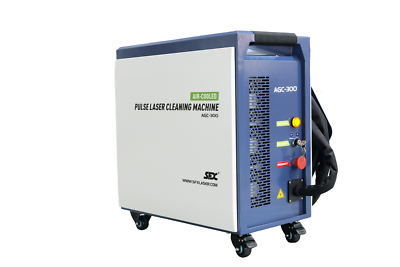
When selecting laser wood refinishing, always prioritize the laser source brand (JPT/Raycus) over raw wattage for long-term reliability.
Laser Wood Refinishing: Shipping & Compliance
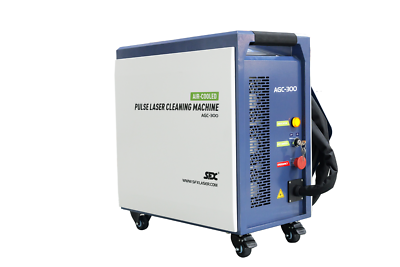
Crating for laser equipment must meet international export standards. Wooden crates should be ISPM 15 certified, especially for intercontinental shipments. This ensures the wood has been heat-treated to prevent pest transfer. Proper crating protects sensitive components like laser sources and CNC systems during transit.
HS codes are essential for global customs clearance. For laser wood refinishing machines, the typical HS code is 8456.30, which covers laser-operated cutting and engraving machines. However, regional variations exist—always confirm with local authorities. Misclassification can lead to delays or fines.
Laser safety regulations require compliance with IEC 60825 and FDA 21 CFR Part 1040.11. Enclosed Class 1 systems are preferred for industrial use, minimizing exposure risks. Interlock systems, emergency stops, and protective enclosures are mandatory. Proper labeling and operator training ensure safe wood refinishing operations.
Traditional wood refinishing relies on sandblasting or chemical stripping. These methods generate hazardous waste and damage substrates. Laser wood refinishing removes finishes cleanly without mechanical wear. It selectively ablates coatings while preserving the underlying wood grain.
Compared to old methods, laser systems offer precision, repeatability, and environmental safety. There’s no media consumption or chemical runoff. Process parameters like pulse frequency and scan speed are fully controllable. This results in consistent surface quality across large production runs.
| Feature | Traditional Sanding/Chemical Stripping | Laser Wood Refinishing |
|---|---|---|
| Substrate Damage | High (abrasion, warping, fiber tearing) | Minimal (controlled ablation) |
| Waste Generated | Dust, slurry, chemical runoff | Only organic particulate (easily filtered) |
| Labor Intensity | High (manual operation) | Low (automated CNC processing) |
| Environmental Impact | High (VOCs, non-recyclable waste) | Low (no chemicals, energy efficient) |
| Precision & Control | Limited (operator-dependent) | High (programmable parameters) |
Key Features & Advantages
Klear Laser’s wood refinishing systems use JPT MOPA fiber laser sources for unmatched precision. These sources deliver stable energy output and fine-tunable pulse control. The technology ensures clean removal of varnishes, paints, or stains without scorching wood fibers. It is engineered for industrial durability in high-volume woodworking environments.
Adjustable pulse widths ranging from 2 to 500 nanoseconds enable safe processing of all wood types. Shorter pulses protect softwoods like pine from thermal damage. Longer pulses efficiently strip hardened coatings from dense hardwoods. This adaptability eliminates manual parameter changes between jobs.
A high-speed galvanometer scanning head with F-Theta optics maintains uniform spot size across curved or textured surfaces. Real-time thermal monitoring dynamically adjusts power to prevent overheating. Operators achieve consistent, residue-free finishes without physical contact.
| Component | Klear Laser Specification | Advantage |
|---|---|---|
| Laser Source | JPT MOPA Fiber (100W) | Tunable pulse width for precise material interaction |
| Pulse Width Range | 2–500 ns adjustable | Prevents charring while removing coatings |
| Scanning Head | Galvanometer with F-Theta lens | Uniform cleaning on curved or textured surfaces |
| Thermal Monitoring | Real-time temperature feedback | Automatically adjusts power to protect substrate |
Industrial Applications
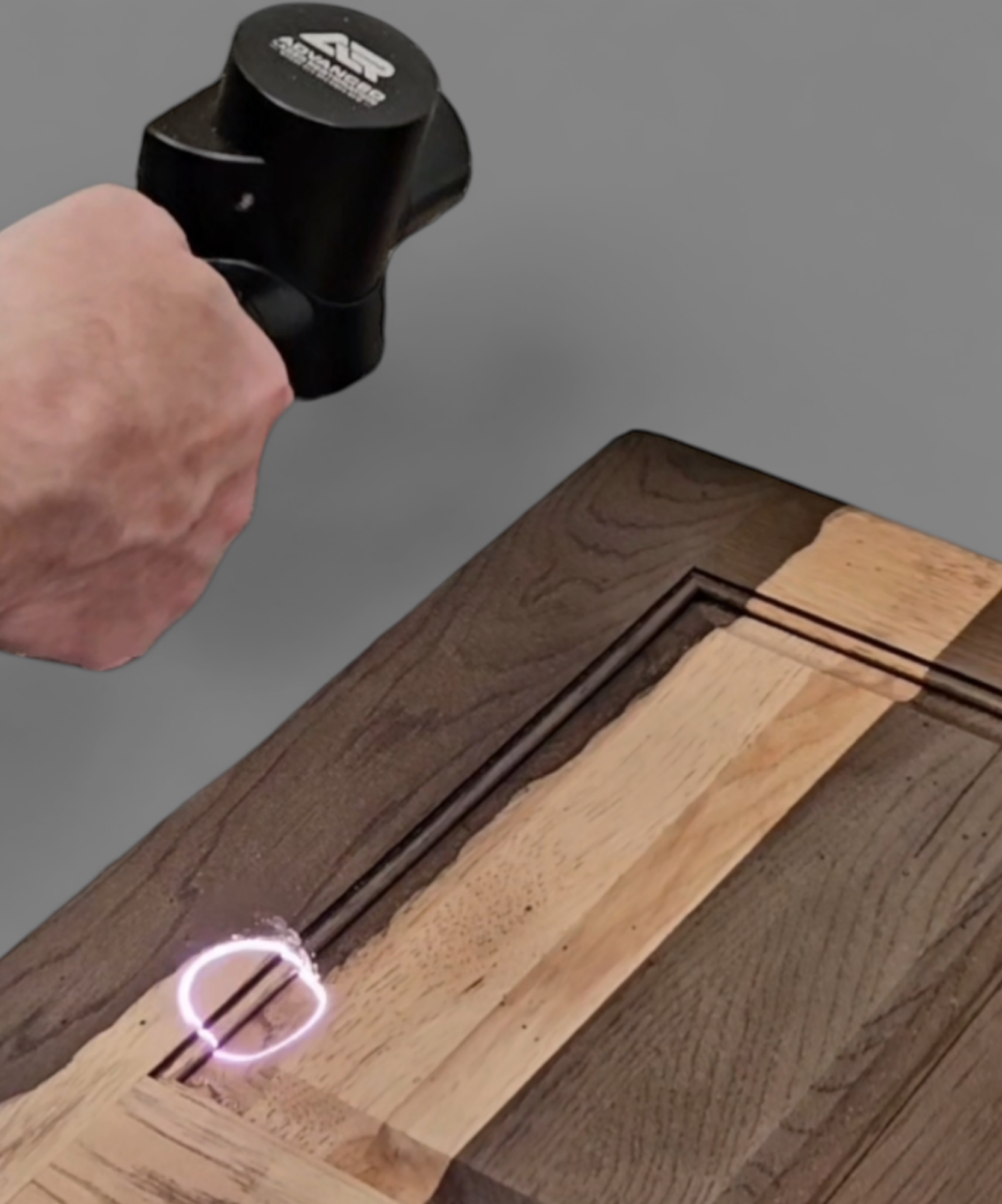
Klear’s pulsed laser cleaning systems strip varnish, stain and char from hardwood dashboards, teak decks and aircraft cabin panels without sanding or chemical strippers. The 100 ns–200 ns pulse width flashes off the coating before heat can reach the substrate, so maple, walnut and marine ply keep their dimensional tolerance and glue lines stay intact. Operators simply trace the gun along grain lines; a fume extractor pulls away the vaporised resin, leaving a surface ready for oil or new finish in one pass.
| Application Area | Typical Wood Substrate | Coating Removed | Pulse Energy | Line Speed |
|---|---|---|---|---|
| Auto restoration | Walnut dash, oak steering wheel | Nitrocellulose lacquer, UV-cured polyester | 8–12 mJ @ 200 kHz | 0.6 m min⁻¹ |
| Aerospace VIP cabin | Cherry veneer, sapele ply | Fire-retardant varnish, polyurethane topcoat | 6–10 mJ @ 250 kHz | 0.5 m min⁻¹ |
| Marine refit | Teak deck, iroko rail | Cetol®, two-part polyurethane, salt-contaminated oil | 10–15 mJ @ 180 kHz | 0.4 m min⁻¹ |
Shipyards use the same Klear-CL50 pulsed head to clean both steel welds and teak decking; one 220 V unit replaces a 25 kW diesel compressor and garnet blaster, eliminating grit embedment that scars soft grain. Aerospace MRO shops value the laser because it removes coatings right up to silk-screened placards without masking, cutting cabin downtime from days to hours. Classic-car restorers appreciate the repeatability: once they store the grain-direction program, every ’65 Mustang glove-box door matches the last, with no fuzzy end-grain or chemical residue to contaminate fresh lacquer.
Why Choose Klear Laser
Klear Laser understands that industrial reliability is solely measured by uptime and consistent throughput. We back our Fiber Laser Welding and Pulsed Laser Cleaning machines with a robust support ecosystem designed for heavy-duty manufacturing environments. Our commitment ensures that replacing traditional processes with laser technology remains a low-risk and high-efficiency transition for your facility.
Our technical support team comprises specialized engineers with deep knowledge of laser interaction on various metals and sensitive substrates. We provide direct access to experts who assist with parameter fine-tuning, whether you are adjusting pulse widths for delicate cleaning or maximizing penetration depth for structural welding. This immediate access minimizes troubleshooting time and actively prevents operator error during complex setups.
We stand behind our equipment with industry-leading warranty terms that cover critical components, including the laser source and optical systems. Our strategic partnership with top-tier source manufacturers like JPT and Raycus allows us to pass on extended coverage directly to the end-user. This warranty structure effectively protects your capital investment against manufacturing defects and premature component failure.
Maintaining a strategic inventory of consumables and critical spare parts is essential for minimizing Mean Time To Repair (MTTR). Klear Laser keeps a domestic, fully stocked warehouse of essential optical components, including protective lenses, copper nozzles, and focusing mirrors. We expedite shipping for these items to ensure your facility maintains peak operational efficiency without waiting on slow overseas logistics.
| Service Component | Generic Market Standard | Klear Laser Advantage |
|---|---|---|
| Laser Source Warranty | 1 Year (Limited) | 2-3 Years (Source Dependent, JPT/Raycus) |
| Technical Support | Email-only, 24-48hr delay | Direct Engineer Access, Rapid Response |
| Consumable Availability | Drop-shipped from overseas | Stocked Domestically, Same-Day Shipping |
| Component Coverage | Chassis only | Source, Controller, and Optics |
💰 ROI Calculator: Laser Wood Refinishing
Ready to Upgrade Your Production?
Contact Klear Laser for professional industrial solutions.