When selecting fiber laser vs co2, always prioritize the laser source brand (JPT/Raycus) over raw wattage for long-term reliability.
Fiber Laser Vs Co2: Technical Specifications
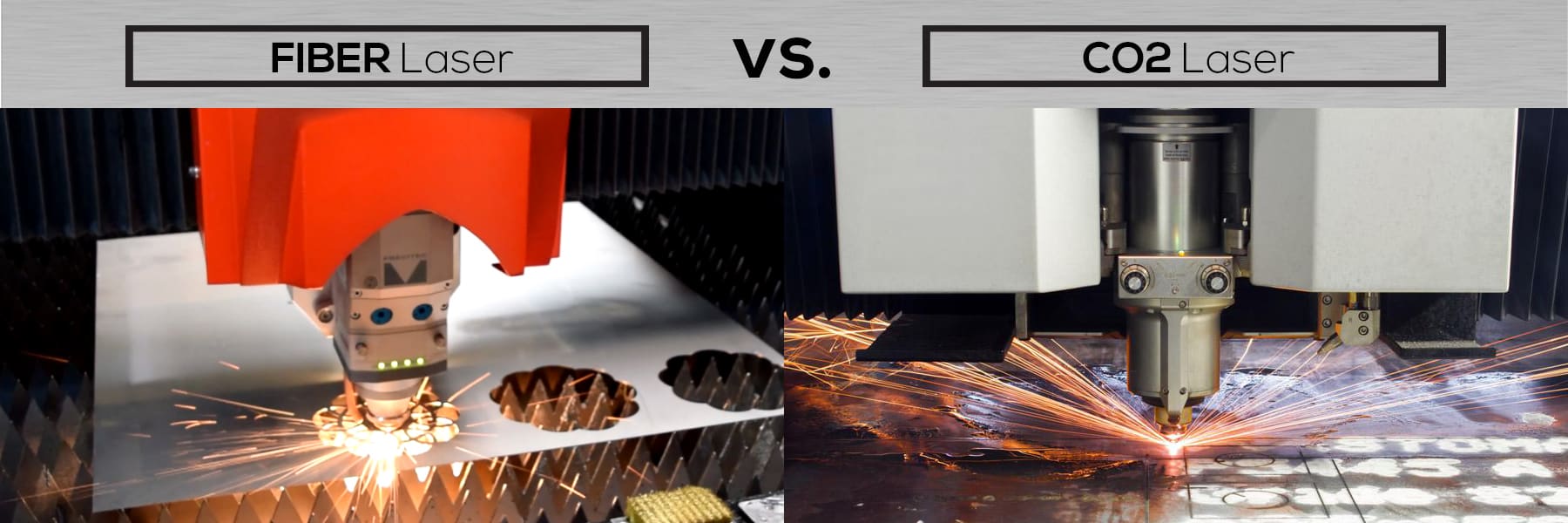
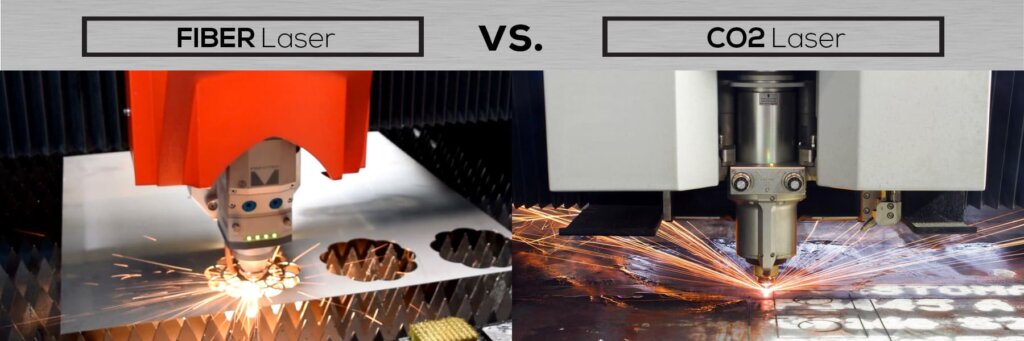
The fundamental distinction between fiber lasers and CO2 lasers begins with the physics of the wavelength. Fiber lasers operate at approximately 1.064 micrometers, a near-infrared wavelength that is highly absorbed by metals like steel, aluminum, and brass. Conversely, CO2 lasers generate a beam at 10.6 micrometers, which is far better suited for organic materials such as wood, acrylic, and leather. At Klear Laser, we utilize fiber technology because metal fabrication demands the high absorption rates that only the 1 µm wavelength can provide.
This wavelength advantage directly influences penetration depth and beam quality in welding applications. When utilizing high-quality sources from JPT or Raycus, the focused fiber beam achieves a high energy density that creates deep, narrow welds with minimal thermal distortion. This precision allows our wobble welding heads to manipulate the beam geometry, effectively bridging gaps between materials while maintaining structural integrity. CO2 lasers typically lack the beam brilliance required for this type of high-speed, deep-penetration metal welding.
regarding pulsed laser cleaning, the ability to control pulse energy and width is critical for substrate safety. A pulsed fiber laser delivers high peak power in nanosecond durations to vaporize rust and coatings without overheating the base metal. This process relies on the ablation threshold where the contaminant absorbs the energy and expands off the surface, while the metal substrate reflects the specific fiber wavelength. A CO2 laser would simply heat the entire component, risking warping or metallurgical damage to the part being cleaned.
Thermal management and cooling requirements further differentiate these technologies in an industrial setting. Fiber lasers are solid-state devices with wall-plug efficiencies exceeding thirty percent, meaning they generate significantly less waste heat. They utilize compact water chillers or air cooling, whereas CO2 systems require complex gas mixtures and massive cooling infrastructure to manage the excess heat generated by the gas discharge. This makes fiber lasers distinctively lower maintenance and more cost-effective for long-term industrial operation.
| Merkmal | Traditional Sandblasting/Arc Welding | CO2 Laser System | Klear Fiber Laser System |
|---|---|---|---|
| Wellenlänge | N/A (Mechanical/Electrical) | 10,600 nm (Far Infrared) | 1,064 nm (Near Infrared) |
| Metal Absorption | Variable | Low (Reflective issues) | High (Excellent coupling) |
| Rostentfernung | Abrasive, damages substrate | Thermal, heats substrate | Selective ablation, protects substrate |
| Cooling Needs | K.A. | High (Large Chillers + Gas) | Low (Compact Active Cooling) |
| Wall-Plug Efficiency | Niedrig | < 10% | > 30% |
| Maintenance | High (Media/Consumables) | High (Mirrors/Gas Refills) | Low (Solid State Source) |
| Primary Use | Rough prep and manual joining | Organics cutting and engraving | Metal welding and precision cleaning |
Hauptmerkmale und Vorteile
Klear Laser’s fiber laser systems outperform CO2 technology in metal processing due to fundamental component advantages. Fiber lasers utilize solid-state diode-pumped sources like JPT or Raycus, eliminating CO2’s gas mixtures, water chillers, and complex mirror alignment. This design delivers near-instant beam delivery through flexible fibers versus CO2’s rigid beam paths requiring precise mirror calibration. Industrial uptime increases significantly with fiber’s maintenance-light architecture.
The JPT/Raycus pump sources achieve 35-50% wall-plug efficiency compared to CO2’s 10-15%, drastically reducing operational costs. Fiber wavelengths (1070nm) absorb 3-5x better in metals than CO2’s 10,600nm output, enabling deeper penetration with lower power. Integrated wobble welding heads dynamically oscillate the beam, eliminating edge spatter and allowing single-pass welding of thick materials without groove preparation. This precision minimizes post-weld grinding in automotive and aerospace applications.
For rust removal, fiber’s nanosecond pulse widths (100-200ns) cleanly ablate contaminants while preserving substrate integrity. CO2 systems typically operate in microsecond pulses, risking thermal damage to base metals during cleaning. Fiber pulse control ensures safe operation on thin substrates like aircraft skins or historical artifacts where thermal distortion is unacceptable. Pulse energy and frequency are precisely tunable for delicate surfaces.
| Spezifikation | Klear Fiber Laser | Traditional CO2 Laser |
|---|---|---|
| Wellenlänge | 1070 nm | 10,600 nm |
| Wall-Plug Efficiency | 35-50% | 10-15% |
| Maintenance Focus | Diode lifetime (100k+ hrs) | Gas refills, mirror alignment |
| Pulse Width (Cleaning) | 100-200 ns (adjustable) | Typically >1000 μs |
| Metal Absorption | High (optimal for Fe, Al, Cu) | Low (requires high peak power) |
| Strahlenlieferung | Flexible fiber optic | Mirrors/lenses (alignment critical) |
Fiber technology eliminates CO2’s consumable gases and coolant systems, aligning with Klear’s mission of sustainable manufacturing. The solid-state source and fiber delivery ensure consistent beam quality for precision welding and non-abrasive cleaning. Industrial users gain lower cost-per-part and compliance with environmental regulations through reduced energy and waste streams.
Industrielle Anwendungen
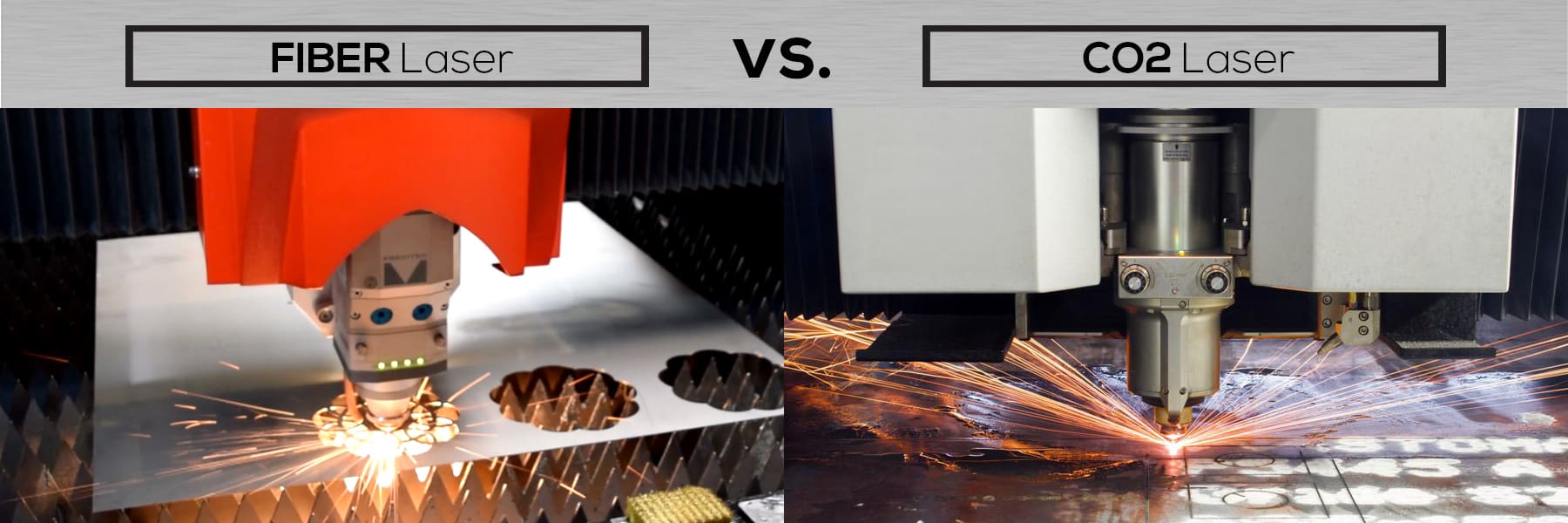
Fiber lasers have displaced CO₂ systems across automotive, aerospace, and marine manufacturing due to superior beam quality, wall-plug efficiency, and maintenance-free operation. Their 1.06µm wavelength couples dramatically better with metals, enabling faster processing with lower power consumption. This wavelength advantage fundamentally changes processing capabilities for both welding and cleaning applications in heavy industry.
In automotive production, fiber laser welding machines with wobble welding heads deliver consistent penetration for galvanized body panels and aluminum battery trays without filler material. Pulsed laser cleaning systems remove rust and e-coat precisely from weld zones with microsecond pulse widths that prevent substrate damage. Tier 1 suppliers rely on JPT-source fiber systems for 24/7 powertrain component welding where CO₂ lasers cannot match the speed or spatter control.
Aerospace MRO operations demand extreme substrate safety when removing oxide layers from titanium turbine blades or paint from aluminum airframes. Fiber laser cleaning achieves this with tunable pulse durations from 10-500ns that vaporize contaminants while keeping base metal below phase transformation temperatures. For fabrication, fiber welders produce porosity-free joints in thin-gauge Inconel and 6Al-4V titanium with penetration control impossible for CO₂ lasers due to their longer wavelength and larger spot sizes.
Marine environments present the harshest corrosion challenges, where Raycus-source fiber cleaning systems strip heavy rust and multiple coating layers from ship hulls and offshore platform steel. The 1000W-2000W pulsed lasers outperform CO₂ by 3:1 in removal rate while eliminating hazardous media blasting waste. For structural fabrication, fiber welding provides 10mm+ penetration in single passes on DH36 shipbuilding steel with minimal distortion, a task requiring multiple CO₂ passes or submerged arc processes.
| Material | Fiber Laser Processing | CO₂ Laser Processing | Industrie Anwendung |
|---|---|---|---|
| Low-Carbon Steel | Excellent welding/cleaning (reflectivity <5%) | Moderate welding, poor cleaning (reflectivity 85%+) | Auto body panels, ship hulls |
| Aluminium-Legierungen | Superior welding with wobble heads; fast oxide cleaning | Poor coupling requires high power; ineffective cleaning | Aerospace structures, EV battery trays |
| Titan-Legierungen | Precise penetration control; safe oxide removal | Risk of embrittlement; plasma interference | Aerospace engine components |
| Rostfreier Stahl | High-speed welding; passive layer cleaning | Slower processing; oxidation issues | Marine hardware, automotive exhaust |
| Copper/Electrical | Excellent conductivity welding with blue/ fiber hybrid | Reflectivity >95% makes processing nearly impossible | EV battery busbars, aerospace connectors |
Klear Laser engineers fiber solutions specifically for these demanding sectors, replacing legacy CO₂ installations and polluting chemical processes with clean, controllable laser technology. Our systems integrate into robotic production lines and portable field service platforms, delivering ROI through energy savings, process speed, and eliminated consumable costs.
Warum Klear Laser wählen
Support: Klear Laser delivers comprehensive technical support for all equipment. Our 24/7 support team offers multilingual technical assistance via phone and email. Remote troubleshooting allows our engineers to diagnose and resolve issues quickly without waiting for physical service visits. For complex applications, we offer optional on-site service visits by our factory-trained engineers.
Warranty: We stand behind our technology with an industry-leading warranty program. All fiber laser sources and key components carry a standard 2-year warranty. Extended warranty options are available to provide additional protection for critical production equipment. Our standard package includes a 1-year warranty on labor and travel expenses for the first service visit.
Spare Parts: Genuine Klear Laser parts ensure optimal performance and longevity. Our global inventory network provides next-day shipping from regional warehouses in North America, Europe, and Asia. All parts are designed specifically for Klear systems, guaranteeing perfect compatibility. We offer preventive maintenance kits with scheduled replacement components to prolong equipment life.
| Komponente | Standard-Garantie | Extended Warranty Available |
|---|---|---|
| Laser-Quelle | 2 Jahre | Ja |
| Stromversorgung | 2 Jahre | Ja |
| Kontrollsystem | 1 year | Ja |
| Kühlsystem | 1 year | Ja |
| Optical Components | 6 months | Ja |
💰 ROI Calculator: Fiber Laser Vs Co2
Sind Sie bereit für ein Upgrade Ihrer Produktion?
Kontaktieren Sie Klear Laser für professionelle industrielle Lösungen.