When selecting how does a laser cutter work, always prioritize the laser source brand (JPT/Raycus) over raw wattage for long-term reliability.
How Does A Laser Cutter Work: Technical Specifications
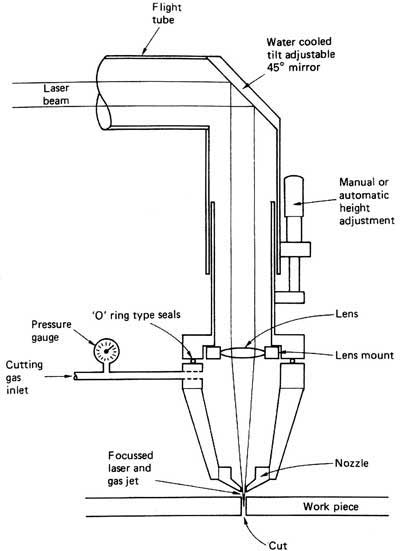
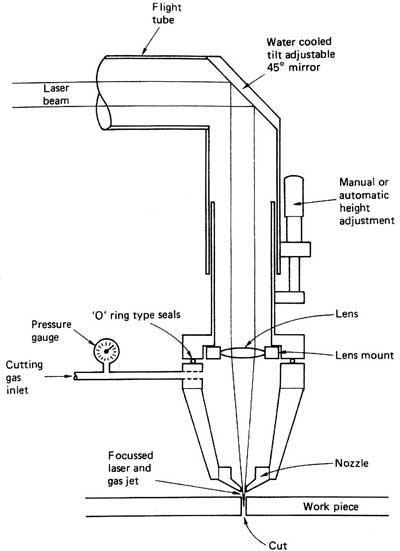
Laser cutting works by focusing a high-power beam onto a material surface, delivering concentrated energy that melts, burns, or vaporizes the target area. The wavelength of the laser determines how well the material absorbs the energy. For fiber lasers, the standard wavelength is 1070–1080 nm, which is highly absorbed by metals like steel, aluminum, and copper, making it ideal for industrial metal cutting.
Pulse energy plays a crucial role in precision and control. In pulsed fiber laser cutting, each pulse delivers a burst of energy measured in joules. High pulse energy allows deeper material penetration with minimal heat spread, preserving the integrity of surrounding areas. This is especially important when cutting thin or heat-sensitive materials where thermal distortion must be avoided.
Cooling is essential to maintain laser source stability and longevity. High-power lasers generate significant heat, and without proper thermal management, beam quality and efficiency degrade. Most industrial systems use closed-loop water chillers to maintain a constant temperature, ensuring consistent performance during prolonged operation. Effective cooling also protects sensitive components like the laser resonator and beam delivery optics.
When compared to traditional mechanical or plasma cutting, laser cutting offers superior precision, speed, and material conservation. Traditional methods often introduce mechanical stress, burrs, or large heat-affected zones. Laser cutting eliminates direct contact, reduces waste, and enables complex geometries unachievable with older techniques.
| Merkmal | Traditional Cutting (Plasma/Mechanical) | Fiber Laser Cutting |
|---|---|---|
| Wellenlänge | N/A (non-optical process) | 1070–1080 nm (optimal metal absorption) |
| Impuls Energie | Not applicable (continuous force or arc) | Adjustable (0.1–50 J/pulse), precise control |
| Methode der Kühlung | Air cooling or minimal fluid use | Closed-loop water chillers for thermal stability |
| Heat-Affected Zone (HAZ) | Large (plasma) or mechanical stress (shearing) | Minimal, especially in pulsed mode |
| Edge Quality | Rough, often requires post-processing | Smooth, near-net shape, minimal finishing |
| Cutting Speed (mild steel 3mm) | 1.5–2 m/min | 20–35 m/min |
| Wartungsintervall | High (blade wear, electrode replacement) | Low (no moving parts in beam path) |
Industrial fiber lasers from sources like Raycus or JPT are engineered for high pulse energy efficiency and stable output. These systems integrate advanced cooling and beam control to maximize uptime and cut quality. As a result, modern laser cutting replaces outdated methods across automotive, aerospace, and fabrication industries—delivering cleaner, faster, and more sustainable manufacturing.
Hauptmerkmale und Vorteile
Klear Laser’s fiber welding machines leverage premium JPT M6 and Raycus R1 laser sources for unmatched consistency and efficiency. These industrial-grade sources feature real-time power stabilization and advanced thermal management. This ensures stable beam output even under heavy-duty production conditions, reducing downtime and defects.
Our dynamic wobble welding heads precisely adjust amplitude and frequency during operation. This adapts to material thickness changes and complex geometries in real time. The result is seamless welds with minimal spatter and superior bead uniformity.
Klear systems achieve deep penetration through optimized optical paths and precision cooling. Beam quality (BPP ≤ 1.5 mm*mrad) enables narrow, high-strength welds with minimal heat distortion. Thin materials stay intact while thick sections weld reliably in single passes.
| Merkmal | Klear Laser Specification | Industriestandard |
|---|---|---|
| Laser-Quelle | JPT M6/Raycus R1 with adaptive control | Generic fiber lasers |
| Wobble Head Precision | 0-5mm amplitude, 0-500Hz frequency adjust | Fixed or manual settings |
| Strahlqualität (BPP) | ≤ 1.5 mm*mrad | ≥ 2.0 mm*mrad |
| Max Welding Speed | Up to 10 m/min (stainless steel) | Typically 5-6 m/min |
| Single-Pass Penetration | Up to 8mm (3mm steel) | Max 4-5mm (multi-pass) |
Industrielle Anwendungen
How Does a Laser Cutter Work, and Where Is It Used?
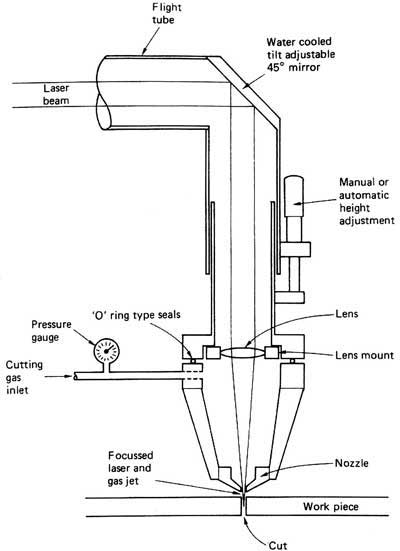
A laser cutter generates a high-density beam that melts, burns, or vaporizes material along a CNC-defined path. Assist gas—oxygen, nitrogen, or air—ejects the melt and leaves a narrow, dross-free kerf. Because the heat-affected zone is tiny, the process keeps metallurgical properties intact and needs little post finishing.
Automotive.
Body-in-white lines use 3–6 kW fiber cutters to blank door rings, roof bows, and hydro-formed tubes at 100 m min⁻¹. The same cell then trims advanced-hardened steels (AHSS) without micro-cracks, saving 2 kg of scrap per door compared with hard tooling.
Aerospace.
Titanium seat tracks, Inconel heat shields, and composite skins are profiled on 5-axis gantries with ±0.05 mm repeatability. No-tool wear means every first article is flight-ready, while nitrogen cutting keeps edges oxide-free for subsequent autoclave bonding.
Marine.
Shipyards slice 20 mm duplex stainless for LNG tank membranes and 30 mm aluminum deck plates with 8 kW sources. The narrow kerf lets designers nest more parts per sheet, cutting material costs by 12 % on a single cruise-shield project.
| Typical Materials Cut | Dickenbereich (mm) | Preferred Assist Gas | Key Property Protected |
|---|---|---|---|
| Low-carbon steel | 0.5–25 | O₂ | Cut speed |
| Edelstahl 304/316 | 0.3–20 | N₂ | Corrosion resistance |
| Aluminum 5083/6082 | 0.5–30 | N₂ | Weld-ready edge |
| Titanium 6Al-4V | 0.3–12 | Ar | Alpha-case free |
| Inconel 625 | 0.3–15 | N₂ | Oxide-free surface |
| Composites (CFRP) | 0.2–10 | Air | No delamination |
Warum Klear Laser wählen
Industrial environments demand continuous uptime and absolute reliability from their manufacturing equipment. Klear Laser structures our post-sale ecosystem to ensure your fiber laser welding and pulsed cleaning systems operate at peak efficiency throughout their lifecycle. We view support not merely as a service, but as a critical technical component equal in importance to the laser source itself.
Our technical support team consists of application engineers who understand metallurgy and laser-material interaction deeply. We provide rapid troubleshooting to diagnose issues with wobble heads, galvanometers, or beam delivery systems immediately. This technical depth ensures that your production line remains active and your throughput targets are consistently met without extended interruptions.
We stand behind our equipment with comprehensive warranty coverage that rigorously protects your capital investment. This includes specific, extended protection for critical components like JPT and Raycus laser sources, which represent the core of our technology. Our warranty terms are transparent and designed to minimize financial risk while guaranteeing the longevity of the machine’s optical chain.
Minimizing downtime requires immediate access to essential consumables and replacement components. We maintain a robust domestic inventory of protective lenses, copper nozzles, and focusing optics specifically calibrated for our wavelengths and power outputs. Rapid logistics ensure that these components reach your facility before standard wear affects your weld penetration depth or surface cleaning finish.
| Merkmal | Klear Laser Standard | Generic Market Standard |
|---|---|---|
| Laser Source Coverage | 2-Year Comprehensive (JPT/Raycus) | 1-Year Limited or Third-Party |
| Technische Unterstützung | Direct Application Engineers | General Customer Service Agents |
| Spare Parts Inventory | Domestic Stock (Lenses, Nozzles, Optics) | Drop-ship from Overseas |
| Reaktionszeit | Same-Day Technical Triage | 24-48 Hour Wait Times |
| Consumable Quality | High-Grade Fused Silica / Copper | Generic Glass / Brass Alloys |
💰 ROI Calculator: How Does A Laser Cutter Work
Sind Sie bereit für ein Upgrade Ihrer Produktion?
Kontaktieren Sie Klear Laser für professionelle industrielle Lösungen.