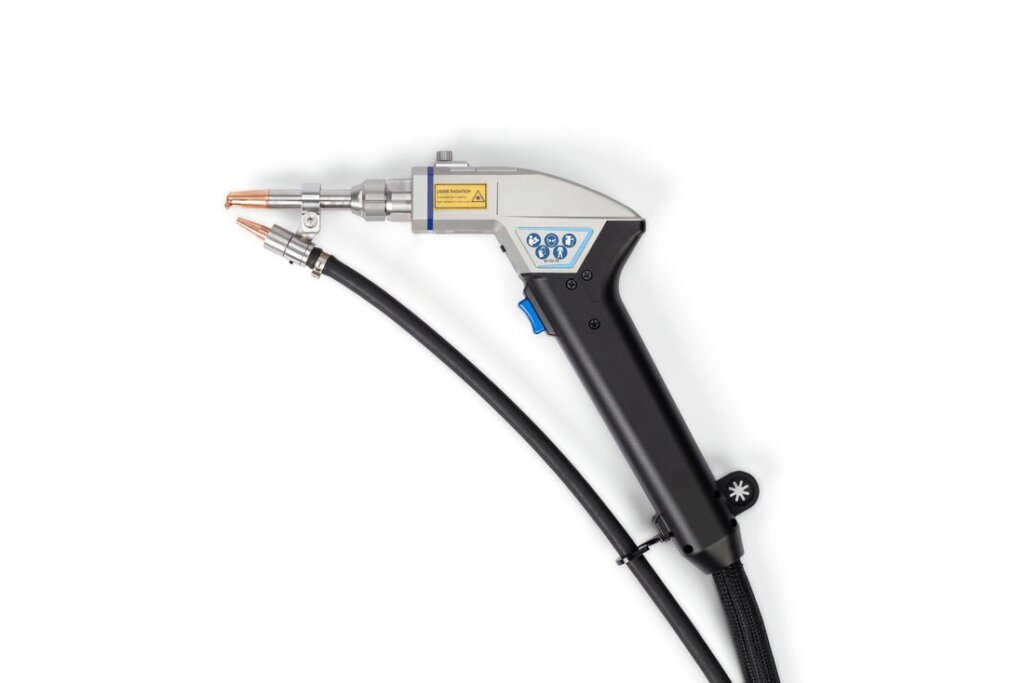
When selecting laser arc welding, always prioritize the laser source brand (JPT/Raycus) over raw wattage for long-term reliability.
Laser Arc Welding: Market Trends & ROI
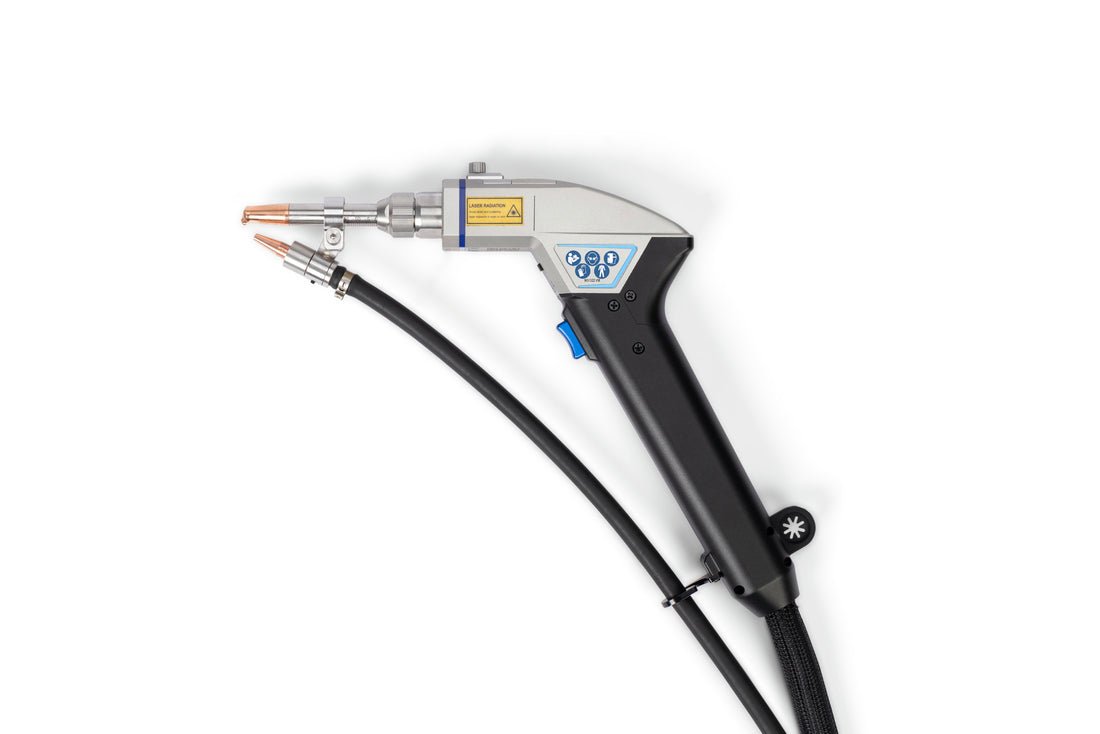
The industrial sector is currently witnessing a massive pivot from traditional arc welding toward handheld fiber laser welding systems. This shift is driven by the urgent need to address the skilled labor shortage inherent to TIG and MIG processes. Manufacturers realize that fiber laser systems allow operators with minimal experience to achieve professional, high-strength bonds almost immediately.
Profitability in modern fabrication relies heavily on processing speed and the reduction of secondary finishing costs. Fiber laser welding operates up to four times faster than traditional TIG methods, which directly increases the revenue potential per labor hour. This dramatic increase in production velocity allows fabrication shops to complete contracts faster and take on higher volumes without expanding their physical footprint.
Technical reliability in these systems is ensured through high-quality power sources like JPT or Raycus units. These sources deliver the consistent energy density required for deep, uniform penetration across stainless steel, carbon steel, and aluminum. The stability of these laser sources ensures that the machine can run continuously in demanding industrial environments without thermal drop-off.
The integration of wobble welding heads further enhances the versatility of these machines compared to static arc welding. This technology oscillates the laser beam to effectively bridge wider joint gaps that would typically require heavy filler material. This beam manipulation creates a wider weld seam and ensures excellent fusion without the excessive heat input that causes warping.
Low heat input results in a significantly smaller heat-affected zone (HAZ) compared to the intense thermal spread of an electric arc. This precision prevents material deformation and largely eliminates the need for extensive post-weld grinding or polishing. By removing the bottleneck of post-processing, companies see an immediate improvement in their overall operational efficiency.
| Merkmal | Traditional Arc Welding (TIG/MIG) | Klear Fiber Laser Welding |
|---|---|---|
| Verarbeitungsgeschwindigkeit | Slow to Moderate | Up to 4x Faster |
| Wärmebeeinflusste Zone | Large (High risk of warping) | Minimal (Preserves substrate) |
| Operator Skill Required | High (Years of training) | Low (Hours of training) |
| Post-Weld Finishing | Extensive grinding/polishing required | Minimal to None |
| Überbrückung von Lücken | Requires filler rod/wire manipulation | Handled automatically by Wobble Head |
| Eindringtiefe | Variable based on amperage/skill | Deep and Narrow (High Aspect Ratio) |
Hauptmerkmale und Vorteile
Klear Laser delivers true fiber laser welding performance, not laser-arc hybrid systems. Our technology eliminates electrical arcs entirely, using pure photon energy for precise metallurgical fusion. This approach removes arc-related defects like spatter and porosity while enabling deeper penetration control.
Superior beam quality from Raycus or JPT fiber laser sources ensures optimal energy density. These industrial-grade sources provide exceptional stability at 1070nm wavelength with wall-plug efficiency exceeding 35%. Continuous wave operation at 500W to 6000W power ranges supports applications from battery tab welding to heavy-duty automotive components.
Advanced wobble welding heads dynamically oscillate the laser focus point during operation. This technique controls melt pool dynamics, reduces undercut, and allows single-pass welding of thick materials up to 8mm. The integrated coaxial gas delivery system shields the weld zone while minimizing oxidation without additional arc shielding requirements.
| Parameter | Klear Fiber Laser Welder | Conventional Arc Welding |
|---|---|---|
| Max Penetration (1.5kW) | 8.0 mm steel | 3.5 mm steel |
| Wärmezufuhr | 15-25 J/mm | 60-100 J/mm |
| Source Lifetime | >100,000 hours | Electrode dependent |
| Spatter Reduction | >95% | N/A (inherent issue) |
Precision welding occurs with minimal heat affected zone distortion compared to arc processes. The combination of high-brightness JPT/Raycus sources and programmable wobble optics enables consistent deep-penetration welds in reflective materials like copper and aluminum. This eliminates post-weld grinding typically required with TIG or MIG arc methods.
Industrielle Anwendungen
Fiber laser welding has largely displaced traditional arc welding in advanced manufacturing sectors due to its superior precision and cleanliness. While “laser arc welding” sometimes describes hybrid processes, modern fiber laser systems from Klear Laser deliver deeper penetration, faster speeds, and eliminate the fumes and spatter of MIG/TIG welding. This technology achieves heat-affected zones under 0.5mm while providing penetration depths up to 10mm, making it ideal for automotive, aerospace, and marine applications where distortion control is critical.
Automotive manufacturers utilize fiber laser welding for body-in-white structures, battery tray assemblies, and powertrain components with 6kW systems achieving weld speeds exceeding 5 meters per minute. Wobble welding heads create adaptive seam widths of 2-5mm, ensuring reliable gap bridging on stamped steel panels while maintaining minimal distortion on thin-gauge materials. The process joins advanced high-strength steels and aluminum alloys without the burn-through risk associated with traditional arc welding.
Aerospace fabricators rely on JPT and Raycus fiber laser sources for turbine engine components, fuel system manifolds, and airframe structural elements requiring porosity levels below 1%. Laser welding produces full-penetration joints in 4mm titanium alloys while preserving the mechanical properties of precipitation-hardened materials like Inconel 718. The concentrated energy input prevents sensitization in stainless steel and achieves dimensional tolerances within ±0.1mm for critical flight hardware.
Marine and offshore constructors deploy laser welding for corrosion-resistant steel superstructures, aluminum deck panels, and duplex stainless steel piping exposed to saltwater environments. Single-pass penetration of 10mm in DH36 shipbuilding steel reduces welding time by 60% compared to multi-pass arc processes. The low residual stress characteristic of laser welding minimizes susceptibility to stress corrosion cracking in high-nickel alloy systems used in subsea applications.
| Material | Dickenbereich | Arc Welding Limitations | Laser Welding Advantages | Industrie Anwendung |
|---|---|---|---|---|
| Low-Carbon Steel | 0.8-10mm | High distortion, spatter, filler cost | 6kW single-pass penetration, 95% less consumables | Auto body frames, marine hulls |
| Aluminum 5xxx/6xxx | 1-6mm | Porosity, hot cracking, wire feed issues | Keyhole stability, porosity <1%, no filler required | Aerospace fuel tanks, auto battery trays |
| Titan Grad 5 | 0.5-4mm | Contamination risk, large HAZ | Inert gas shielding, HAZ <0.3mm, preserved fatigue strength | Aerospace engine components |
| Rostfreier Stahl 316L | 1-8mm | Sensitization, distortion, discoloration | 3kW autogenous welds, no carbide precipitation | Marine piping, chemical tanks |
| Inconel 718 | 0.8-3mm | Crack susceptibility, sluggish puddle | Precise energy control, reduced liquation cracking | Aerospace turbine vanes |
Klear Laser integrates 2kW to 6kW fiber laser sources with programmable wobble welding heads for adaptive process control across these demanding applications. Our electric-driven systems eliminate shielding gas waste and consumable electrodes while reducing energy consumption by 40% compared to arc welding equipment. Contact our applications team to configure a production-ready welding platform for your specific material and joint requirements.
Warum Klear Laser wählen
Klear Laser provides comprehensive technical support to ensure your laser equipment operates at peak performance. Our team of experienced engineers offers remote troubleshooting, phone and email support, and field service for on-site assistance. We understand that production downtime is costly, so we prioritize quick response times and effective solutions to keep your operations running smoothly.
All Klear Laser industrial systems come with an industry-leading two-year limited warranty covering key components. This warranty reflects our confidence in the durability and reliability of our laser sources and optics. Extended warranty options are available, providing up to five years of comprehensive coverage.
We maintain an extensive inventory of genuine OEM spare parts specifically designed for your Klear Laser system. This ensures immediate availability of critical components to minimize equipment downtime. Our global logistics network guarantees prompt delivery wherever your facility is located.
💰 ROI Calculator: Laser Arc Welding
Sind Sie bereit für ein Upgrade Ihrer Produktion?
Kontaktieren Sie Klear Laser für professionelle industrielle Lösungen.