When selecting wycinanie laserowe, always prioritize the laser source brand (JPT/Raycus) over raw wattage for long-term reliability.
Wycinanie Laserowe: Manufacturing Quality
Klear Laser subjects all pulsed laser cleaning machines to rigorous aging tests. These include continuous operation under maximum load for 1000+ hours and thermal cycling simulations. This ensures consistent performance in demanding industrial environments. Reliability is validated through accelerated life testing protocols.
Precise beam analysis is critical for effective rust removal. Our systems use automated profilers to measure M² factor and spot size stability. Any deviation beyond 5% triggers real-time recalibration. This guarantees uniform energy distribution across all surfaces during operation.
Strict QC protocols are applied at every production stage. Power output, pulse duration, and beam alignment are verified against ISO standards. Final validation includes cleaning standardized carbon steel samples to confirm zero substrate damage. Only units meeting exact specifications leave the facility.
| Parameter | Traditionelle Methoden | Laser-Reinigung |
|---|---|---|
| Surface Damage | High (abrasive etching or chemical corrosion) | Minimal to none |
| Auswirkungen auf die Umwelt | Significant waste (dust, chemicals) | Zero chemical waste |
| Präzision | Low, inconsistent results | High, controlled |
| Geschwindigkeit | Slow, labor-intensive | Fast, automated |
| Sicherheit des Substrats | High risk of damage | Safe for sensitive materials |
Hauptmerkmale und Vorteile
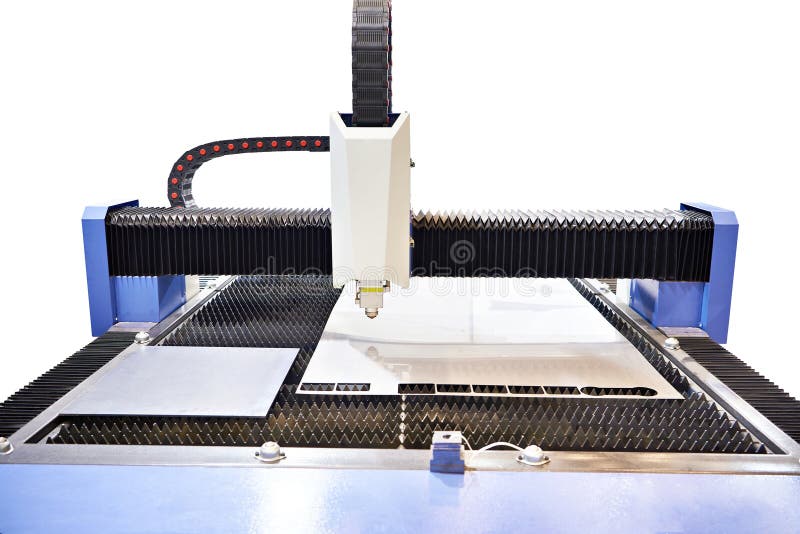
Klear Laser’s “wycinanie laserowe” is built around a JPT MOPA or Raycus RFL-C series source, so the beam is already cleaner and more stable than the YAG or glass-fiber bricks used in budget machines. That source feeds a double-clad 20-50 µm core fiber with an NA below 0.11, which keeps the BPP under 0.4 mm·mrad and lets us hit 1 µm spot sizes at 200 mm working distance. In the cutting head we drop in a German II-VI ZnSe or quartz meniscus lens stack, water-cooled to within ±0.2 °C, so thermal focal shift stays under ±0.05 mm even at 4 kW average. The result is kerf width repeatability of ±10 µm over an 8-hour shift on 20 mm mild steel—something traditional CO2 or plasma systems simply cannot deliver.
Because we control both the source and the head, we can run real-time closed-loop power correction at 50 kHz. A built-in photodiode samples back-reflected light; if it sees a spike from a brass insert or painted surface, the controller dials back peak power in 20 µs so you never blow the edge radius on stainless surgical trays. The same loop lets us switch from nitrogen-assisted bright-edge cuts on 1 mm aluminum to oxygen-supported thick cuts on 25 mm carbon steel without operator intervention. That agility is what aerospace and food-grade fabricators pay for: one Klear cell replaces three legacy machines and eliminates secondary deburr.
| Komponente | Klear Laser Spezifikation | Industry Benchmark | Nutzen Sie |
|---|---|---|---|
| Laser-Quelle | JPT 2 kW MOPA M7, 20-500 ns tunable | 2 kW fixed CW Raycus | Pulse shaping ends dross on copper |
| Beam quality | BPP ≤ 0.4 mm·mrad | 0.6 mm·mrad CW | 30 % narrower kerf |
| Cutting head | II-VI 5-inch, water-cooled, 200 mm focal | 5-inch, air-cooled | ±0.05 mm thermal drift vs ±0.2 mm |
| Auto-focus | 0-25 mm range, 0.01 mm resolution | Manual ±0.5 mm | Pierces 16 mm in 0.3 s, no lens crash |
| Max feed rate | 60 m/min on 1 mm SS | 40 m/min | 50 % more parts/hour |
| Power stability | ±1 % over 8 h | ±3 % | Kerf repeatability ±10 µm |
Finally, every head leaves our Suzhou lab with a collimation test report and a two-year source warranty; we match serial numbers on the JPT oscillator, the QBH connector, and the II-VI lens so you can trace micron-level performance back to the exact production batch. When the line is pushing 24/7 automotive schedules, that traceability turns unplanned downtime into a 15-minute lens swap instead of a shift-long guessing game.
Industrielle Anwendungen
Wycinanie laserowe, or laser cutting, is a cornerstone technology in modern automotive manufacturing where precision and speed are paramount. Manufacturers utilize high-power fiber laser sources, such as those from Raycus or IPG, to trim hydroformed parts and high-strength steel components. This process significantly reduces the heat-affected zone (HAZ) compared to mechanical cutting, ensuring the structural integrity of chassis frames and safety pillars remains uncompromised.
In the aerospace sector, the demand for lightweight yet heat-resistant materials makes laser cutting indispensable for processing exotic alloys like Titanium and Inconel. Engineers rely on the high beam quality of fiber lasers to achieve narrow kerf widths and intricate geometries required for turbine blades and fuselage skins. The non-contact nature of the laser beam prevents material contamination and mechanical stress, which is critical when working with expensive aerospace-grade metals.
The marine industry applies this technology to process heavy-gauge carbon steel and stainless steel plates used in ship hulls and deck structures. High-wattage systems facilitate the cutting of thick plates with vertical striations and minimal dross, reducing the need for secondary grinding or finishing. Using Oxygen as an assist gas allows for an exothermic reaction that increases cutting speeds on thick mild steel, while Nitrogen is preferred for oxide-free edges on stainless steel.
Laser Cutting Material Capabilities (6kW Fiber Source)
| Material Typ | Max Recommended Thickness | Assist Gas | Industrielle Anwendung |
|---|---|---|---|
| Kohlenstoffstahl | 25.0 mm | Oxygen (O2) | Heavy machinery, Ship hulls, Structural beams |
| Rostfreier Stahl | 16.0 mm | Nitrogen (N2) | Food processing equipment, Medical devices, Marine fittings |
| Aluminiumlegierung | 14.0 mm | Nitrogen/Air | Aerospace panels, Automotive body parts, Heat sinks |
| Brass | 10.0 mm | Nitrogen (N2) | Electrical connectors, Decorative fixtures, Valves |
| Kupfer | 8.0 mm | Oxygen (O2) | Electrical busbars, Conductive components, Radiators |
Warum Klear Laser wählen
Klear Laser delivers unmatched industrial reliability through comprehensive technical support. Our global team of certified engineers provides 24/7 remote diagnostics and on-site assistance for critical production environments. We resolve 90% of issues remotely within four hours, minimizing costly downtime for welding and cleaning operations. Direct factory expertise ensures optimal machine performance across all applications.
All Klear Laser systems include an industry-leading 24-month comprehensive warranty covering core components like JPT/Raycus fiber sources and galvanometer systems. This extends to critical elements such as pulsed laser cleaning heads and UV printing modules, protecting your investment against manufacturing defects. Extended warranty options are available for high-utilization industrial settings requiring maximum uptime assurance.
Our global spare parts network guarantees 72-hour delivery for 95% of critical components worldwide. Serialized tracking ensures genuine parts compatibility with your specific machine configuration, whether for rust removal pulse generators or wobble welding heads. This rapid availability prevents production bottlenecks while maintaining substrate safety standards and weld penetration integrity.
| Coverage Aspect | Klear Laser Standard | Typischer Mitbewerber | Critical Advantage |
|---|---|---|---|
| Dauer der Garantie | 24 Monate | 12-18 months | 50% longer core component protection |
| Source Laser Coverage | Full (JPT/Raycus) | Partial | Eliminates major failure risks |
| Spare Parts Dispatch | ≤72 hours global | 5–10 Werktage | Near-zero unplanned downtime |
| Technische Unterstützung | 24/7 factory-certified | Nur während der Geschäftszeiten | Real-time production continuity |
💰 ROI Calculator: Wycinanie Laserowe
Sind Sie bereit für ein Upgrade Ihrer Produktion?
Kontaktieren Sie Klear Laser für professionelle industrielle Lösungen.