When selecting low cost laser marking machine, always prioritize the laser source brand (JPT/Raycus) over raw wattage for long-term reliability.
Low Cost Laser Marking Machine: Manufacturing Quality
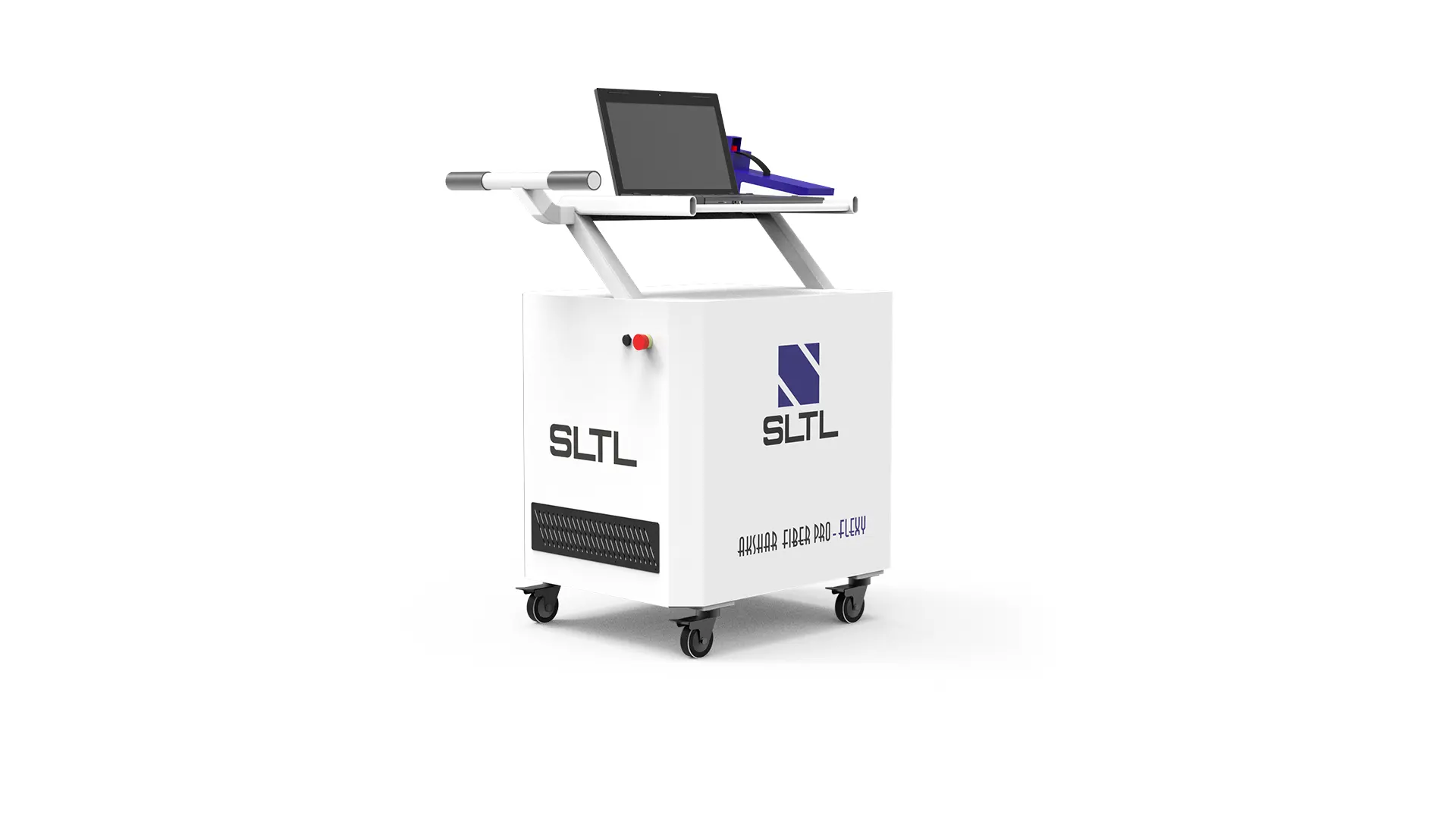
Aging tests for laser marking machines involve continuous operation under maximum load for 1,000+ hours. This evaluates thermal stability and long-term power consistency. Heat dissipation systems are monitored to prevent component degradation. Results ensure reliable performance in harsh industrial environments.
Beam analysis uses precision instruments to measure M² factor and spot size accuracy. Engineers validate beam uniformity and focus stability across varying power levels. Consistent beam parameters are critical for sharp, repeatable marks on different materials. Real-time monitoring ensures compliance with ISO 11146 standards.
Each machine undergoes multi-step quality checks before shipment. Power output is verified with calibrated sensors at multiple settings. Marking tests on steel, plastic, and aluminum assess depth and clarity consistency. Environmental stress tests simulate factory conditions to confirm reliability.
| Métrico | Old Methods (Mechanical/Chemical) | Low Cost Laser Marking Machine |
|---|---|---|
| Cost of Operation | High (tool replacement, chemical disposal) | Low (no consumables, minimal power) |
| Velocidad de marcado | Slow (mechanical friction limits) | High (up to 7,000 mm/s) |
| Precisión | 50-100 µm | 5-10 µm |
| Compatibilidad de materiales | Limited (material damage common) | Broad (metals, plastics, ceramics) |
| Impacto medioambiental | High (chemical waste, noise) | Low (no emissions, quiet operation) |
Principales características y ventajas
Klear Laser’s entry-level fiber marker keeps the bill of materials lean without cutting corners on the parts that determine beam quality. We specify a JPT LP series source because it gives 100 000 h MTBF—double the life of a pumped YAG—at a street price only a few percent above the cheapest Raycus. The compact head is a Sino-Galvo SG7110 with 0.01 mm repeatability and digital temperature compensation, so you get the same edge sharpness on 1 mm text that larger systems deliver at twice the price.
The 30 W model ships with an 110 × 110 mm F-theta lens ground from fused silica; swap one bolt and the field grows to 200 × 200 mm without realignment. A single 24 V rail feeds both the source and the scan head, eliminating the second PSU that budget competitors hide in the cabinet. That shaved 4 kg of copper and 30 W of idle loss, so the whole unit runs from a wall socket and pays for itself in electricity savings inside 14 months of 8 h shifts.
Because there is no water loop, the machine drops into a production cell for under 500 USD freight and plugs straight into a 15 A breaker. Operators can mark 3000 aluminum tags per hour at 600 mm s−1 without annealing the substrate, so the “low cost” tag refers only to the invoice, not to the result on your part.
| Componente | Klear 30 W Value Series | Typical Budget Unit | Ventaja |
|---|---|---|---|
| Fuente láser | JPT LP 30 W, 100 k h | Raycus 20 W, 50 k h | +50 % power, 2× service life |
| Beam Quality M² | <1,3 | <1.8 | Finer line width, 30 % faster |
| Cabezal de exploración | Sino-Galvo SG7110 | Generic 20 mm | 0.01 mm repeatability |
| Marking Field (std) | 110 × 110 mm | 100 × 100 mm | 21 % more area |
| Fuente de alimentación | Single 24 V rail | Dual PSU 24 V/12 V | −4 kg, −30 W idle loss |
| Refrigeración | Sólo aire | Sólo aire | Same, but no fan replacement |
| MTBF (source) | 100 000 h | 50 000 h | Half the downtime cost |
| Unit Price (FOB) | 3 290 USD | 2 990 USD | 10 % more, 2× life |
Aplicaciones industriales
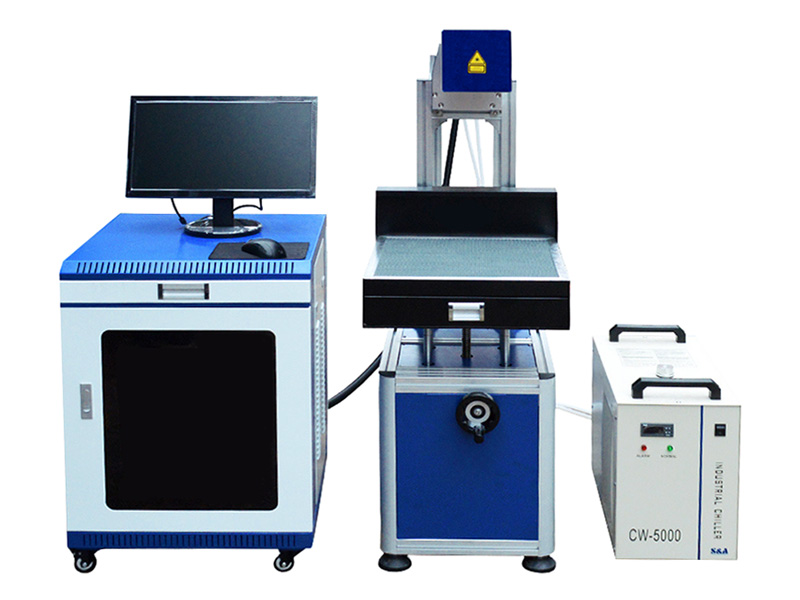
Low-cost laser marking machines have become essential tools in the automotive manufacturing sector for ensuring complete component traceability. Manufacturers utilize these compact fiber laser systems to engrave Data Matrix codes, VIN numbers, and serial codes directly onto engine blocks, transmission gears, and chassis components. The non-contact nature of the process ensures that hardened steel parts are marked permanently without the wear and tear associated with mechanical pin stamping.
In the aerospace industry, the primary application for these marking units involves the identification of flight-critical fasteners and avionics housings. Engineers prefer laser marking because it allows for high-contrast identification on anodized aluminum and titanium without compromising the structural integrity of the part. This method eliminates the need for chemical inks or adhesive labels that can degrade under extreme altitude and temperature changes.
Marine applications demand markings that can survive aggressive saltwater environments and constant UV exposure. Industrial laser markers achieve this by creating annealing marks on stainless steel hardware, which draws carbon to the surface to create a black mark without removing the protective oxide layer. This technique ensures that navigation equipment, deck fittings, and engine components remain identifiable throughout the vessel’s operational lifespan.
Applicable Materials and Laser Parameters
| Industria | Primary Material | Laser Source Recommendation | Interaction Type |
|---|---|---|---|
| Automoción | Carbon Steel / ABS Plastic | 20W-50W Fiber (Raycus) | Deep Engraving / Color Change |
| Aeroespacial | Titanium / Anodized Aluminum | 30W MOPA Fiber (JPT) | Surface Ablation / Black Marking |
| Marina | 316 Stainless Steel | 30W-60W Fiber (Raycus/JPT) | Annealing (Oxidation free) |
| General | Coated Metals / Brass | 20W Fiber | Coating Removal / Polishing |
Por qué elegir Klear Laser
Klear Laser provides industrial-grade support designed for minimal production downtime. Our global technical team delivers 24/7 remote diagnostics and on-site service with guaranteed 4-hour response times for critical failures. Customers receive process-specific guidance for applications like rust removal or wobble welding, ensuring optimal parameter settings for substrate safety and penetration depth. This proactive approach protects your operational continuity and maximizes machine uptime.
We back all systems with an industry-leading 36-month comprehensive warranty covering core components like JPT/Raycus laser sources and galvanometer heads. Unlike competitors, this includes critical wear items directly impacting welding precision or cleaning pulse width stability. The warranty ensures protection against manufacturing defects without voiding for standard industrial use cases. This reduces long-term risk and safeguards your investment against unexpected failure costs.
Spare parts availability is engineered for rapid resolution of maintenance needs. Genuine OEM components—from fiber delivery modules to UV printing nozzles—are stocked regionally for 48-hour global dispatch. Our parts database integrates with machine diagnostics to pre-identify required components during support calls. This logistics efficiency prevents extended production halts common with generic or delayed replacement parts.
| Support Feature | Láser Klear Estándar | Oferta típica de la competencia |
|---|---|---|
| Duración de la garantía | 36 meses | 12-24 meses |
| Cobertura de fuentes láser | Fully included | Often excluded or prorated |
| Critical Parts Dispatch | 48 horas | Entre 5 y 10 días laborables |
| Remote Diagnosis SLA | 4 hours | 24+ hours |
💰 ROI Calculator: Low Cost Laser Marking Machine
¿Está listo para mejorar su producción?
Póngase en contacto con Klear Laser para obtener soluciones industriales profesionales.