When selecting co2 laser fiber optic, always prioritize the laser source brand (JPT/Raycus) over raw wattage for long-term reliability.
Co2 Laser Fiber Optic: OEM & Customization
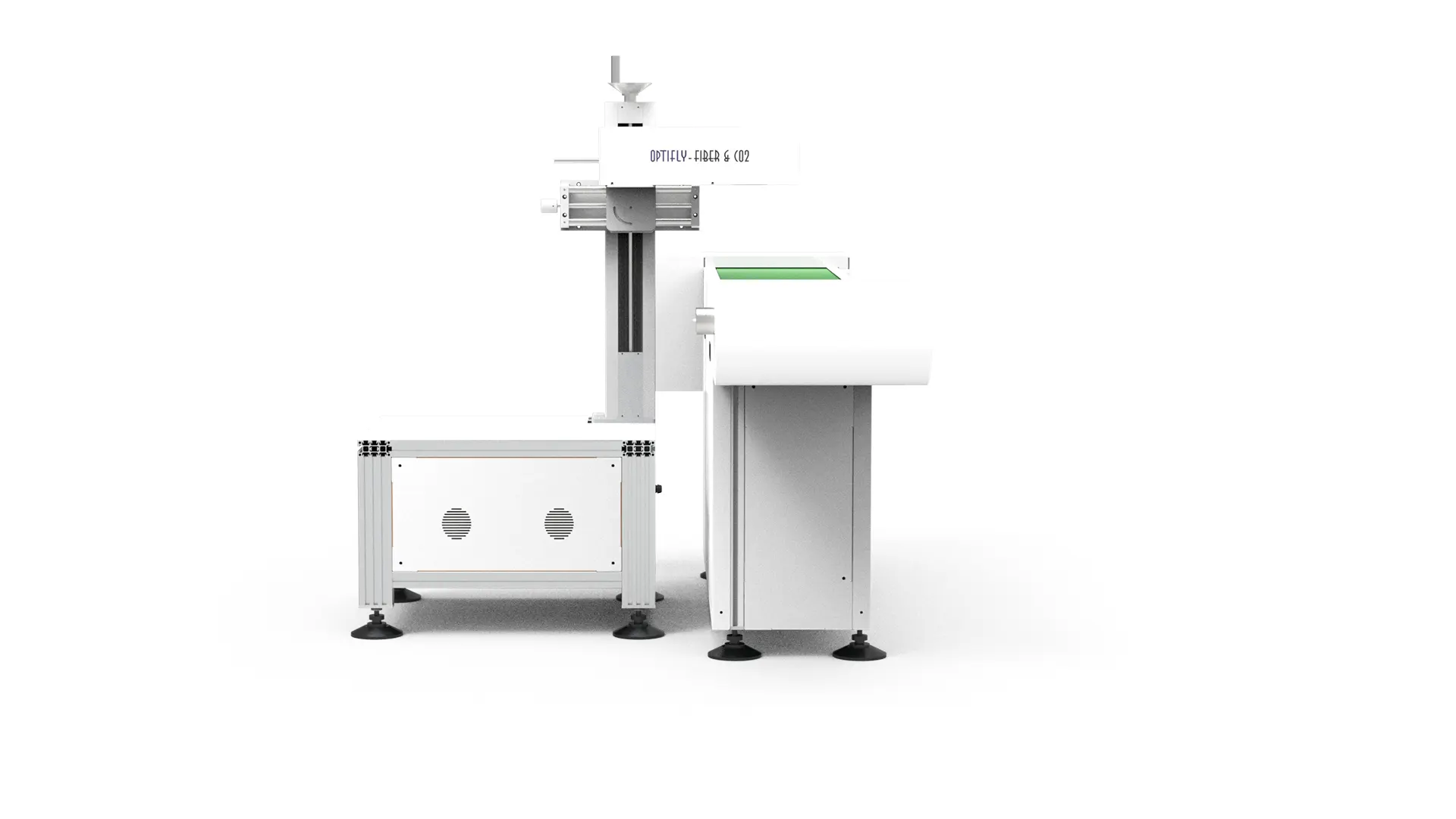
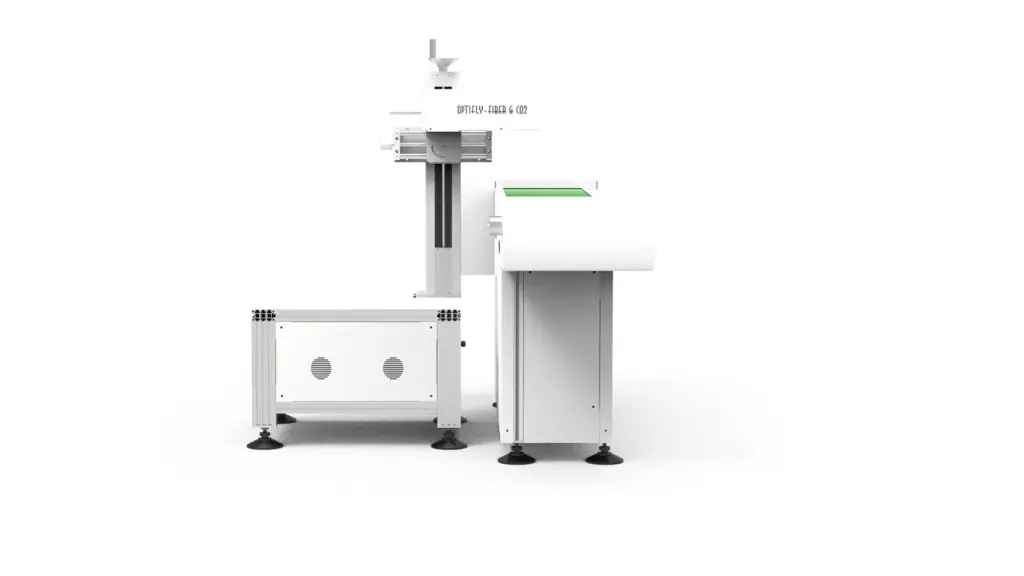
At Klear Laser, we customize chassis designs to match your production line’s footprint and automation needs. Each chassis is built from industrial-grade steel with modular access panels for easy maintenance. We tailor cable routing, cooling systems, and safety enclosures to suit specific factory environments.
Our software is fully customizable to integrate with PLCs, robotics, and factory IoT systems. We develop user interfaces based on operator skill levels, including touchscreens with real-time monitoring and error diagnostics. Parameters like pulse frequency, power curves, and cleaning speed are programmable and saveable per job profile.
Laser power is scaled precisely to application demands. For rust removal or paint stripping, we match average power (100W–2000W) and pulse width to substrate sensitivity. Our CO2 laser fiber optic systems use sealed-tube or RF-excited sources, allowing stable output with minimal maintenance compared to traditional CO2 lasers.
While traditional CO2 lasers rely on mirrors and free-space beam delivery, our CO2 fiber-coupled systems use waveguide integration for higher stability and alignment accuracy. This enables consistent focus over long distances, ideal for automated rust removal without damaging the base metal.
Below is a comparison of old rust removal methods and modern CO2 laser fiber optic technology:
| Característica | Old Methods (Blasting, Chemical) | CO2 Laser Fiber Optic System |
|---|---|---|
| Impacto medioambiental | High (waste, VOCs, water use) | Zero chemical waste, low energy use |
| Riesgo de daños en el sustrato | High (over-blasting, pitting) | Minimal (controlled ablation depth) |
| Compatibilidad con la automatización | Limitado | Full integration with robotics |
| Operating Cost (per m²) | High (consumables, disposal) | Low (no consumables, long tube life) |
| Precision & Selectivity | Bajo | High (adjustable pulse width, power) |
Principales características y ventajas
Klear Laser does not manufacture CO2 laser systems. CO2 lasers use gas discharge and mirror-based beam delivery, not fiber optics. Fiber lasers utilize doped optical fibers for beam generation and delivery. This common terminology confusion is technically inaccurate.
Klear Laser exclusively produces industrial fiber laser solutions for welding and cleaning. Our systems leverage advanced fiber optic components optimized for precision metal processing. This focus ensures superior efficiency and reliability compared to CO2 alternatives in modern manufacturing environments.
Below is a technical comparison highlighting key differences between fiber lasers and CO2 lasers:
| Característica | Fiber Laser | CO2 Laser |
|---|---|---|
| Beam Delivery | Flexible fiber optic cable | Rigid mirror optics |
| Longitud de onda | 1,060-1,080 nm | 10,600 nm |
| Electrical Efficiency | 25-35% | 10-15% |
| Metal Absorption | High (especially for steel) | Lower (requires higher power for metals) |
| Mantenimiento | Minimal (no mirrors/alignment) | Regular mirror cleaning and alignment |
Klear Laser’s fiber laser welding machines integrate JPT or Raycus sources with wobble heads for controlled penetration and consistent seam quality. For cleaning applications, pulsed fiber technology enables precise rust removal without substrate damage through optimized pulse width control. These features directly support our mission to eliminate traditional polluting processes.
Aplicaciones industriales
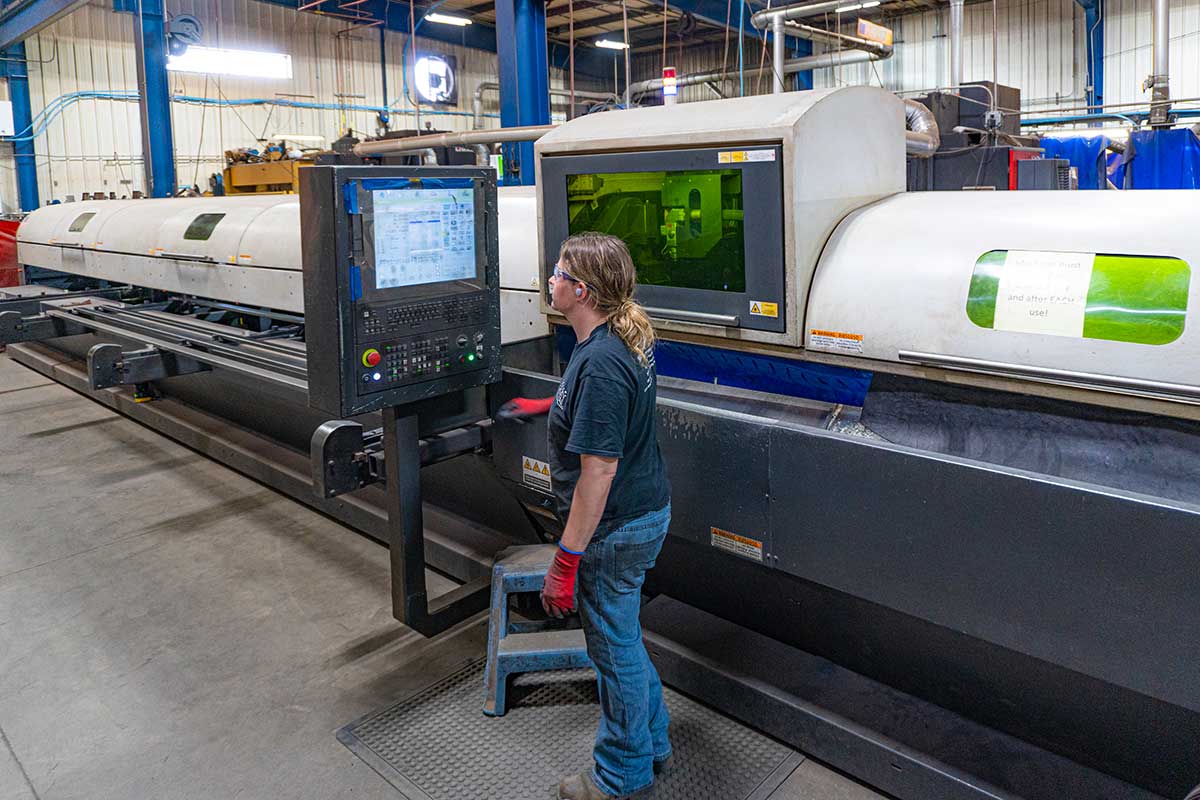
CO₂ laser energy cannot be delivered through a glass fiber; the 10.6 µm wavelength is absorbed by standard silica, so the resonator, bending mirrors, and processing head are linked by open-air mirrored beam paths or articulated arms.
That physical limitation keeps CO₂ systems out of most on-robot and hand-held jobs in auto, aerospace and marine plants, but the source is still valued wherever the task needs a long infrared absorption fingerprint that fiber lasers (1 µm) do not provide.
In automotive you will therefore find CO₂ beams trimming airbag films, scoring dashboard tear seams, and cutting natural-fiber interior panels where the polymer matrix chars less than with a 1 µm beam.
Tier-1 suppliers also use flying-optic CO₂ cells to ablate paint prior to conductive glue placement on panoramic roof bus bars, because the process leaves no copper oxide and avoids the weld spatter risk of a fiber pulse cleaner.
Aerospace plants keep 5-axis CO₂ gantries busy cutting aramid/PEEK thermal insulation blankets, profiling cargo-liner silicone foams, and drilling micro-perforations in titanium-honeycomb acoustic liners; the long wavelength vaporises the resin without the fibre pull-out seen at 1 µm.
MRO stations likewise rely on kilowatt CO₂ heads to strip polyurethane topcoats from composite rotor blades: one pass penetrates the coating while the carbon substrate barely rises 40 °C, eliminating the need for chemical baths that can wick into the laminate.
Marine applications centre on 2-6 kW CO₂ systems in shipyards that cut 20 mm plywood templates for composite hull moulds and raster-engrave anti-slip patterns on teak decks; the beam chars the wood surface into a dark, water-resistant carbon layer that lasts longer than a mechanical groove.
Yards also use low-power sealed CO₂ tubes to mark stainless hose tags and cable trays with CerMark, giving salt-spray-resistant black legends without the metal penetration risk of a fiber mark.
Typical materials matched to CO₂ absorption and common transport industry uses:
| Material class | 10.6 µm absorption | Auto use | Aplicaciones aeroespaciales | Uso marítimo |
|---|---|---|---|---|
| Polymer films (PET, PP) | Very high | Airbag slicer, dash tear seam | Fuel-tank damping patch shape | Radar-window spacer |
| CFRP/GFRP epoxy | High (resin) | — | Acoustic liner drill, seat shell trim | — |
| Aramid felt / PEEK veil | Alta | — | Thermal barrier cut | — |
| Wood / teak | Alta | — | Interior veneer in VIP jets | Deck engraving, plywood template |
| Silicone foam | Very high | Seal gasket profiling | Cargo-liner cushions | — |
| Polyurethane paint | Alta | Glue area cleaning | Radome strip | Topside paint removal (MRO) |
| Titanium honeycomb | Medium (oxide stop) | — | Liner perforation | — |
| Copper bus bar | Low (indirect via paint) | Paint ablate for gluing | — | — |
Por qué elegir Klear Laser
Industrial manufacturing requires equipment that minimizes downtime and maximizes throughput. Klear Laser understands that shifting from legacy CO2 systems to fiber optic technology represents a significant capital investment. Our support infrastructure is built to ensure your JPT or Raycus laser sources maintain peak performance levels throughout their operational lifespan.
We provide a comprehensive warranty that reflects the reliability of solid-state fiber lasers compared to fragile gas tubes. This coverage extends to critical components such as the laser source module and the active wobble welding head or cleaning galvanometer. You receive financial protection and technical assurance that aligns with the heavy-duty cycles of industrial production.
Maintenance teams often struggle with the complex mirror alignment and gas replenishment required by traditional CO2 lasers. Klear Laser simplifies this by stocking essential fiber laser consumables like protective windows, copper nozzles, and locking rings for immediate dispatch. We ensure your maintenance department has rapid access to specific parts needed to keep the beam delivery system functioning at optimal energy density.
Our technical support team is comprised of engineers who understand the physics of fiber optic delivery and material interaction. We troubleshoot issues ranging from software parameter settings to hardware diagnostics without reading from a generic script. You gain a partner dedicated to replacing polluting, high-maintenance workflows with clean, reliable laser precision.
| Característica | Legacy CO2 Laser Support | Klear Laser Fiber Optic Support |
|---|---|---|
| Beam Delivery Maintenance | High; requires frequent mirror cleaning and complex optical path alignment. | Zero; utilizes a flexible, maintenance-free fiber optic cable delivery system. |
| Source Warranty | Limited; glass tubes often have short warranties (6-12 months) due to degradation. | Extended; solid-state sources (JPT/Raycus) typically carry 2+ year coverage. |
| Consumibles necesarios | High cost; requires laser gases, mirrors, and frequent lens replacements. | Low cost; primarily requires protective cover slides and nozzle tips. |
| Eficiencia energética | Low; wall-plug efficiency is often below 10%, increasing operational overhead. | High; wall-plug efficiency exceeds 30%, significantly reducing power requirements. |
| Cooling Requirements | Heavy; requires large chillers to manage significant waste heat. | Moderate; integrated water or air cooling is sufficient for high-power fiber units. |
💰 ROI Calculator: Co2 Laser Fiber Optic
¿Está listo para mejorar su producción?
Póngase en contacto con Klear Laser para obtener soluciones industriales profesionales.