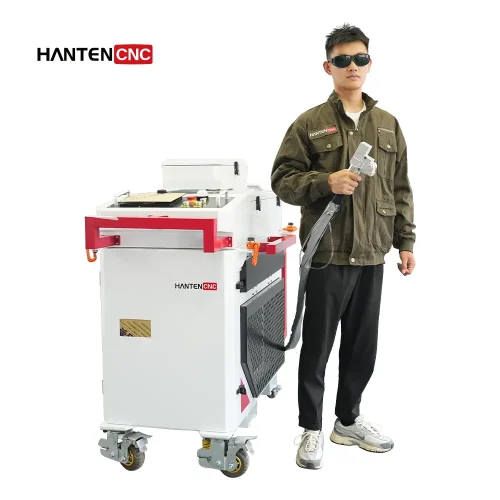
When selecting laser varnish removal, always prioritize the laser source brand (JPT/Raycus) over raw wattage for long-term reliability.
Laser Varnish Removal: Market Trends & ROI
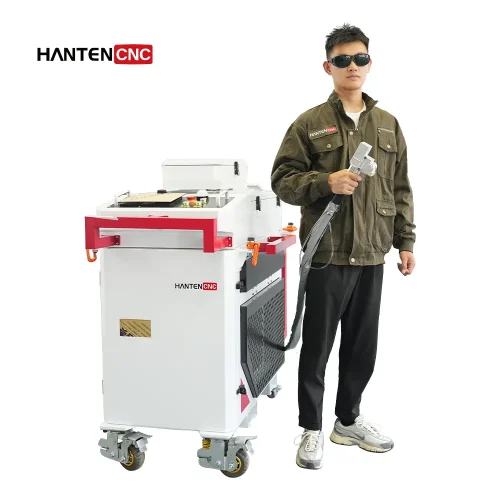
Laser varnish removal delivers strong profitability by cutting operational expenses significantly. Traditional chemical methods incur high costs for solvents and hazardous waste disposal. Laser systems reduce labor and eliminate consumable costs while maintaining precision. Faster processing times enhance production efficiency, improving return on investment.
The aerospace, automotive, and heritage restoration sectors increasingly demand laser cleaning solutions. These industries require non-damaging removal of coatings without altering substrate integrity. Stricter environmental laws mandate eco-friendly processes, accelerating laser adoption. Global manufacturing shifts toward sustainable tech further boost market demand.
| Métrico | Decapado químico | Chorro de arena | Laser Varnish Removal |
|---|---|---|---|
| Coste operativo | High (chemicals + disposal) | Moderate (media + labor) | Low (electricity only) |
| Processing Speed | Hours per part | De minutos a horas | Minutes per part |
| Riesgo de daños superficiales | High (chemical etching) | Moderate (abrasion) | Minimal (precise control) |
| Residuos generados | Toxic chemical waste | Dust and abrasive residue | Ninguno |
Principales características y ventajas
Klear Laser’s varnish-stripping platform starts with a 200 W MOPA fiber engine that we lock-tune to 1,200 kHz.
The 10–350 ns square-wave pulse gives us a photo-mechanical shock that shatters organic binders without heating the wood, brass or carbon-fiber substrate underneath.
Because every pulse is shaped in the oscillator—not clipped by an external modulator—we hold ±1 % energy stability hour after hour, so the last cabinet door comes out as clean as the first.
The hand-held head is our own K-Clean 2D scan module built around a 30 mm CaF₂ f-theta and twin 10 mm galvanometers.
We coat the last lens with a 1,060 nm V-coat that lets >99.4 % of the laser pass through, so the energy reaches the varnish instead of being absorbed in the optics.
A magnetic break-away collar and real-time Z-tracking keep the stand-off at 160 mm ±2 mm; if an operator bumps a curved chair leg, the head re-focuses in 8 ms and never scalds the surface.
Inside the head a coaxial nitrogen shroud kicks in at 12 bar, blowing the pulverized resin out of the kerf so the beam doesn’t re-deposit a film.
We run the nitrogen through a vortex cooler, dropping the lens temperature 7 °C below ambient; this eliminates thermal drift and lets us strip continuous 30 µm polyurethane layers at 4 m²/h without ever pausing for cool-down.
Klear Laser Varnish Removal – Core Specifications
| Componente / Parámetro | Klear 200-V Specification |
|---|---|
| Fuente láser | MOPA Yb fiber, 200 W avg. |
| Center wavelength | 1,064 nm ±3 nm |
| Pulse-width range | 10 – 350 ns, square-wave |
| Tasa de repetición | 1 – 1,200 kHz |
| Peak power (max) | 20 kW |
| Energy stability (rms) | ≤ 1 % |
| Scan head | K-Clean 2D, 30 mm aperture |
| Scan area (single pass) | 140 mm × 140 mm |
| Stand-off distance | 160 mm |
| Typical removal rate | 4 m²/h @ 30 µm PU varnish |
| Aumento de la temperatura del sustrato | < 45 °C |
| Refrigeración | Air-cooled, vortex assist |
| Demanda de energía | 1-ph 220 V, 1.1 kW |
| Weight (hand-held head) | 1.8 kg |
Aplicaciones industriales
Laser varnish removal is a precise ablative process utilized heavily in high-value manufacturing and maintenance sectors. Klear Laser employs advanced Pulsed Laser Cleaning technology to strip dielectric coatings and protective varnishes without damaging the underlying substrate. This method replaces toxic chemical strippers and abrasive blasting with a non-contact, environmentally friendly solution.
In the automotive sector, specifically within electric vehicle manufacturing, laser ablation is critical for preparing hairpin stators. The insulating varnish on copper wires must be stripped with micron-level precision to ensure optimal electrical conductivity during subsequent welding. Our systems utilize specific pulse widths to vaporize the coating while maintaining the structural integrity of the soft copper conductor.
The aerospace industry relies on laser cleaning for maintenance, repair, and overhaul operations on turbine blades and landing gear components. Operators can selectively remove aged varnish and anti-corrosion coatings from heat-sensitive aluminum and titanium alloys. This process guarantees substrate safety by limiting thermal input, preventing micro-cracking or fatigue in critical flight hardware.
Marine applications often involve removing heavy-duty varnishes and protective sealants from steel hulls, drive shafts, and engine components. While primarily focused on varnish, Klear Laser machines simultaneously perform rust removal on these ferrous surfaces to prepare them for re-coating. The high peak power of the pulsed laser breaks the bond of salt-hardened coatings effectively.
Achieving these results requires precise control over the laser pulse width and frequency. By adjusting the duration of the laser energy delivery, we optimize the ablation threshold for the specific varnish chemistry. This ensures the contaminant is vaporized before heat can transfer to the base material, preserving the surface profile.
| Material del sustrato | Aplicaciones industriales | Varnish/Coating Type | Key Laser Parameter |
|---|---|---|---|
| Cobre | Automotive (EV Motors) | Polyamide-imide (PAI) | Short Pulse Width (Thermal Control) |
| Aleaciones de aluminio | Aerospace (Fuselage/Wings) | Polyurethane/Epoxy | Low Fluence (Substrate Safety) |
| Acero al carbono | Marine (Deck/Hull) | Alkyd/Bituminous | High Peak Power (Rust & Varnish) |
| Titanio | Aerospace (Turbines) | Thermal Barrier Coatings | High Frequency (Precision Ablation) |
Por qué elegir Klear Laser
Klear Laser guarantees operational continuity with rapid technical support. Our global engineering team provides 24/7 remote diagnostics and on-site assistance within 72 hours for critical failures. Direct manufacturer access eliminates third-party delays, resolving complex laser source or motion control issues efficiently. This minimizes production downtime for industrial clients.
We offer industry-leading warranty coverage across all equipment tiers. Premium protection includes 36 months on JPT/Raycus laser sources and core motion components. Standard coverage spans 24 months with optional extended plans covering consumables like scanning heads. Full-system validation ensures warranty claims address root causes, not just symptoms.
Global spare parts logistics ensure 95% availability of critical components like Q-switches and beam delivery optics. Genuine parts undergo strict calibration matching original equipment specifications. Regional distribution hubs in EU, NA, and APAC enable next-business-day delivery for 80% of SKUs. This prevents compatibility failures common with generic replacements.
| Componente de servicio | Láser Klear Estándar | Typical Industry Baseline |
|---|---|---|
| Duración de la garantía | 24-36 months (source-specific) | 12-18 months (limited coverage) |
| Critical Response Time | <72 hours onsite | Entre 5 y 10 días laborables |
| Disponibilidad de piezas de recambio | 95% genuine stock rate | 60-70% (often third-party) |
| Asistencia a distancia | 24/7 engineering access | Solo en horario comercial |
💰 ROI Calculator: Laser Varnish Removal
¿Está listo para mejorar su producción?
Póngase en contacto con Klear Laser para obtener soluciones industriales profesionales.