When selecting what does a jewelry welders do, always prioritize the laser source brand (JPT/Raycus) over raw wattage for long-term reliability.
What Does A Jewelry Welders Do: OEM & Customization
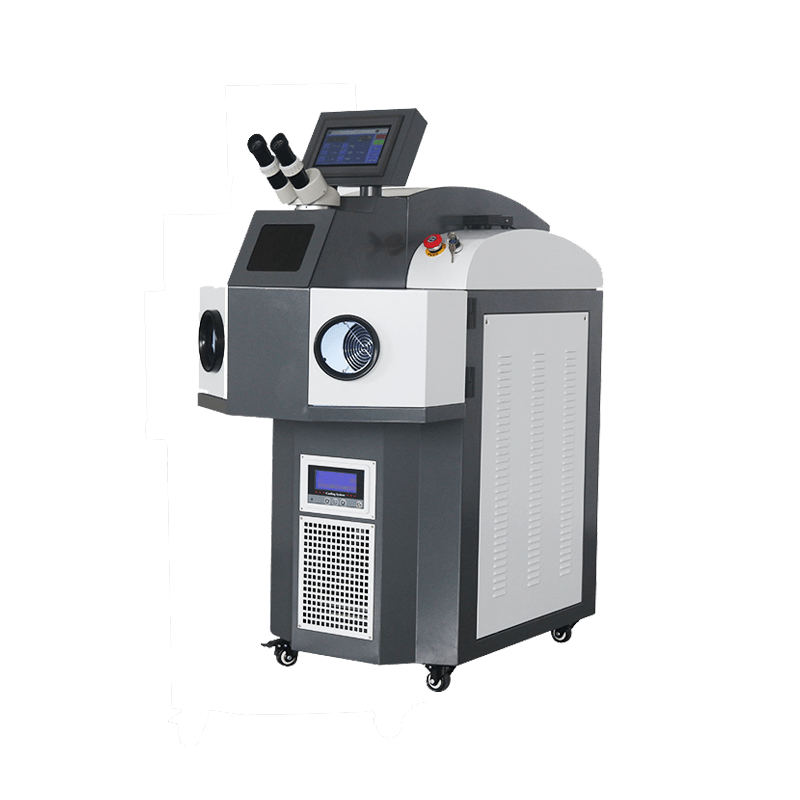
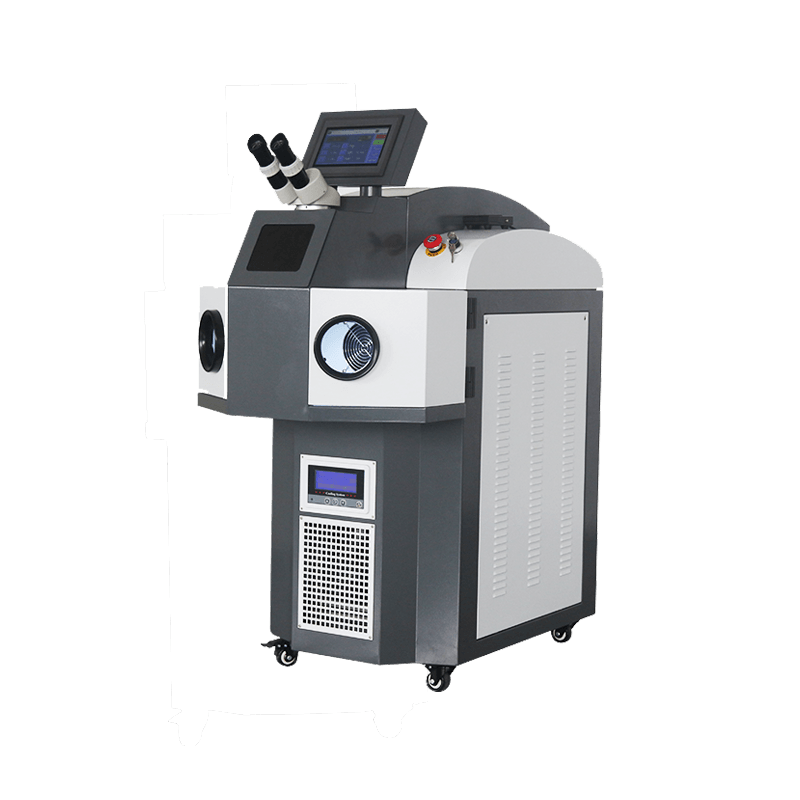
A jewelry welder utilizes concentrated photonic energy to fuse precious metals such as gold, silver, and platinum with microscopic precision. This process creates a hermetic seal and deep weld penetration without transferring excessive heat to the surrounding material or damaging heat-sensitive gemstones. Unlike traditional torch methods, the laser beam allows for the joining of dissimilar metals and thin-walled components that would otherwise deform under thermal stress.
Klear Laser engineers these systems using premium JPT or Raycus fiber laser sources to ensure exceptional beam quality and operational longevity. These sources provide the stable energy output required to maintain consistent pulse-to-pulse stability during intricate tasks. We integrate advanced wobble welding heads that oscillate the beam, effectively bridging gaps in the workpiece and creating a smooth, aesthetically pleasing seam that requires minimal post-processing.
We customize the machine chassis to accommodate the specific ergonomic and spatial requirements of your production facility. Whether you require a compact benchtop enclosure for a retail environment or a robust, automated standing unit for high-volume manufacturing, we fabricate the structure to ensure stability and safety. This mechanical customization ensures that the optical path remains aligned even in vibrating industrial environments.
Our team modifies the control software to offer precise management over pulse frequency, wave shape, and peak power. This allows operators to save specific parameter libraries for different alloys, ensuring the weld penetration depth is perfectly calibrated for the material thickness. Advanced software features enable the synchronization of the laser output with automated motion systems for complex, repeatable geometries.
We scale the laser power configuration based on the specific throughput needs and material density of your application. While a lower wattage source suffices for fine filigree and tacking, we can upgrade the system to higher power outputs for casting repairs and deep structural welding. This power customization ensures you achieve the necessary energy density for rapid fusion without incurring unnecessary energy costs.
| Fonctionnalité | Traditional Torch Soldering | Laser Jewelry Welding |
|---|---|---|
| Zone affectée par la chaleur (HAZ) | Large area spreads heat to stones and settings. | Microscopic HAZ protects adjacent areas and gems. |
| Filler Material | Requires solder and flux to join parts. | Autogenous welding often requires no filler or flux. |
| Precision Level | Low precision relying on manual dexterity. | Micron-level precision controlled by optics. |
| Post-Weld Cleanup | Significant oxidation and flux residue removal needed. | Clean, bright welds with minimal oxidation. |
| Vitesse | Slow heating and cooling cycles. | Instantaneous fusion and rapid cooling. |
Principales caractéristiques et avantages
Klear Laser jewelry welders precisely fuse precious metals without filler material. They use pulsed fiber lasers to deliver controlled energy bursts for micro-welds on delicate settings and chains. Minimal heat input prevents stone damage and component warping common with torch welding. This enables repair and assembly impossible with traditional methods.
Our systems utilize premium JPT or Raycus pulsed fiber laser sources with MOPA technology. These provide unmatched pulse duration control from 5ns to 2ms for optimal melt pool management on gold, platinum, or silver. Fine-tuned parameters ensure deep penetration without spatter or porosity in thin sections. This precision eliminates rework and material waste in high-value pieces.
The integrated wobble welding head dynamically oscillates the laser beam at high frequencies. This technique bridges gaps up to 0.1mm and creates uniform seams on uneven joints common in cast jewelry. It distributes heat evenly, preventing localized overheating while achieving stronger metallurgical bonds. Single-pass welding replaces multiple manual touch-ups required by conventional lasers.
Key technical advantages over standard jewelry lasers are demonstrated in component specifications:
| Fonctionnalité | Standard Jewelry Laser | Les avantages de Klear Laser |
|---|---|---|
| Source laser | Fixed-pulse fiber | JPT MOPA (5ns-2ms control) |
| Qualité du faisceau (M²) | >1.8 | ≤1.3 for 0.01mm precision |
| Wobble Capability | Aucun | 500Hz max frequency |
| Énergie d'impulsion | ≤30J | Up to 120J at 1kHz |
| Taille du spot | ≥50µm | Adjustable 20-100µm |
This component synergy delivers superior weld penetration consistency and surface finish on complex 3D jewelry structures. The system maintains substrate integrity even when working near heat-sensitive gemstones or thin foils. Industrial-grade reliability ensures stable output for high-volume workshop production.
Applications industrielles
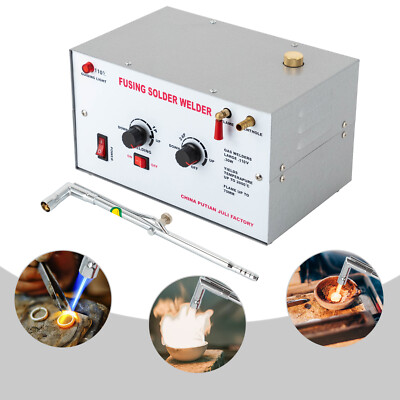
Jewelry-grade laser welders deliver precision micro-welding capabilities to industrial sectors demanding exact control over heat input and minimal distortion. These systems operate at lower power ranges (typically 100-200W) while maintaining exceptional beam quality for intricate work on small-scale components. The technology originally developed for precious metal fabrication now serves critical applications across automotive, aerospace, and marine manufacturing.
Automotive manufacturers deploy precision laser welders for sensor housings, fuel injector components, and battery terminal connections where conventional welding introduces excessive thermal stress. These systems achieve penetration depths of 0.1-1.5mm with JPT fiber sources providing stable, repeatable pulse characteristics essential for high-volume production. Wobble welding heads enhance joint quality by oscillating the beam to bridge minor gaps and improve fusion in dissimilar metal combinations.
Aerospace applications leverage this technology for turbine blade cooling hole repairs, fuel nozzle assemblies, and avionics enclosure sealing where material integrity cannot be compromised. The narrow heat-affected zone preserves the mechanical properties of titanium and nickel superalloys critical to flight safety. Raycus fiber lasers integrated with microscopic focusing optics enable weld widths as fine as 50 microns on components requiring absolute precision.
Marine environments demand corrosion-resistant welds on stainless steel sensors, titanium instrumentation, and bronze propulsion system components exposed to saltwater immersion. Precision laser welding creates sealed joints that maintain IP68 ratings while avoiding the contamination risks of traditional TIG processes. The controlled energy input prevents sensitization in 300-series stainless steels, preserving intergranular corrosion resistance.
| Secteur d'activité | Catégorie de matériaux | Common Grades | Application Examples |
|---|---|---|---|
| Automobile | Acier inoxydable | 304L, 316L | Fuel rail sensors, exhaust gas monitors |
| Automobile | Alliages de cuivre | C11000, C18200 | Battery busbars, connector terminals |
| Aérospatiale | Alliages de titane | Ti-6Al-4V, Grade 5 | Hydraulic fittings, pressure transducers |
| Aérospatiale | Superalliages à base de nickel | Inconel 718, Hastelloy X | Turbine blade repairs, combustion liners |
| Marine | Acier inoxydable | 316Ti, Duplex 2205 | Submersible instrumentation housings |
| Marine | Alliages d'aluminium | 5083, 6061-T6 | Corrosion-resistant electronic enclosures |
Modern jewelry welder platforms feature adjustable wobble heads that expand the effective weld width by 0.2-2.0mm while maintaining centerline penetration, crucial for bridging manufacturing tolerances in machined components. JPT single-mode fiber sources provide beam quality M² <1.3, ensuring optimal focusability for micro-welds on thin-walled tubes and delicate assemblies. These systems integrate coaxial vision systems for real-time positioning accuracy within ±5 microns, enabling automated production of safety-critical components across all three industrial sectors.
Pourquoi choisir Klear Laser
Assistance
Klear Laser delivers 24/7 technical support for all equipment. Our expert engineers provide immediate troubleshooting via remote diagnostics and on-site service. This minimizes production downtime and ensures continuous operation for critical industrial processes.
Garantie
We stand behind our technology with industry-leading warranties. Coverage includes all critical components, labor, and performance guarantees. Extended options are available for maximum asset protection.
Pièces détachées
Genuine Klear Laser spare parts are always in stock for fast shipping. Our parts program ensures compatibility and performance, extending equipment lifespan. Avoid downtime with proactive maintenance and genuine replacements.
| Couverture de la garantie | Durée de l'accord | Avantages |
|---|---|---|
| Core laser sources (JPT/Raycus) | 2-3 years | Full replacement, proven reliability |
| Wobble heads & optics | 1-2 years | Precision maintenance, zero downtime |
| Control systems | 1 year | Software updates, technical training |
💰 ROI Calculator: What Does A Jewelry Welders Do
Prêt à améliorer votre production ?
Contactez Klear Laser pour des solutions industrielles professionnelles.