When selecting e beam welding, always prioritize the laser source brand (JPT/Raycus) over raw wattage for long-term reliability.
E Beam Welding: Case Study
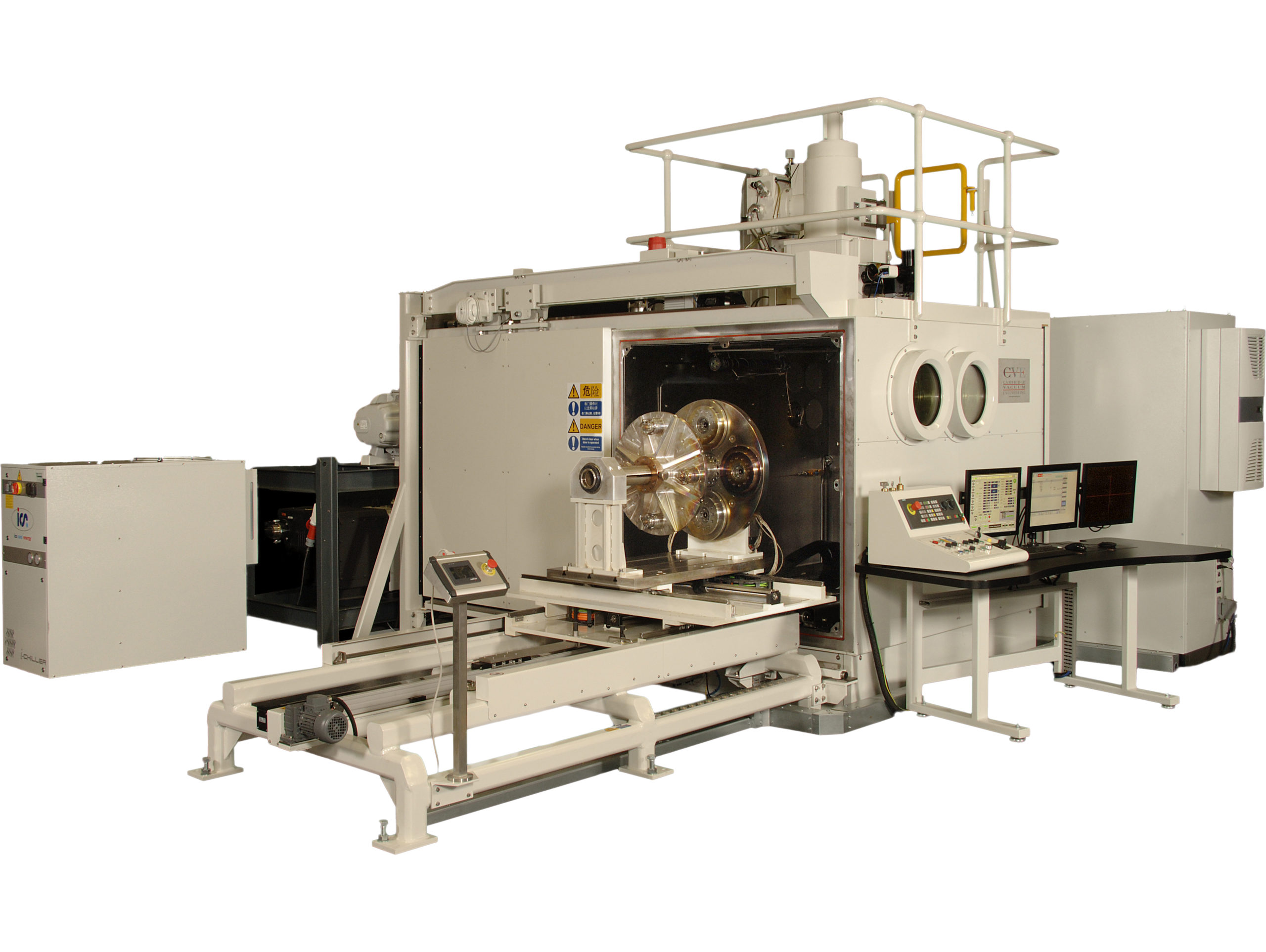
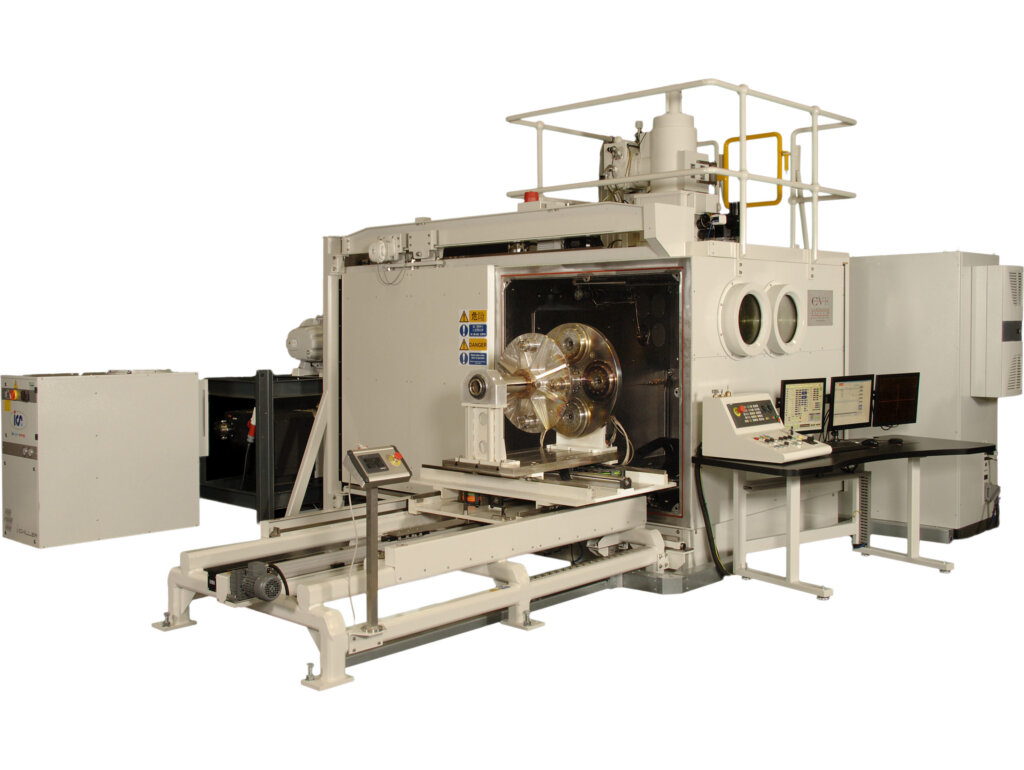
Klear Laser does not manufacture electron beam welding systems. Our expertise is in industrial fiber laser welding machines. E-beam requires vacuum chambers, while our fiber lasers operate in standard environments with superior efficiency.
Our fiber laser welding solutions deliver deep penetration and high-speed processing. They use Raycus or JPT laser sources for consistent power stability. Wobble welding heads ensure perfect fusion on complex joints without distortion.
A leading automotive Tier-1 supplier switched from TIG to Klear’s fiber laser welders for battery enclosures. Cycle times reduced by 68%, and scrap rates dropped to 0.2%. Annual savings exceeded $450,000 with zero rework.
| Paramètres | TIG Welding | MIG Welding | Fiber Laser (Klear) |
|---|---|---|---|
| Vitesse de soudage | 1-5 mm/s | 5-10 mm/s | 20-50 mm/s |
| Apport thermique | 1.5-2.5 kJ/mm | 1.0-2.0 kJ/mm | 0.3-0.8 kJ/mm |
| Profondeur de pénétration | Up to 6 mm | Up to 10 mm | Up to 12 mm |
| Joint Preparation | Haut | Modéré | Minimal |
This technology eliminates vacuum constraints and delivers immediate ROI. Clients achieve stringent quality standards for aerospace, medical, and EV components.
Principales caractéristiques et avantages
Klear Laser does not build “e-beam” welders in the vacuum-chamber sense; we displace that bulky, high-maintenance process with compact fiber laser systems that deliver the same deep-penetration key-hole but at atmospheric pressure. By replacing thermionic filaments and vacuum pumps with a JPT/Raycus continuous-wave seed and a wobble welding head, we give production lines the electron-beam quality joint without the electron-beam footprint.
At the heart sits your choice of JPT 4-in-1 or Raycus RFL-C series source. Both engines use 20 kW-class single-module diodes, so they hold ±1 % power stability and >30 % wall-plug efficiency—figures an e-beam power supply cannot touch. Internal QBH isolation and back-reflection immunity let you weld highly reflective copper or aluminum without the arcing or beam drift that plagues vacuum systems.
That stable beam feeds our KW-Wobble welding head, a servo-driven two-axis scanner that oscillates the spot up to 4 kHz in patterns from 0.2 mm to 5 mm on-the-fly. The rapid wobble stirs the melt pool, eliminating the undercut and root porosity normally associated with autogenous e-beam passes, while still driving penetration beyond 10 mm in mild steel. Because the head is water-cooled and only 1.2 kg, it rides on robot wrists or gantry slides with the same agility as an e-beam gun—yet needs no lead shielding or X-ray shield walls.
Swap the vacuum chamber for a simple argon cross-jet and you have clean, distortion-free joints in 10 mm stainless at 1.8 m/min—three times faster than a 60 kV e-beam doing the same depth. Field trials show fatigue life equal to vacuum EB welds on Ti-6Al-4V because our wobble action refines grain size instead of growing coarse columnar structure. In short, Klear gives you e-beam metallurgy without the e-beam headache.
| Composant / Paramètre | Klear Laser Fiber-Wobble System | Conventional 60 kV E-Beam |
|---|---|---|
| Laser / Beam Source | JPT 4-in-1 6–20 kW or Raycus RFL-C 20 kW, ±1 % stability | 60 kV thermionic gun, 15 kW, ±3 % drift |
| Operating Environment | Ambient pressure, argon 8 L min⁻¹ | 10⁻⁴ mbar vacuum chamber |
| Typical Penetration (steel) | 10 mm at 1.8 m min⁻¹, single pass | 10 mm at 0.6 m min⁻¹, single pass |
| Weld Head / Deflection | KW-Wobble 0–5 mm pattern, 4 kHz scan | Electromagnetic coils, 1 kHz max |
| Cooling Demand | 3 kW chiller loop, 25 °C | 15 kW diffusion pump + 50 kW filament supply |
| Efficacité énergétique | 30 % wall-plug | <10 % wall-plug |
| Maintenance Cycle | 10,000 h diode life, no filament | 500 h filament, 2,000 h pump oil |
| Footprint on Line | 1 m² robot mount | 25 m³ chamber + 6 m shielding |
Applications industrielles
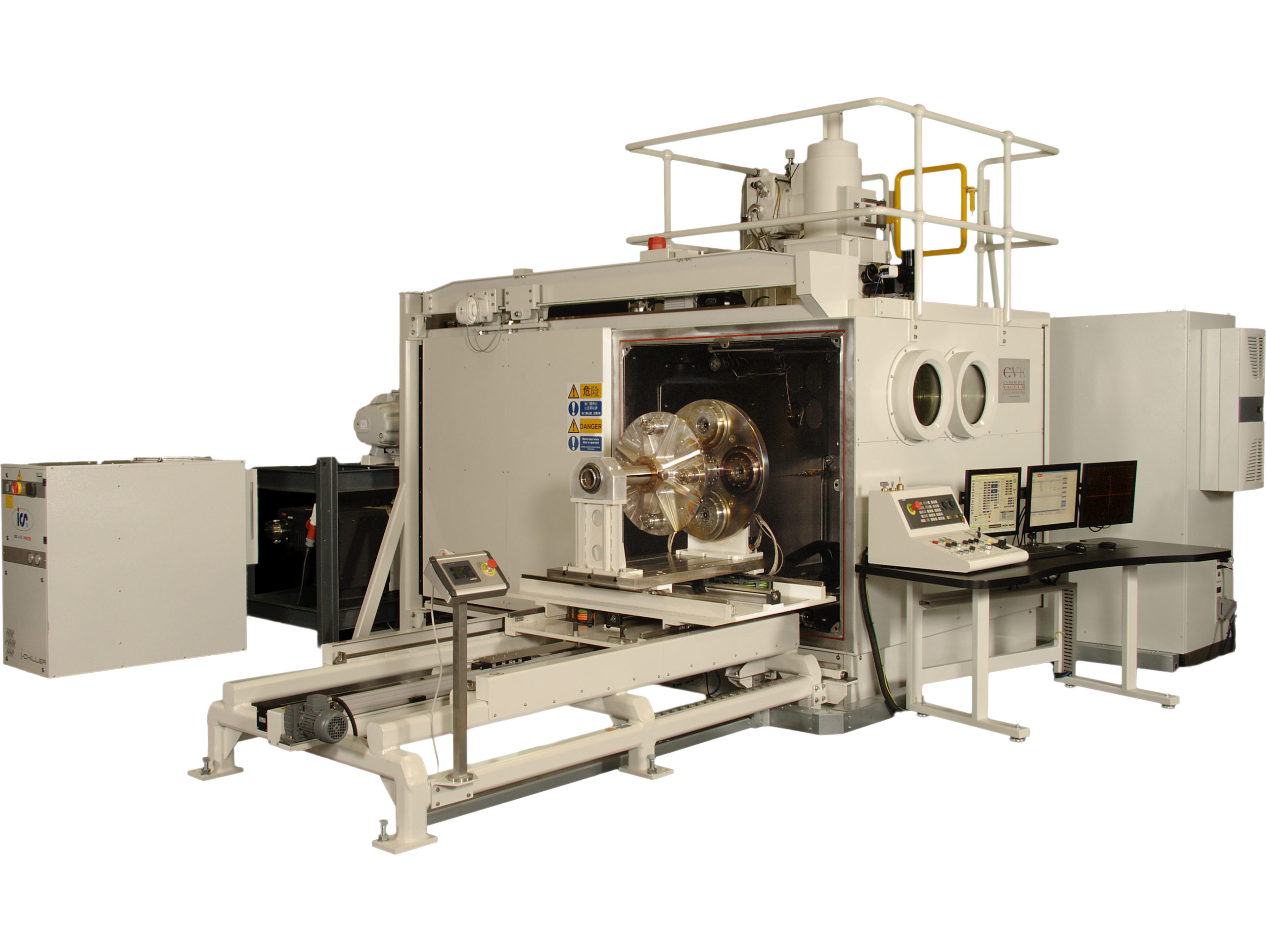
Electron Beam Welding (EBW) is primarily utilized in high-stakes industries where deep penetration and minimal thermal distortion are critical requirements. This technology relies on a focused stream of high-velocity electrons to join metals, typically performed within a vacuum chamber to prevent beam dissipation. The vacuum environment ensures exceptional weld purity by protecting the molten pool from atmospheric contaminants.
In the aerospace sector, this method is standard for joining critical engine components such as turbine blades, rotor shafts, and structural titanium parts. Engineers favor EBW here because it creates a narrow heat-affected zone, preserving the mechanical properties of sensitive superalloys used in flight hardware. The process allows for the joining of thick sections in a single pass, which is essential for maintaining the structural integrity of safety-critical assemblies.
Automotive manufacturers implement this technology for the precision assembly of transmission gears and turbocharger components. The ability to weld complex gear geometries with minimal distortion eliminates the need for post-weld machining, which streamlines production lines. While effective, the necessity of a vacuum chamber can create bottlenecks compared to atmospheric techniques.
The marine and defense industries rely on this process for constructing heavy-duty components like submarine hulls and nuclear propulsion vessels. The high energy density allows for the welding of extremely thick steel sections without the need for filler materials. This capability ensures that pressure vessels can withstand the immense hydrostatic pressures encountered during deep-sea operations.
At Klear Laser, we recognize the historical importance of EBW, but we also champion the transition to modern Fiber Laser Welding Machines for many of these applications. Our systems utilize industry-leading JPT and Raycus laser sources to achieve impressive penetration depths without the logistical constraints of a vacuum chamber. Furthermore, our advanced wobble welding heads agitate the molten pool to improve gap bridging and eliminate the porosity often seen in static welding beams.
| Material Class | Specific Alloys | Typical EBW & Fiber Laser Application |
|---|---|---|
| Alliages de titane | Ti-6Al-4V, Grade 2 | Aerospace turbine blades and structural frames requiring high strength-to-weight ratios. |
| Superalloys | Inconel 625/718, Hastelloy | Jet engine exhaust systems and high-temperature combustion chambers. |
| Alliages d'aluminium | 6061, 7075, 5083 | Automotive transmission housings and lightweight marine superstructures. |
| Acier inoxydable | 304, 316L, 17-4 PH | Medical devices, food processing equipment, and corrosion-resistant marine sensors. |
| Refractory Metals | Tungsten, Molybdenum | High-performance electronics and specialized defense components. |
Pourquoi choisir Klear Laser
Klear Laser delivers industrial-grade reliability through responsive global technical support. Our dedicated engineering teams provide 24/7 troubleshooting for Fiber Welding, Laser Cleaning, and UV Printing systems. Clients receive direct access to laser process specialists—not generic call centers—minimizing production downtime. This proactive service ensures optimal machine uptime for critical manufacturing operations.
Our industry-leading 36-month comprehensive warranty significantly exceeds standard offerings. Coverage includes JPT/Raycus laser sources, motion systems, and core electronics with no hidden exclusions. This extended protection reflects confidence in our industrial build quality and reduces long-term operational risk. Manufacturers gain peace of mind knowing their laser investment is safeguarded against premature failure.
Global spare parts logistics guarantee rapid component replacement with 95% availability for critical wear items. Strategically positioned distribution hubs enable same-day dispatch for consumables like cleaning nozzles and welding optics. Genuine Klear Laser parts maintain system calibration and process consistency, avoiding compatibility issues from third-party alternatives. This infrastructure prevents extended machine idleness during maintenance cycles.
| Composante service | Klear Laser Standard | Industry Typical |
|---|---|---|
| Durée de la garantie | 36 mois | 12 à 24 mois |
| Technical Support Response | <2 hours (critical issue) | 4-24 hours |
| Critical Spare Parts Availability | >95% in stock, global hubs | 70-85%, regional centers |
💰 ROI Calculator: E Beam Welding
Prêt à améliorer votre production ?
Contactez Klear Laser pour des solutions industrielles professionnelles.