When selecting laser brazing, always prioritize the laser source brand (JPT/Raycus) over raw wattage for long-term reliability.
Laser Brazing: Market Trends & ROI
Profitability Analysis
Laser brazing offers strong profit potential due to efficiency gains and quality improvements. Initial setup costs are high, but operational expenses are lower. Energy consumption is significantly reduced compared to traditional methods. Longer equipment lifespan and minimal rework further enhance long-term profitability.
Industrial Demand Drivers
Demand is rising steadily in automotive, aerospace, and heavy machinery sectors. These industries prioritize precision, reliability, and automation. Laser brazing delivers consistent high-strength joints, critical for safety-critical components. The push toward Industry 4.0 integration amplifies demand for automated laser solutions. High initial investment remains a barrier for small manufacturers, limiting short-term adoption.
Old Methods vs. Laser Brazing Comparison
| Paramètres | Torch Brazing/Induction Brazing | Laser Brazing |
|---|---|---|
| Apport thermique | High, localized heating | Controlled, minimal heat-affected zone |
| Distortion Risk | Haut | Négligeable |
| Cycle Time | Longer due to slower heating | Faster, precise energy delivery |
| Automation Feasibility | Limited manual intervention | Fully automated compatible |
| Joint Quality | Inconsistent filler flow | Uniform, defect-free joints |
| Operating Costs | Higher energy and maintenance | Lower energy, minimal consumables |
| Impact sur l'environnement | Emissions from flux/heat | Dry process, no flux required |
Technical Advantages
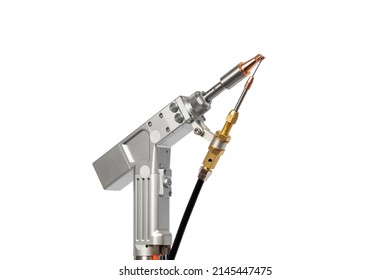
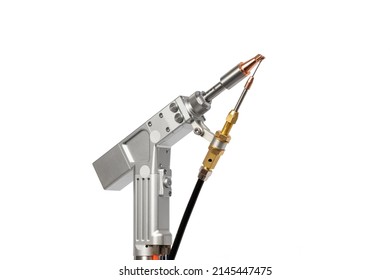
Laser brazing provides superior control over penetration depth and heat input. It uses high-quality fiber laser sources (e.g., JPT, Raycus) for stable power output. Wobble welding heads enable complex joint geometries and enhanced filler metal distribution. Pre-brazing cleaning via pulsed laser ensures oxide-free surfaces, critical for adhesion.
Market Outlook
The global laser brazing market is projected for steady growth. Increasing adoption in EV battery assembly and aerospace turbine components drives demand. Profitability will improve as technology costs decrease and skilled operators become more accessible. Klear Laser’s expertise positions it as a leader in this expanding sector.
Principales caractéristiques et avantages
Klear Laser’s brazing systems leverage high-performance continuous-wave fiber laser sources from industry leaders like Raycus and JPT. These sources deliver stable, adjustable power output with excellent beam quality, essential for precise brazing applications. The consistency of the laser beam ensures uniform melt pools, minimizing defects and maximizing joint strength in automated production environments.
The integration of advanced wobble welding heads sets Klear Laser brazing systems apart. These heads dynamically oscillate the laser beam, enabling controlled melt pool distribution and improved gap bridging. Wobble patterns reduce undercut and porosity while allowing lower overall heat input, preserving base material integrity and reducing post-process finishing.
Precision motion control and real-time monitoring ensure repeatable brazing quality across complex 3D seams. Combined with intelligent process feedback, the system maintains optimal focus position and energy density throughout the cycle. This level of control is critical for high-end applications in automotive, aerospace, and sanitary ware manufacturing.
| Spécifications | Value / Model |
|---|---|
| Source laser | Raycus / JPT CW Fiber, 1000–3000 W |
| Longueur d'onde | 1070 ± 10 nm |
| Qualité du faisceau (M²) | <1.6 |
| Wobble Head Options | Circular, Figure-8, Linear Oscillation |
| Oscillation Frequency | Up to 500 Hz |
| Spot Size (adjustable) | 0.2 – 0.8 mm |
| Control System | PLC + Touch HMI with I/O integration |
| Méthode de refroidissement | Water-cooled (chiller integrated) |
Applications industrielles
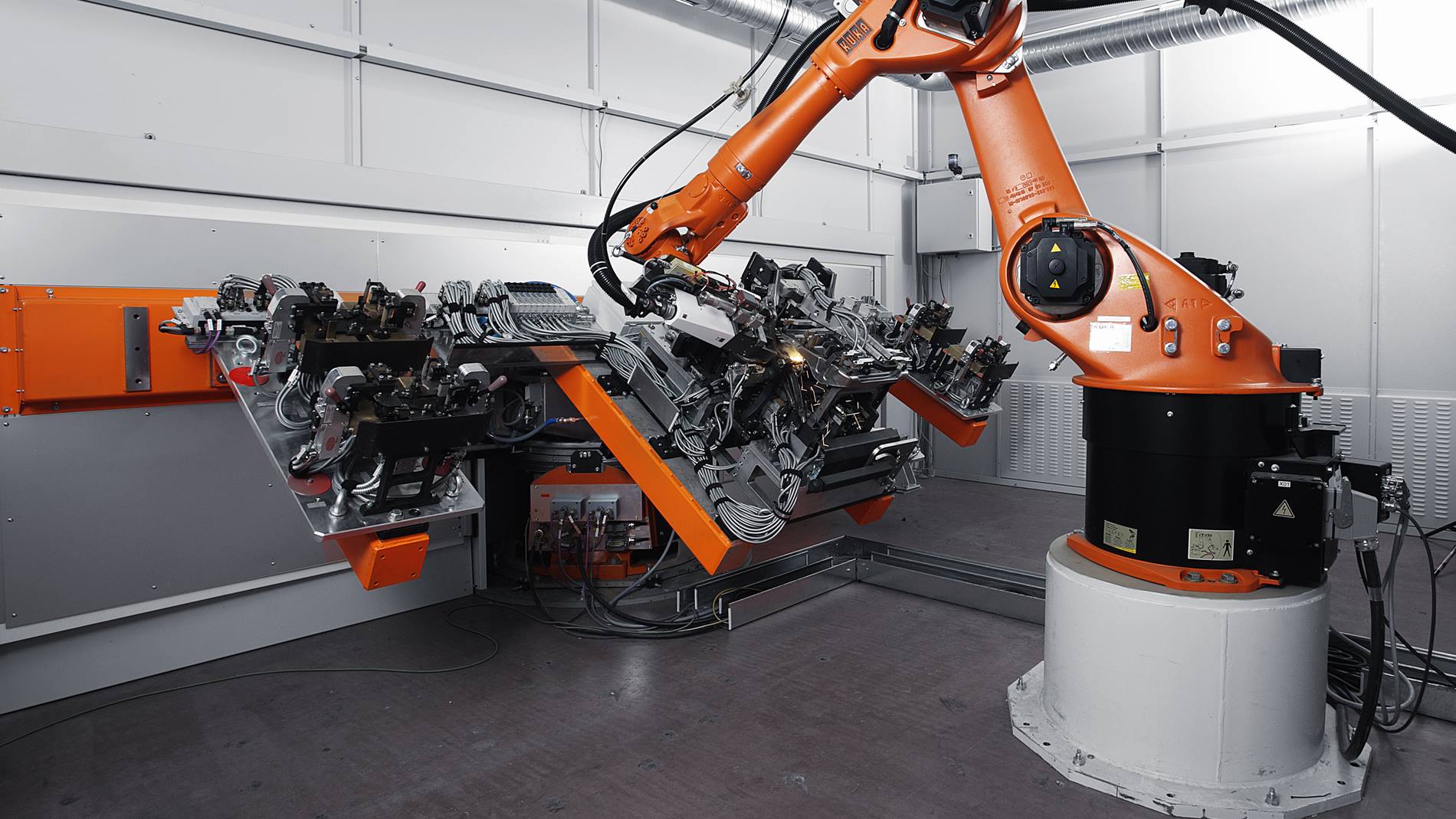
Laser brazing is widely adopted across automotive, aerospace, and marine industries for high-precision joining tasks. This process uses laser energy to melt filler material, creating strong bonds with minimal heat input. It replaces older techniques that caused warping or corrosion.
Automotive manufacturing relies on laser brazing for seamless body panels. JPT or Raycus fiber lasers guide filler wire into roof seams and trunk lids. Wobble welding heads ensure consistent bead profiles on complex curves without distortion.
Aerospace applications require extreme precision for critical components. Raycus laser systems precisely melt titanium and aluminum alloys for fuel tanks. Wobble technology maintains structural integrity while avoiding thermal damage in high-stress areas.
Marine engineering uses this method for corrosion-resistant joints. JPT lasers with wobble heads braze stainless steel hull fittings. The controlled process prevents warping in saltwater-exposed components like exhaust systems.
| Matériau | Automobile | Aérospatiale | Marine |
|---|---|---|---|
| Acier galvanisé | Roof seams, trunk lids | – | – |
| Alliages d'aluminium | Body panels, structural parts | Fuel tanks, air ducts | Deck structures, heat exchangers |
| Acier inoxydable | Exhaust systems, trim pieces | Structural components | Hull fittings, exhaust systems |
| Copper-Nickel | Electrical contacts | – | Propeller shafts, condensers |
| Alliages de titane | – | Engine components, structures | – |
Pourquoi choisir Klear Laser
Klear Laser ships every Fiber Laser Welding Machine with a five-year warranty on the JPT or Raycus source and a two-year bumper-to-bumper warranty on the entire chassis, so the beam that gives you 3 mm stainless penetration on day one still delivers the same kilowatts after 50,000 hours of wobble-head duty.
Our support engineers are on the phone, on Skype, or on the next flight within 24 h because a halted automotive seat-belt line costs more in one shift than the laser brazing system that keeps it moving. Free operator training at your dock, free process recipes for silicon-bronze to galvanized steel, and a cloud-based health monitor that pings us before the chiller filter costs you a shift are all part of the package.
We keep 100 % of spare parts—gold-coated copper mirrors, wobble welding heads, ceramic nozzles, and JPT 2 kW modules—in regional hubs in Ohio, Düsseldorf, and Shenzhen, so 90 % of customers receive the component the next morning and swap it out with plug-and-play connectors in under 30 min. After year five you can still buy every consumable at published list price; no SKU is ever discontinued because we designed the same sealed cabinet and chiller across six model generations.
Markdown Comparison of Support Tiers
| Élément de couverture | Standard (Free) | Platinum (Optional) | Lifetime (High-Volume OEM) |
|---|---|---|---|
| Garantie d'origine | 5 years JPT/Raycus | 7 years with annual recal | 10 years, full replacement |
| Chassis & Wobble Head | 2 years all-inclusive | 3 years + wear-seal kit | 5 years + 2 spare heads |
| Temps de réponse | 24 h phone / 72 h on-site | 12 h phone / 48 h on-site | 4 h phone / 24 h on-site |
| Spare-Part Dispatch SLA | Next business day | Same day by 3 p.m. | 4 h emergency courier |
| Operator Training | 2 days at install | Annual 1-day refresher | Quarterly, on us |
| Cloud Process Library | 50 braze recipes | 150 + custom DOE support | Unlimited + AI optimization |
With parts, labor, and travel fully covered and a global logistics net that never retires a single sub-assembly, Klear Laser turns the normal risk of industrial laser brazing into a predictable line item while you focus on shipping clean, zinc-coated joints that pass 200 N/mm² tensile tests every single time.
💰 ROI Calculator: Laser Brazing
Prêt à améliorer votre production ?
Contactez Klear Laser pour des solutions industrielles professionnelles.