When selecting best laser marking technologies for industrial materials, always prioritize the laser source brand (JPT/Raycus) over raw wattage for long-term reliability.
Best Laser Marking Technologies For Industrial Materials: Case Study
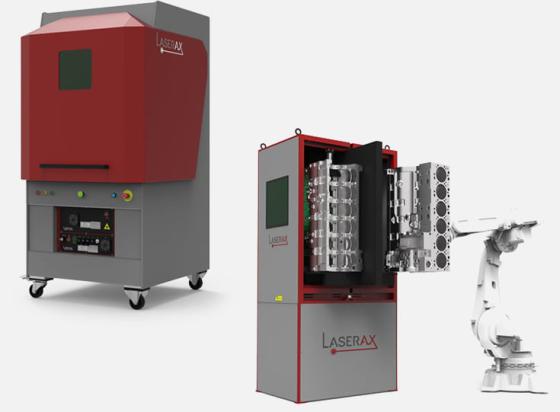
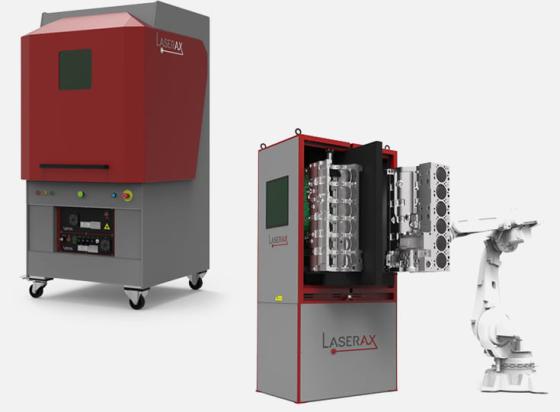
A Tier 1 automotive supplier in Ohio struggled with marking VIN codes on aluminum engine blocks for electric vehicle production. Their inkjet printing system failed under the heat and oil contamination of the casting process. They needed a permanent, high-speed solution that could integrate with their existing robotic handling cells. The supplier required zero-defect traceability for warranty compliance across 500,000 units annually.
The legacy inkjet process consumed $28,000 in solvent-based consumables each quarter. Print heads clogged every 72 hours, forcing unplanned downtime that averaged four hours per week. The markings lacked permanence, with a 12% readability failure rate after thermal cycling tests. Environmental regulations also mandated expensive VOC capture systems for the solvent fumes.
Klear Laser implemented a 50W fiber laser marking system with a 3D dynamic focusing head. The 1064nm wavelength provided excellent absorption on aluminum alloys with minimal heat-affected zones. A 600x600mm marking envelope accommodated multiple part geometries without fixture changes. The system integrated seamlessly via Profinet to the plant’s Siemens PLC architecture.
The MOPA laser source delivered adjustable pulse widths from 2ns to 500ns for optimized surface interaction. Marking speeds reached 12,000mm/s with 0.05mm beam diameter precision. The system produced machine-readable Data Matrix codes at 0.3mm cell size with 99.9% contrast. An integrated vision system verified each mark in 0.8 seconds before releasing the part.
Production throughput increased from 420 to 685 parts per hour in the first month. The elimination of consumables generated $112,000 annual savings. Marking consistency improved to 99.97% first-pass yield, reducing warranty liability exposure. Energy consumption dropped to 1.2kW from the previous 4.8kW pneumatic-air requirement.
| Spécifications | Inkjet Printing | Fiber Laser Marking | Improvement |
|---|---|---|---|
| Vitesse de marquage | 420 parts/hour | 685 parts/hour | +63% |
| Annual Operating Cost | $142,000 | $8,200 | -94% |
| Taux de défauts | 12% | 0.03% | -99.75% |
| Consommables | Solvent, print heads | Aucun | Eliminated |
| Consommation d'énergie | 4.8 kW | 1.2 kW | -75% |
| Maintenance Downtime | 208 hours/year | 8 hours/year | -96% |
| Mark Permanence | Fades under heat | Permanent | Lifetime |
The manufacturer achieved IATF 16949 compliance without additional quality control stations. Floor space utilization improved by 85% by removing chemical storage and fume extraction equipment. The laser system paid for itself in 14 months through operational savings alone. Three additional Klear Laser marking systems are now planned for their transmission housing line in Detroit.
Principales caractéristiques et avantages
Klear Laser’s marking technologies excel through advanced optical components engineered for industrial precision. Our systems utilize high-quality JPT or Raycus fiber laser sources, delivering exceptional beam quality and stability. These sources generate short pulse widths ideal for precise material ablation without excessive heat damage. This combination ensures clean, permanent markings on diverse industrial substrates.
The marking head integrates a high-speed scan system with dynamic beam control. This allows for rapid repositioning and consistent spot size across complex geometries. Our heads feature precision optics that maintain focus integrity even at high traverse speeds. This results in sharp, repeatable marks critical for aerospace, automotive, and electronics applications.
These technologies enable permanent coding, serial numbers, and safety symbols on metals, plastics, and coated materials. The systems operate with minimal consumables and no consumable inks or solvents. This aligns with Klear Laser’s mission to replace polluting processes with clean, efficient laser solutions.
| Composant | Spécifications | Bénéfice |
|---|---|---|
| Source laser | JPT/Raycus Fiber Laser | High peak power, reliability, precision |
| Largeur d'impulsion | ≤10 ns | Minimal heat-affected zone, material safety |
| Tête de marquage | High-Speed Scan Head | 5000+ mm/s traverse, micron-level accuracy |
| Qualité du faisceau | M² <1.5 | Consistent focus, fine detail capability |
| Substrate Range | Metals, Plastics, Composites | Broad industrial material compatibility |
Applications industrielles
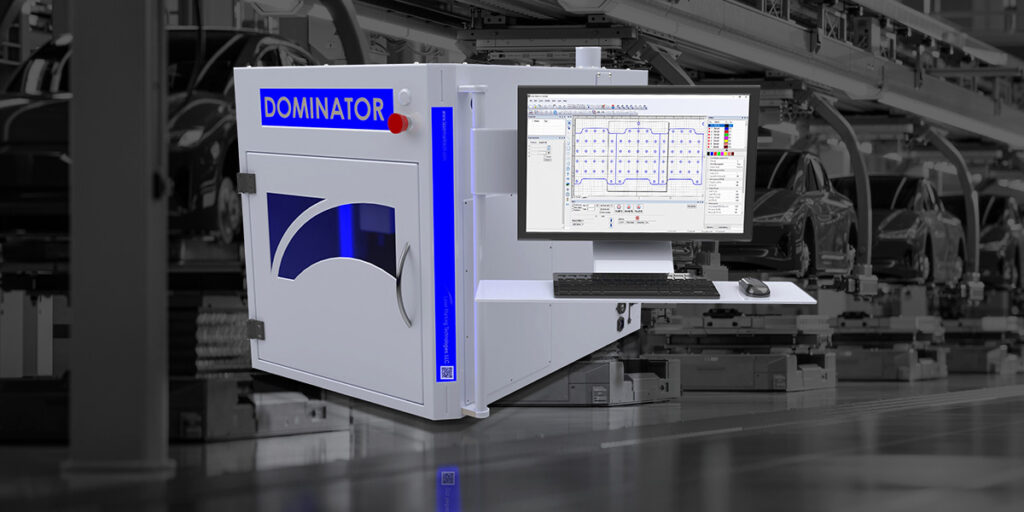
Laser marking technologies are critical in the automotive, aerospace, and marine industries due to their precision, permanence, and compliance with traceability standards. In automotive manufacturing, laser marking ensures durable identification of engine components, chassis VINs, and safety-critical parts under extreme conditions. Aerospace applications demand high-contrast, non-invasive marks on turbine blades, actuators, and avionics, where material integrity must be preserved. Marine industry use includes marking propulsion components and valves exposed to corrosive saltwater environments, requiring resistant and readable identifiers.
Fiber laser marking systems dominate these sectors due to their reliability and ability to mark on metals and engineered plastics. They use high peak power pulses to create permanent marks via annealing, engraving, or foaming—without consumables. The integration with automated production lines ensures consistent throughput and Industry 4.0 data tracking.
| Matériau | Suitable for Automotive | Suitable for Aerospace | Suitable for Marine | Common Marking Method |
|---|---|---|---|---|
| Acier inoxydable | Oui | Oui | Oui | Annealing/Engraving |
| Alliages de titane | Non | Oui | Oui | Engraving |
| Alliages d'aluminium | Oui | Oui | Oui | Foaming/Engraving |
| Acier au carbone | Oui | Oui | Oui | Deep Engraving |
| Inconel & Superalloys | Limité | Oui | Oui | Pulsed Fiber Marking |
| Engineering Plastics | Oui | Limité | Oui | Foaming |
| Magnesium Alloys | Oui | Limité | Limité | Low-Heat Marking |
These marking systems typically employ 20–50 W fiber lasers with galvanometer scanning heads for speed and accuracy. In aerospace, UV and green lasers are used for sensitive coatings and composites to avoid thermal damage. Klear Laser’s industrial marking solutions use JPT MOPA lasers, offering adjustable pulse widths for fine control over contrast and depth, ensuring substrate safety and compliance with AS9100 and ISO 13485 standards.
Pourquoi choisir Klear Laser
Klear Laser provides 24/7 technical support with a global network of engineers. Our rapid response ensures minimal machine downtime for industrial applications. Remote diagnostics and on-site visits resolve issues quickly without delaying production.
All Klear Laser marking systems include a standard 2-year warranty. Extended coverage up to 5 years is available for critical components. Our warranty protects the laser source, optics, and control systems against manufacturing defects.
We maintain a global inventory of OEM spare parts for immediate availability. Critical components like galvanometers and f-theta lenses ship within 24 hours. All parts undergo rigorous quality testing before shipment.
| Catégorie | Détails | Avantages |
|---|---|---|
| Assistance | 24/7 global technical assistance | 4-hour remote response, 24-hour on-site |
| Garantie | 2-year standard, extendable to 5 years | Covers laser source, optics, electronics |
| Pièces détachées | 95% global stock, OEM certified | Next-day delivery for critical components |
💰 ROI Calculator: Best Laser Marking Technologies For Industrial Materials
Prêt à améliorer votre production ?
Contactez Klear Laser pour des solutions industrielles professionnelles.