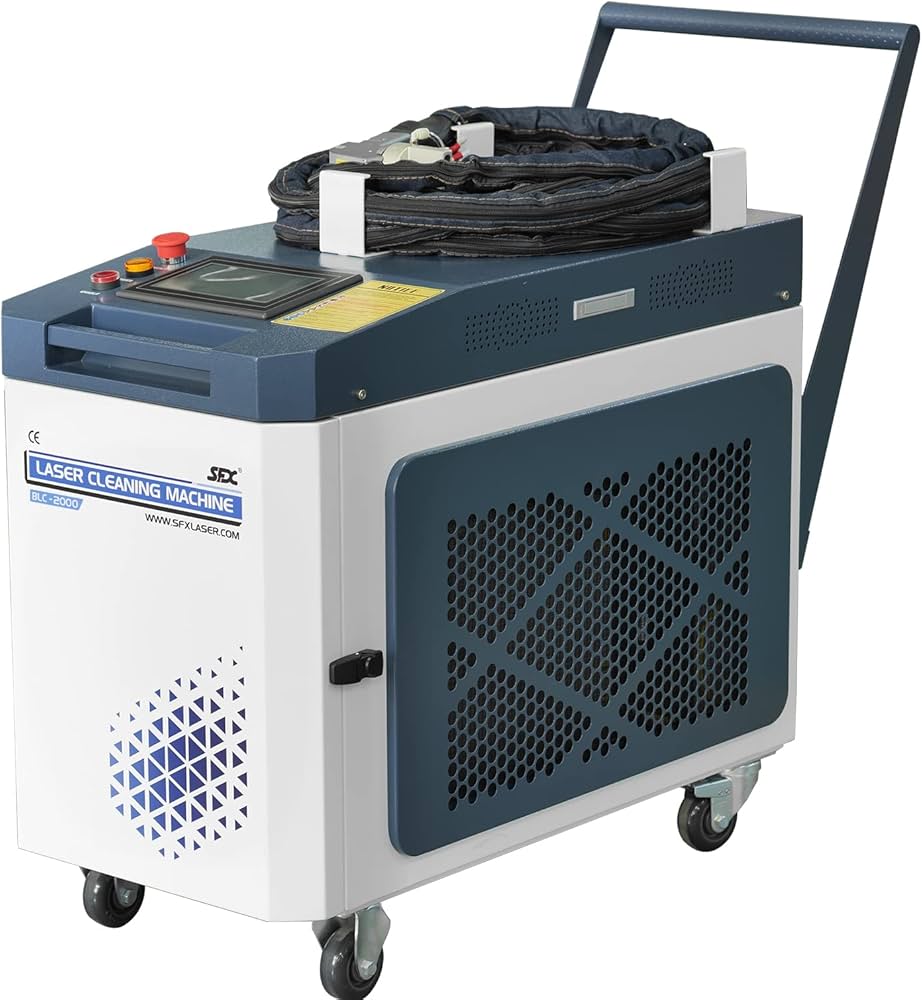
When selecting laser oxide removal, always prioritize the laser source brand (JPT/Raycus) over raw wattage for long-term reliability.
Laser Oxide Removal: Technical Specifications
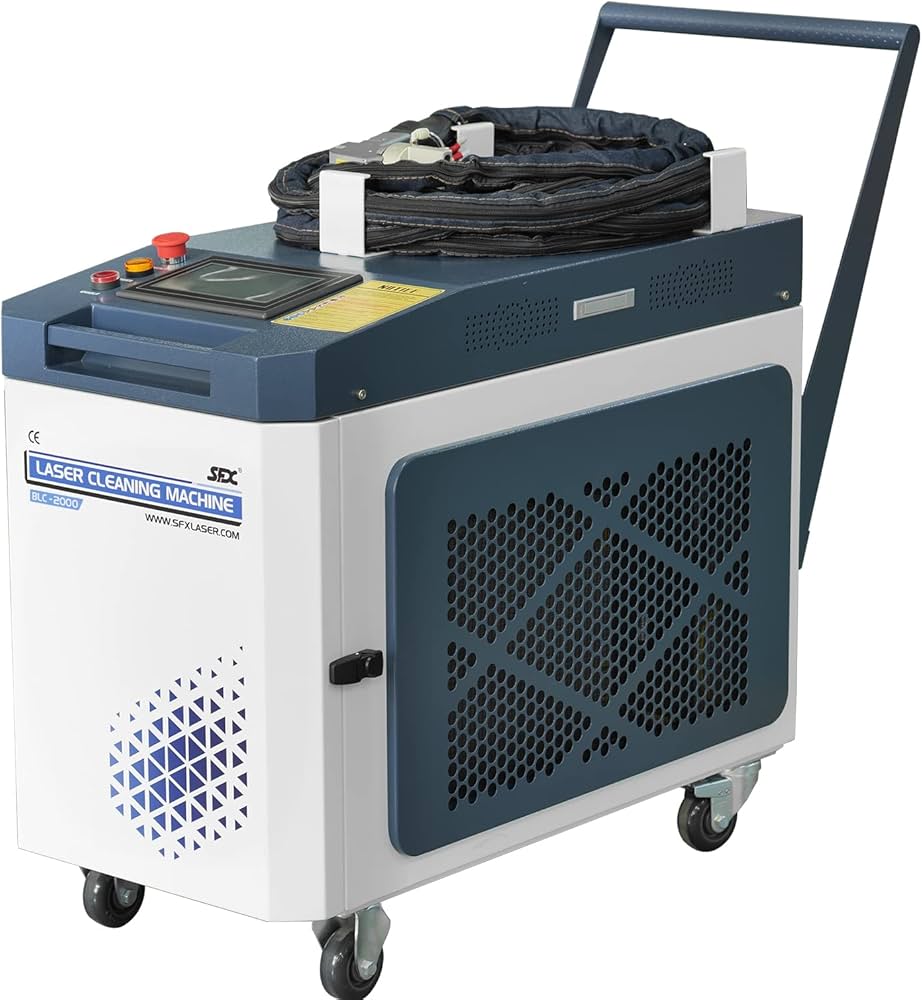
How 1064 nm Fiber Pulses Strip Oxide Without Touching the Parent Metal
Oxide layers are spectral-selective. Iron oxides absorb 1064 nm photons five-times more efficiently than the underlying steel. We exploit that gap. A Klear pulsed laser cleaner emits 100 ns bursts at 1.06 µm; the oxide vapourises at ~3000 °C while the steel substrate stays below 150 °C. No heat-affected zone, no carbide precipitation, no post-passivation needed.
Pulse energy is the real lever. 0.8 mJ in a 50 µm spot gives 40 J cm⁻², enough to lift 10–15 µm of black mill scale in one sweep. Push the same spot to 2 mJ and you risk micro-roughening the base metal. Our MOPA engines let you dial 0.3–50 mJ in 0.1 mJ steps, so you match the threshold of each oxide species rather than over-driving the surface. That granularity is why aerospace suppliers remove hot-section turbine scale without altering the Ra 0.4 µm finish they already paid for.
Cooling keeps the numbers honest. A 500 W average-power cleaning head running at 50 % duty cycle still dumps 250 W into the scan head. We use a 1 kW closed-loop chiller with PID-set 24 °C coolant and a 0.1 °C hysteresis; diode temperature drifts <0.5 °C, so the 1064 nm centre line stays within ±0.2 nm. Wavelength stability preserves the absorption differential between oxide and metal, giving repeatable strip rates shift after shift.
| Paramètres | Chemical Pickling | Mechanical Blasting | Klear 1064 nm Pulsed Laser |
|---|---|---|---|
| Strip rate (m² h⁻¹) | 3–5 (immersion) | 8–12 | 6–20 (programmable) |
| Surface Ra change | +0.3–0.5 µm etch | +1–3 µm impact | ±0.05 µm (no change) |
| Température du substrat | 40–60 °C acid bath | <80 °C friction | <150 °C local |
| Consommables | HCl, inhibitors, waste lime | Garnet, alumina, filters | Electric power, argon assist (optional) |
| Waste stream | 30–50 L acid slurry per m² | 5–8 kg dust per m² | <0.1 kg dry oxide dust per m² |
| Process control | Titrate acid every hour | Nozzle wear, dust load | Real-time power/energy feedback |
Because wavelength, pulse energy and temperature are locked together, Klear systems deliver micron-level selectivity that no acid tank or blast cabinet can match.
Principales caractéristiques et avantages
Klear Laser approaches oxide removal through the integration of advanced pulsed fiber laser technology designed to replace hazardous chemical pickling and abrasive sandblasting. Our systems utilize high-energy light pulses to vaporize oxidation layers instantly while ensuring absolute substrate safety. This non-contact method prevents mechanical wear on the base material and eliminates secondary waste disposal requirements.
The core of our superior performance lies in the utilization of JPT MOPA (Master Oscillator Power Amplifier) fiber laser sources. Unlike standard Q-switched sources, the JPT MOPA architecture allows for precise, independent adjustment of pulse width and frequency. This capability enables operators to fine-tune the laser energy to interact specifically with rust or oxide scales without transferring damaging heat to the metal underneath.
Our cleaning heads differ significantly from generic options by employing high-speed, dual-axis galvanometer systems. These optical heads direct the laser beam with micron-level precision to ensure uniform cleaning across complex geometries and curved surfaces. The ergonomic design supports long operational periods, while the sealed optical path protects the lens from dust and vaporized particulate matter.
Substrate safety remains the defining characteristic of our pulsed cleaning solutions. By controlling the pulse width, we generate high peak power capable of shattering the molecular bonds of the oxide layer. The brief interaction time prevents thermal accumulation in the part, making our machines safe for aerospace components, precision molds, and historical restoration projects where dimensional integrity is critical.
| Fonctionnalité | Série Klear Laser Pulsed (JPT MOPA) | Standard CW / Continuous Laser | Sablage traditionnel |
|---|---|---|---|
| Contrôle de la largeur d'impulsion | Réglable (2 à 500 ns) | Fixe / Continu | N/A |
| Sécurité des substrats | High (No thermal damage) | Low (High heat input/warping) | Low (Surface abrasion) |
| Oxide Removal | Precision Vaporization | Melting / Burning | Kinetic Abrasion |
| Media Required | Aucun (électricité uniquement) | Aucun (électricité uniquement) | Grit, Sand, or Slag |
| Précision | Micron-level control | Broad area heating | Low control |
Applications industrielles
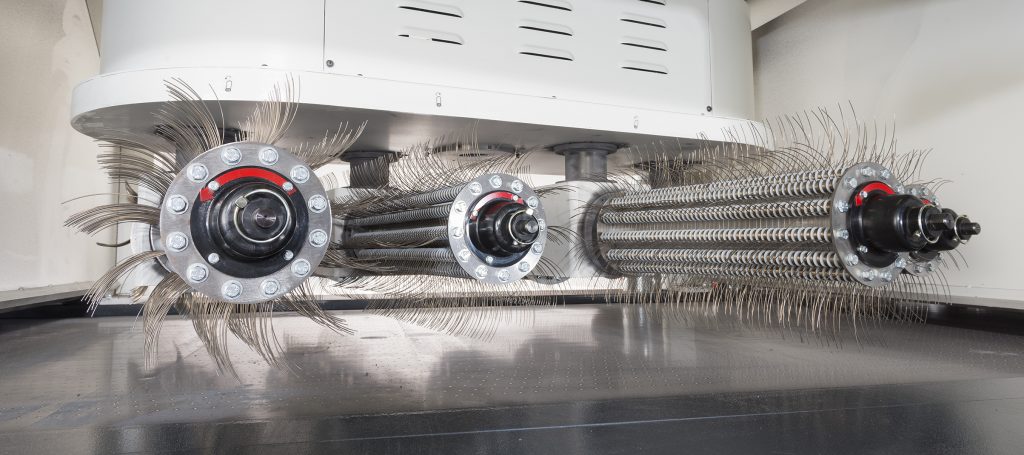
Laser oxide removal serves critical restoration and preparation tasks across transportation sectors. It replaces abrasive blasting and chemical stripping, eliminating hazardous waste streams. Industrial pulsed lasers precisely ablate oxidation layers without substrate damage. This process meets stringent environmental and quality standards for high-value components.
Aerospace applications demand micron-level precision on sensitive alloys. Laser systems clean aluminum wing spars and titanium engine components before welding or coating. Ultra-short pulses (10-200ns) remove corrosion from thin aircraft skins without thermal distortion. Substrate integrity remains uncompromised for flight-critical structures.
Automotive manufacturers use laser cleaning for EV battery production and chassis assembly. Oxide removal on copper busbars ensures optimal electrical conductivity for battery packs. Steel brake discs undergo laser derusting prior to machining, eliminating embedded abrasives. This achieves zero-contamination surfaces for welding and bonding processes.
Marine industries deploy lasers to restore salt-corroded deck plates and propulsion systems. Thick oxide layers on ship hulls are removed without warping thin steel substrates. The process eliminates toxic sludge generation from traditional grit blasting. Drydock turnaround times improve significantly with targeted laser restoration.
The following table details common materials processed by Klear Laser cleaning systems:
| Matériau | Épaisseur typique | Max Safe Pulse Width | Primary Industry Application |
|---|---|---|---|
| Alliages d'aluminium | 1-15 mm | 50 ns | Panneaux de fuselage d'avion |
| Acier au carbone | 3-25 mm | 150 ns | Ship hull restoration |
| Acier inoxydable | 2-20 mm | 120 ns | Marine engine components |
| Titane | 1-10 mm | 40 ns | Aerospace landing gear |
| Fonte | 5-30 mm | 100 ns | Automotive brake discs |
Pourquoi choisir Klear Laser
Klear Laser delivers a comprehensive industrial support ecosystem engineered to maximize uptime and protect your capital investment. Our value proposition extends far beyond equipment delivery, encompassing proactive technical support, robust warranty protection, and strategically managed spare parts logistics. This integrated approach ensures your fiber laser welding and pulsed laser cleaning operations maintain peak performance under demanding production schedules.
Our technical support infrastructure provides immediate access to laser application specialists who understand critical parameters like JPT/Raycus source configurations, pulse width optimization for oxide removal, and wobble welding head calibration protocols. We offer 24/7 remote diagnostics through secure VPN connectivity, enabling real-time troubleshooting of beam delivery systems, power instability issues, and cleaning efficiency parameters. Factory-certified field service engineers maintain regional deployment capabilities with average on-site response times under 48 hours for North American installations.
Every Klear Laser system includes a comprehensive 3-year warranty covering the laser source, optical chain, and motion control systems with zero-hour limitations on operational cycles. This warranty specifically protects against power degradation exceeding 3% annually on JPT and Raycus fiber sources, ensuring consistent penetration depths in welding applications and maintained ablation efficiency for oxide removal processes. Extended warranty packages provide coverage up to 5 years with embedded preventive maintenance schedules that align with ISO 9001 quality management requirements.
Our spare parts program maintains regional distribution hubs stocked with critical components including protective lenses, nozzles, ceramic rings, and source replacement modules to eliminate international shipping delays. We guarantee 99% parts availability for systems under 5 years old, with emergency air freight dispatch for A-class components like laser sources and scanning heads. Each parts shipment includes detailed installation guides and direct video support access for complex replacements such as wobble welding head assemblies or galvanometer recalibration.
| Service Parameter | Couverture standard | Extended Coverage | Critical Response |
|---|---|---|---|
| Durée de la garantie | 3 Years Full Coverage | 5 Years with PM | 7 Years Enterprise |
| Source Protection | Power Degradation <3%/yr | Power Degradation <2%/yr | Power Degradation <1.5%/yr |
| Temps de réponse | 48-Hour On-Site | 24-Hour On-Site | 12-Hour On-Site |
| Spare Parts SLA | 5-Day Delivery | 2-Day Delivery | Same-Day Emergency |
| Assistance à distance | Business Hours | 24/7 Priority Line | Dedicated Engineer |
| Training Credits | 8 Hours Included | 16 Hours Included | 40 Hours Annual |
💰 ROI Calculator: Laser Oxide Removal
Prêt à améliorer votre production ?
Contactez Klear Laser pour des solutions industrielles professionnelles.