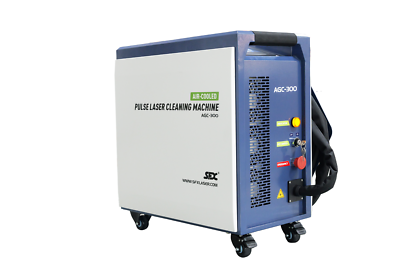
When selecting laser wood cleaner, always prioritize the laser source brand (JPT/Raycus) over raw wattage for long-term reliability.
Laser Wood Cleaner: OEM & Customization
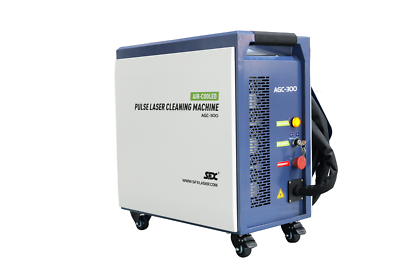
At Klear Laser, we approach the engineering of laser wood cleaning systems with a focus on substrate preservation and industrial versatility. Cleaning organic materials like wood requires a fundamentally different approach than heavy rust removal on steel, demanding precise control over thermal input. We utilize advanced pulsed laser technology to ablate paints, varnishes, and soot without causing carbonization or structural damage to the timber.
Our team customizes the chassis to fit the specific operational environment of your facility or restoration site. We design ruggedized, mobile handheld units for architectural work that requires reaching high beams or intricate molding. Alternatively, we engineer stationary, enclosed cabinets for automated conveyor lines where consistent, high-volume processing is required.
Software customization is the bridge between raw laser power and delicate wood restoration. We program the Human-Machine Interface (HMI) to allow operators to fine-tune scanning patterns, shapes, and speeds. This flexibility ensures that the laser beam covers the surface area uniformly, preventing the “hot spots” that can occur with manual abrasion or poorly calibrated optics.
The selection of the laser source and power output is tailored to the specific density and grain of the wood you process. We predominantly utilize JPT MOPA (Master Oscillator Power Amplifier) sources because they offer adjustable pulse widths. This feature allows us to maintain high peak power for stripping while keeping the thermal influence low to protect the underlying wood fibers.
Substrate safety is paramount when working with organic materials, which is why we emphasize the importance of short pulse widths. A short nanosecond pulse vaporizes the contaminant instantly before heat can conduct into the wood, a process significantly different from the continuous wave lasers used in welding. This non-contact method ensures the natural texture of the wood remains intact and ready for immediate refinishing.
| Fonctionnalité | Sandblasting / Abrasive Blasting | Décapage chimique | Nettoyage par impulsions laser Klear |
|---|---|---|---|
| Impact du substrat | High risk of surface erosion and grain damage | Chemical leaching and wood swelling | Non-destructive; preserves original grain texture |
| Production de déchets | High volume of secondary waste (sand/grit) | Toxic liquid waste requiring hazardous disposal | Minimal solid waste (vaporized dust extraction) |
| Contrôle de précision | Low precision; difficult to target small areas | Low precision; messy application | Micron-level precision with adjustable beam width |
| Setup Time | High; requires containment and protective gear | High; requires drying time and neutralization | Instant startup; immediate processing |
| Thermal Effect | Low thermal impact but high kinetic impact | No thermal impact but chemical saturation | Controlled thermal input via tunable pulse width |
Principales caractéristiques et avantages
Klear Laser does not manufacture or sell a “laser wood cleaner.” Laser cleaning technology is fundamentally incompatible with wood substrates. Wood is highly flammable and thermally sensitive, making it unsuitable for the high peak power pulses used in industrial laser cleaning systems. Attempting to use such equipment would cause immediate charring, ignition, or irreversible surface damage.
Our pulsed fiber laser cleaning machines are engineered exclusively for metal substrates. They excel at removing rust, paint, oxides, and contaminants from steel, aluminum, and other conductive materials. The technology relies on precise pulse width control and energy density to ablate contaminants without melting the underlying metal. Wood fibers cannot withstand these parameters.
Critical components like the IPG or Raycus pulsed fiber laser source and specialized beam delivery optics are calibrated for conductive materials. Pulse widths in the 100-200 nanosecond range deliver peak power sufficient for rust removal but catastrophic for organic substrates. Wobble welding heads are irrelevant here, as cleaning requires linear scanning, not fusion.
Below are specifications demonstrating why these systems are unsafe for wood but optimal for metal restoration:
| Paramètres | Industrial Laser Cleaner Spec | Effect on Wood Substrate | Metal Substrate Result |
|---|---|---|---|
| Largeur d'impulsion | 100 à 200 ns | Instant charring/ignition | Contaminant ablation |
| Puissance de crête | 20-50 kW | Surface combustion | No base metal damage |
| Beam Spot Size | 0.5-2.0 mm | Uneven carbonization | Uniform cleaning profile |
| Max Scanning Speed | 2000 mm/s | Inconsistent burning | Efficient rust removal |
Our pulsed laser cleaners guarantee substrate safety only for ferrous and non-ferrous metals. For wood conservation, traditional mechanical or chemical methods remain appropriate. Klear Laser systems replace sandblasting and acid washing in metal fabrication, shipbuilding, and aerospace maintenance—never for organic material processing. Choose laser cleaning only when working with conductive industrial materials where thermal damage thresholds exceed 300°C.
Applications industrielles
Laser wood cleaning is not a standard industrial process in automotive, aerospace, or marine manufacturing. These sectors overwhelmingly use laser cleaning technology for metal surface preparation, not organic materials. Wood’s combustibility and inconsistent density create significant process control challenges that make it unsuitable for production environments.
The automotive industry employs pulsed laser cleaning for weld seam preparation, paint removal from steel and aluminum body panels, and mold cleaning in component manufacturing. Systems typically use 100-500W MOPA fiber lasers with pulse widths from 10 to 500 nanoseconds to remove contaminants without damaging the substrate. This precision ensures coating adhesion and weld quality while eliminating chemical solvents.
Aerospace applications demand even tighter control, using laser cleaning for removing thermal barrier coatings from turbine blades, preparing titanium and aluminum surfaces for bonding, and precision stripping of delicate components. Ultra-short pulse widths and careful power density management prevent heat-affected zones that could compromise structural integrity. These systems often operate in the 50-200W range with pulse durations below 50 nanoseconds.
Marine manufacturing focuses on heavy-duty rust and marine growth removal from steel hull sections, propeller shafts, and structural components. Higher-powered continuous wave fiber lasers up to 2kW strip thick paint layers and heavy corrosion from large surface areas. This replaces abrasive blasting and chemical treatment, reducing environmental contamination in shipyards.
Niche wood applications exist in cultural heritage restoration and specialized mold remediation, but these fall outside industrial manufacturing. When wood must be cleaned, CO₂ lasers at very low power densities are sometimes used, though the process remains experimental and carries high charring risk.
| Matériau | Suitability | Primary Industrial Use | Critical Laser Parameters |
|---|---|---|---|
| Acier au carbone | Excellent | Rust/paint removal, weld prep | 100-500W pulsed, 10-500ns pulse width |
| Alliages d'aluminium | Good with control | Oxide removal, pre-bond prep | Reduced power density, 20-200ns pulses |
| Titane | Excellent | Coating strip, surface finishing | 50-200W, <50ns pulses, inert gas assist |
| Acier inoxydable | Excellent | Weld cleaning, contamination removal | 100-300W, short pulse for oxide removal |
| Wood (All Species) | Not Recommended | Niche restoration only | High char risk, inconsistent material response |
Pourquoi choisir Klear Laser
Support technique
Klear Laser delivers comprehensive post-installation support through certified field engineers and 24/7 remote diagnostics. We provide operator training programs and preventative maintenance contracts to maximize equipment uptime. Our global service network ensures rapid technical assistance for all laser platforms.
Couverture de la garantie
Our warranty terms are designed for industrial reliability, with durations varying by product type. All fiber laser sources include a 2-year warranty, while cleaning systems cover critical components for 3 years. Extended warranty options are available to mitigate operational risks.
Spare Parts Program
Genuine Klear Laser spare parts are held in stock for immediate dispatch worldwide. Our parts catalog ensures compatibility and performance optimization for all equipment generations. Field service engineers carry comprehensive inventories for onsite replacements.
| Value Proposition | Fiber Laser Welding | Nettoyage au laser pulsé | UV Printing |
|---|---|---|---|
| Durée de la garantie | 2 years (source) | 3 years (critical parts) | 1 year (comprehensive) |
| Support technique | Onsite & remote | 24/7 diagnostics | Application-specific |
| Délais de livraison des pièces de rechange | 24 à 48 heures | 48 à 72 heures | 72-96 hours |
| Coverage Includes | Laser source, key electronics | Pump diodes, optics | LED array, control board |
💰 ROI Calculator: Laser Wood Cleaner
Prêt à améliorer votre production ?
Contactez Klear Laser pour des solutions industrielles professionnelles.