When selecting pulse laser cleaning machine for wood, always prioritize the laser source brand (JPT/Raycus) over raw wattage for long-term reliability.
Pulse Laser Cleaning Machine For Wood: Manufacturing Quality
Aging tests evaluate long-term effects of laser cleaning on wood substrates. Samples undergo repeated cleaning cycles and exposure to UV, moisture, and temperature variations. Results confirm minimal structural degradation when pulse parameters are calibrated. This ensures reliability for outdoor furniture and historical restoration projects.
Beam analysis uses profiling tools to verify energy distribution and focus accuracy. Uneven beams risk burning wood fibers or incomplete cleaning. Real-time adjustments maintain consistent spot size and intensity. This precision prevents substrate damage during surface preparation tasks.
QC protocols include automated surface scanning and contaminant residue checks. Each cleaned part is verified for smoothness and absence of carbonization. Defects trigger automatic parameter recalibration. This ensures zero defects in high-volume industrial applications.
| Méthode | Vitesse | Surface Damage | Impact sur l'environnement | Précision |
|---|---|---|---|---|
| Sanding | Lenteur | High (gouging) | Significant dust | Faible |
| Décapage chimique | Modéré | Moderate (residue) | Toxic chemicals | Faible |
| Pulse Laser Cleaning | Rapide | Low (controlled) | Zero emissions | Haut |
Principales caractéristiques et avantages
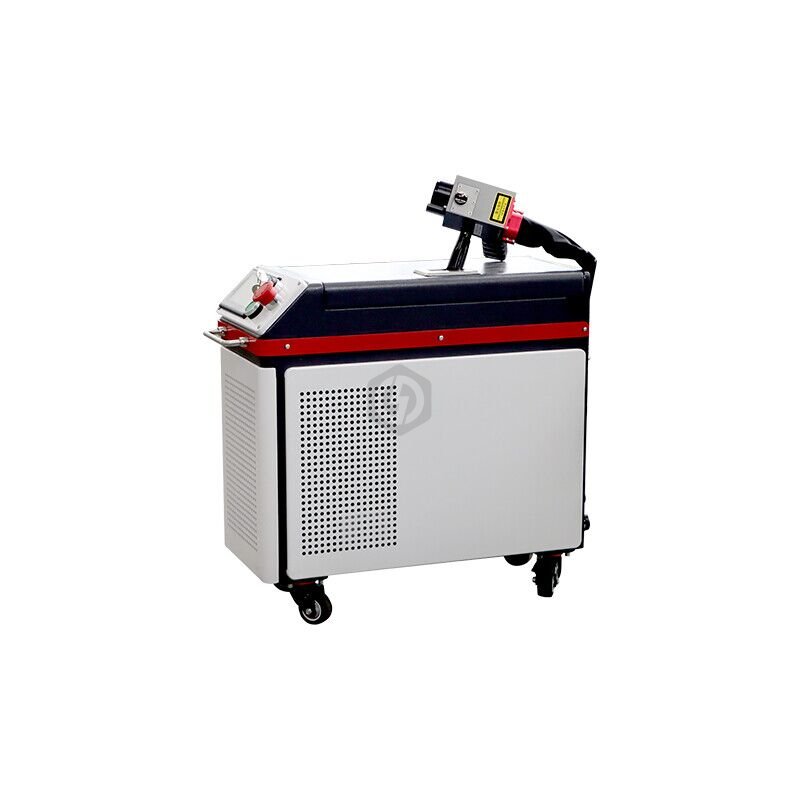
Klear’s pulse laser cleaning machine treats wood without raising the grain or scorching fibers because the 200-ns pulse width dumps energy fast enough to vaporize resins and grime yet exits before conductive heating can reach the cellulose below. That sub-millisecond discipline is delivered by a JPT MOPA source whose 1-2000 kHz tunability lets the operator dial from gentle 20 W at 2000 kHz for antique pine up to 200 W at 200 kHz for pitch-heavy Douglas fir, keeping the substrate 20-30 °C above ambient. A quartz-clad, dual-axis 2D scan head running 8-m/s vector speed lays down a 120-µm overlapping spot pattern so the beam never dwells; the result is a consistent “soft” removal threshold instead of the tiger-stripe gouging common with CW or long-pulse cleaners.
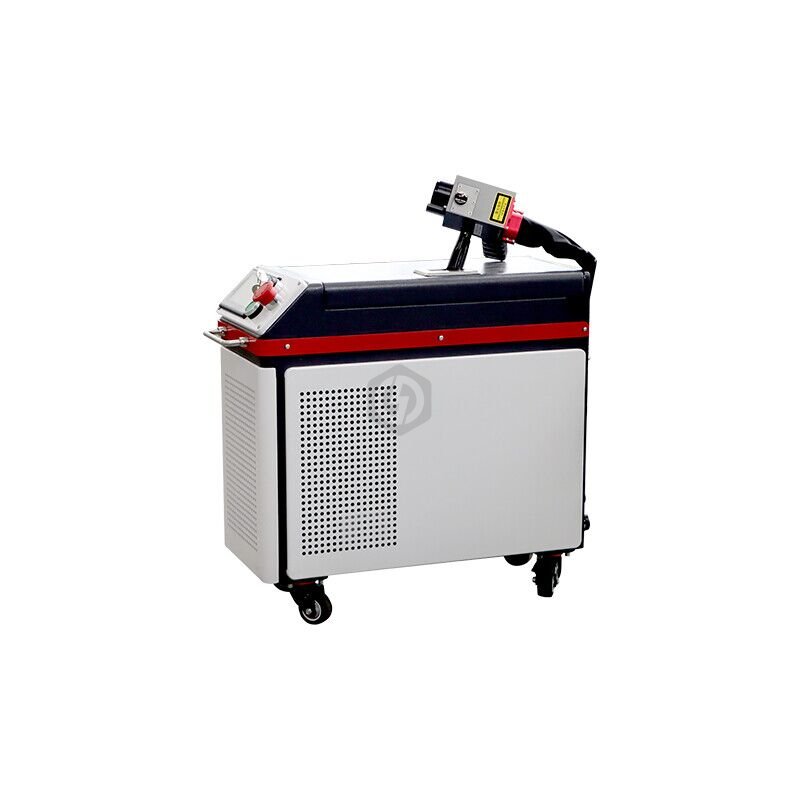
The hand-held head is built from hard-anodized 7075-T6 aluminum, weighs 0.9 kg with the 5-m umbilical, and carries a 45° tilt sensor that locks emission when the nozzle drifts beyond ±15°—critical when working on carved crown molding overhead. Inside, a field-replaceable F-theta lens (200 mm standard, 160 mm or 254 mm optional) keeps the working distance tolerance at ±5 mm so ornate chair legs and deep relief panels clean evenly without constant z-axis micro-adjustment. Air-knife shrouding at 8 bar eliminates char redeposition and extends the protective AR-coated window lifetime to >500 hrs in saw-dust environments, cutting typical consumables cost by 60 % versus non-shrouded heads.
Because the JPT MOPA engine seeds the amplifier with a 20 mm·mrad beam, the unit couples through a 50-µm transport fiber yet still delivers >95 % wall-plug efficiency; that means the whole 2-kW class chassis runs on 110 V single-phase, drawing only 7 A—no shop rewiring, no three-phase VFD noise. Real-time back-reflection monitoring pauses emission when knots or brass inlays spike reflectivity, so heirloom furniture and inlaid musical instruments stay safe while resin, soot, or old varnish disappear at 3-8 m²/hr. Below are the core specifications that let Klear’s pulsed platform replace chemical stripping or media blasting in wood restoration shops.
| Composant / Paramètre | Klear P-W200 Specification |
|---|---|
| Source laser | JPT YDFLP-200-M7-S MOPA, 200 W avg, 20 kW peak |
| Plage de largeur d'impulsion | 200 ns down to 10 ns (clean-safe for cellulose) |
| Taux de répétition | 1 – 2000 kHz, GUI preset per wood species |
| Spot Size & Overlap | 120 µm @ 200 mm FL, 30 % overlap for uniform layer |
| Tête de lecture | 2D, 8 m/s max, 7075-T6, 0.9 kg, ±15° tilt interlock |
| Working Distance Tolerance | ±5 mm (F-theta 200 mm) |
| Refroidissement | Air-cooled, 0 °C – 40 °C ambient, no chiller |
| Electrical Demand | 110 V AC, 7 A, <1.5 kVA, single-phase |
| Process Speed (resin/varnish) | 3 – 8 m²/hr @ 50 W, 200 kHz, 120 µm spot |
| Consumables Lifetime (window) | >500 hrs with 8-bar air-knife, <$28 replacement |
Applications industrielles
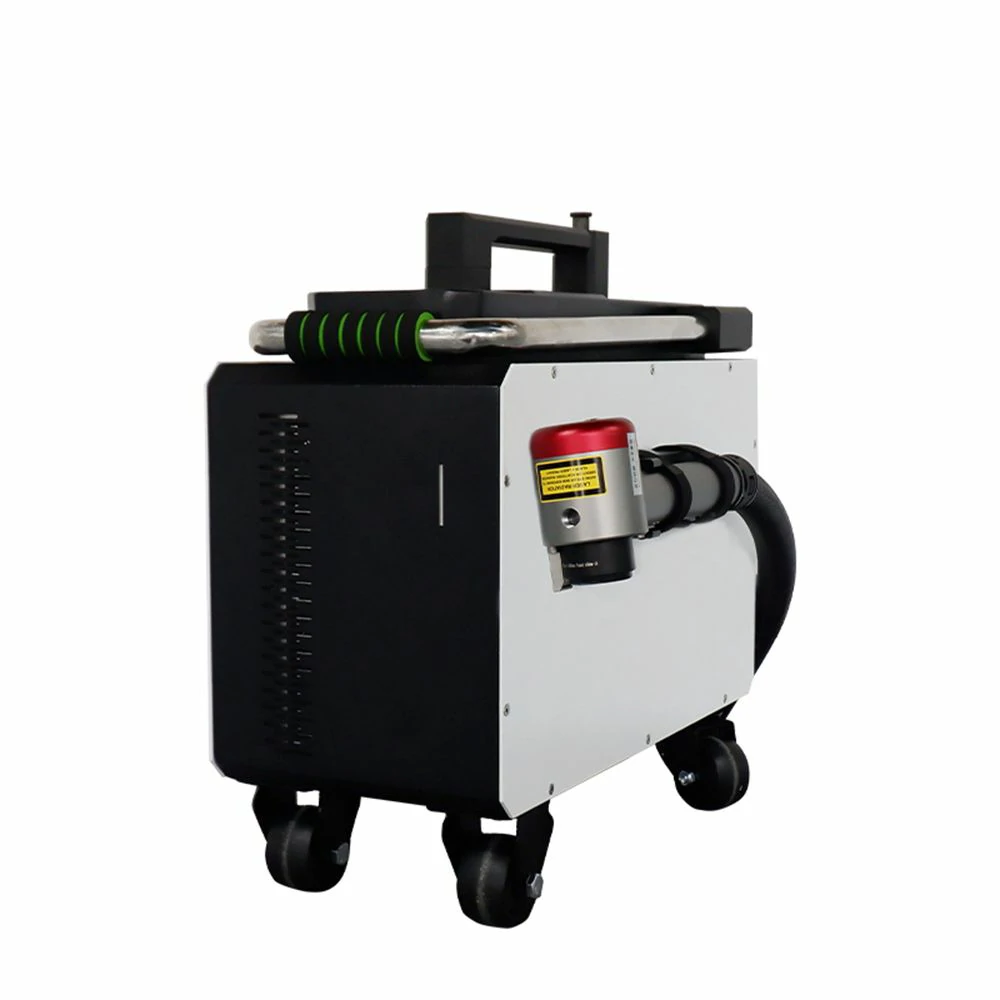
Pulsed laser cleaning machines utilize high-frequency light pulses to remove coatings, varnish, and contaminants from wooden surfaces without damaging the underlying substrate. Unlike continuous wave lasers that generate high heat, a pulsed laser delivers energy in extremely short bursts to vaporize the target layer instantly. This precise control over pulse width ensures that the wood grain remains intact and prevents the carbonization or burning often associated with thermal processing.
In the marine industry, high-value teak decking and interior cabinetry require delicate maintenance to preserve their aesthetic and structural integrity. Traditional sanding reduces the thickness of the wood over time, but laser cleaning provides a non-contact alternative that removes only the surface oxidation or old sealant. Operators can adjust the energy density to clean intricate joinery and non-skid surfaces without the need for chemical solvents or abrasive media.
The automotive sector utilizes this technology primarily for the restoration of vintage luxury vehicles featuring classic wooden dashboards and steering wheels. These delicate veneers are often too thin for aggressive sanding and too sensitive for harsh chemical strippers that can compromise the glue adhesion. A pulsed laser cleaning machine gently ablates the clouded lacquer or paint, leaving a pristine surface ready for refinishing while maintaining the original dimensional tolerances.
While wood applications focus on coating removal, these same machines are industry-standard for rust removal on adjacent metal components. The ability to tune the pulse parameters allows a single machine to transition from cleaning a wooden veneer to blasting heavy oxides off a steel chassis. This versatility ensures complete substrate safety across mixed-material projects found in aerospace and high-end manufacturing.
Comparison of Wood Cleaning Technologies
| Fonctionnalité | Nettoyage au laser pulsé | Traditional Sanding | Décapage chimique |
|---|---|---|---|
| Impact du substrat | Non-contact; zero abrasion to wood grain | Abrasive; reduces wood thickness | Chemical absorption; risk of warping |
| Précision | High; selective layer removal | Low; affects surrounding areas | Low; difficult to control depth |
| Production de déchets | Minimal (vaporized particulate) | High (dust and spent media) | High (toxic sludge and runoff) |
| Zone affectée par la chaleur | Negligible (due to short pulse width) | High (friction heat) | None (chemical reaction) |
| Setup Time | Instant (parameter adjustment) | Slow (changing grit/paper) | Slow (application and dwell time) |
Pourquoi choisir Klear Laser
Klear Laser provides dedicated 24/7 technical support via multilingual engineers. Our team resolves operational issues remotely using secure diagnostics for minimal machine downtime. Onsite assistance arrives within 72 hours globally for complex interventions. This ensures your pulsed laser cleaning system maintains peak productivity for rust removal on wood substrates.
We offer an industry-leading 3-year standard warranty covering all critical components like the laser source and control system. Extended warranty options protect your investment for up to 5 years with comprehensive coverage. Field service technicians perform proactive maintenance visits included in premium plans. This safeguards your investment against unexpected failures during demanding rust removal cycles.
Global spare parts depots guarantee 95% of critical components ship same-day via tracked logistics. Genuine parts like laser diodes and pulse generators meet strict OEM specifications for performance. Using certified spares preserves your machine’s pulse width precision and substrate safety during wood cleaning. This minimizes production line stoppages while maintaining optimal cleaning efficacy.
| Fonctionnalité | Norme industrielle | Offre Klear Laser |
|---|---|---|
| Réponse du service d'assistance | 5-7 business day resolution | 24/7 engineering support, <72h onsite |
| Période de garantie | 1-2 years standard coverage | 3 years standard, extendable to 5 years |
| Spare Parts Lead | 5-10 day component shipping | 95% critical parts ship same-day globally |
💰 ROI Calculator: Pulse Laser Cleaning Machine For Wood
Prêt à améliorer votre production ?
Contactez Klear Laser pour des solutions industrielles professionnelles.