When selecting how much does a laser welder cost, always prioritize the laser source brand (JPT/Raycus) over raw wattage for long-term reliability.
How Much Does A Laser Welder Cost: Market Trends & ROI
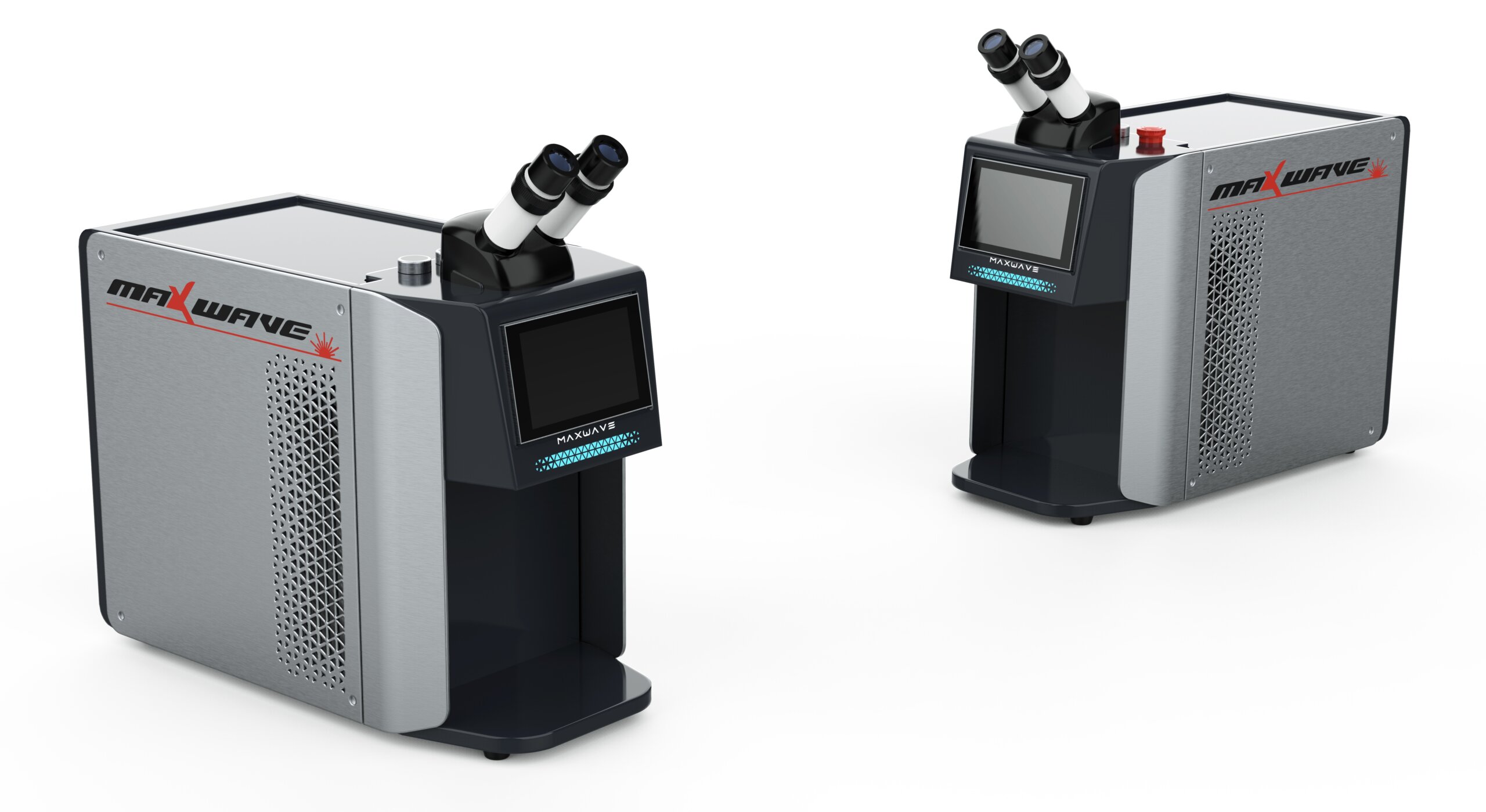
Industrial demand for fiber laser welding is accelerating because every automotive, appliance, and HVAC plant now runs mixed-batch production that traditional MIG/TIG simply cannot schedule profitably. A Klear Laser 2 kW wobble-head system lets one operator toggle between 0.5 mm aluminum foil and 6 mm carbon steel in under 30 s, eliminating electrode changeover, wire stock, and post-grind labor that normally absorb 18 % of total part cost. With payback achieved in 6–9 months on three-shift lines, finance managers treat the purchase as an operating expense rather than cap-ex, pushing replacement orders to record levels.
Profitability stacks up fastest where weld penetration beyond 4 mm is routine and downstream painting is required. A single Klear wobble head delivers 6 kW of Raycus or JPT source power into a 0.1 mm spot, creating full-penetration keys at 1.8 m min⁻¹ on 8 mm stainless—three times faster than pulsed MIG and without the 3 mm reinforcement that adds 12 ¢ in² of grinding consumables. Customers report gross margin lifts of 22 % on stainless tanks and 31 % on aluminum bus-bar because laser seams need zero spatter paste, zero rework, and pass helium-tight leak tests at first go.
| Cost Driver | Traditional MIG/TIG (per meter of 4 mm steel weld) | Klear 2 kW Fiber Laser (same joint) |
|---|---|---|
| Equipment amortization | $0.42 (10 yr life, $85 k station) | $0.18 (10 yr life, $38 k laser) |
| Consumables (wire, gas, tips, grind discs) | $2.10 | $0.05 (shield gas only) |
| Labor (welder + grinder, 3 min) | $4.50 | $0.90 (1 min, one operator) |
| Electricity | $0.12 | $0.08 |
| Rework/scrap allowance | $0.80 (5 %) | $0.04 (0.2 %) |
| Total cost per meter | $7.94 | $1.25 |
Across 2 000 running meters per month the laser saves $13 380, so a $38 k Klear unit pays for itself in 2.8 months and generates $160 k cash surplus inside the first year.
Principales caractéristiques et avantages
When evaluating how much a laser welder costs, it is essential to understand that the price reflects the caliber of the internal components. A Klear Laser welding system commands a premium because we integrate industrial-grade JPT or Raycus fiber laser sources. These sources are engineered for high electro-optical conversion efficiency and provide stable beam quality necessary for consistent manufacturing uptime.
The core advantage of our pricing structure lies in the inclusion of advanced wobble welding heads, such as the Sup20s or Sup21s models. This technology oscillates the laser beam at high frequencies to widen the weld seam and bridge gaps that improved stationary beams cannot handle. By manipulating the beam path, our machines ensure deep penetration without compromising the structural integrity of the surrounding metal.
Investing in a Klear Laser machine replaces the hidden costs of traditional TIG or MIG welding, such as extensive post-weld grinding and high consumable usage. Our systems allow for deep penetration welding on stainless steel, aluminum, and carbon steel with minimal heat-affected zones. The precision of the wobble head eliminates the need for skilled operators to perform complex manual movements.
We design our equipment to withstand rigorous industrial environments where reliability directly impacts the bottom line. The initial capital expenditure yields a significant return on investment through faster processing speeds and reduced material waste. A cheaper machine often lacks the beam modulation capabilities required for high-strength industrial bonds.
| Spécifications | Klear Laser Premium Configuration | Standard/Generic Configuration |
|---|---|---|
| Laser Source Brand | JPT or Raycus (Industrial Grade) | Generic or Rebranded Sources |
| Welding Head Tech | Dual-Axis Wobble (Sup20s/21s) | Stationary or Single-Axis Head |
| Profondeur de pénétration | Deep (Up to 6-8mm depending on power) | Shallow (Surface only) |
| Zone affectée par la chaleur | Minimal (Precision Control) | Wide (High Distortion Risk) |
| Système de refroidissement | S&A Industrial Chiller | Basic Water Cooling |
| Typical Duty Cycle | Continuous (24/7 Operation) | Intermittent (Overheat Risk) |
Applications industrielles
Laser welders serve critical roles in automotive, aerospace, and marine manufacturing where precision and joint integrity are non-negotiable. Automotive production uses them for high-speed welding of battery housings, powertrain components, and body-in-white assemblies. These applications demand consistent deep penetration on thin to medium gauge steels and aluminum alloys, often utilizing wobble welding heads to eliminate seam defects and reduce post-weld machining. Cost factors here correlate strongly with throughput requirements and integration complexity into production lines.
Aerospace manufacturing relies on laser welding for turbine engine components, fuel systems, and structural airframe elements requiring extreme metallurgical control. Systems must achieve deep, spatter-free penetration (typically 3-8mm) in challenging materials like Inconel 718 and titanium alloys under stringent NADCAP standards. Higher costs are driven by the need for ultra-stable JPT or Raycus fiber laser sources, hermetic chamber compatibility, and extensive qualification testing for flight-critical parts.
Marine industry applications focus on constructing corrosion-resistant vessels and offshore structures using duplex stainless steels and aluminum. Laser welding provides the low heat input necessary to maintain substrate corrosion resistance in harsh saltwater environments, particularly for deck fittings, piping, and superstructures. Investment scales with the required weld penetration depth in thick-section materials and the integration of real-time monitoring systems to ensure weld integrity in critical load-bearing joints.
The table below shows common materials welded in these sectors, along with typical maximum thickness capabilities and laser source requirements that directly influence system cost:
| Industrie | Matières premières | Max Thickness (mm) | Key Laser Source Requirement |
|---|---|---|---|
| Automobile | Aluminum Alloys, Mild Steel | 4.0 | Raycus 1.5kW Pulsed/MOPA |
| Aérospatiale | Inconel 718, Ti-6Al-4V | 8.0 | JPT MOPA 2kW+ with wobble |
| Marine | Duplex Stainless, Marine Al | 6.0 | Raycus 3kW CW with IP65 head |
Pourquoi choisir Klear Laser
Industrial laser welding systems represent a capital investment where true cost extends far beyond the initial purchase price. Klear Laser engineering focuses on total cost of ownership through robust support infrastructure, comprehensive warranty protection, and strategic spare parts logistics. Our fiber laser welders integrate JPT and Raycus sources with precision wobble welding heads to deliver 0.5mm to 3mm penetration depth in steel applications, ensuring your production line maintains competitive edge.
Our technical support team provides 24/7 remote diagnostics and on-site service deployment within 24 hours for critical failures. Each support engineer carries deep expertise in laser physics, wobble head calibration, and parameter optimization for dissimilar metal joining. We deliver proactive maintenance scheduling based on your duty cycle and operating environment to prevent unplanned downtime before it impacts your manufacturing throughput.
The standard warranty covers all core components including laser sources, wobble welding heads, and chiller systems for 24 months with unlimited operating hours. This protection extends to beam delivery optics and control electronics in industrial environments rated IP54 and above. Our warranty includes free software updates for weld parameter libraries and process monitoring algorithms throughout the coverage period.
Strategic spare parts depots in North America and Europe maintain critical inventory of JPT/Raycus source modules, wobble head assemblies, and protective optics with same-day shipping capability. We analyze your machine utilization patterns to recommend consignment stock for high-wear components like focusing lenses and nozzle tips. This approach reduces mean time to repair from days to hours, maximizing your equipment availability and production revenue.
| Component Category | Couverture de la garantie | Typical Spare Parts Lead Time | Support Response Level |
|---|---|---|---|
| Laser Source (JPT/Raycus) | 24 months full replacement | 4 hours (emergency) | 24/7 phone + remote access |
| Tête de soudage oscillante | 24 months mechanical/optical | Same day shipment | On-site within 24 hours |
| Chiller System | 24 months parts & labor | Next day delivery | 4-hour remote diagnostic |
| Control Electronics | 24 months advanced replacement | 2 hours (emergency) | Direct engineer assignment |
Manufacturing operations cannot afford extended downtime in today’s just-in-time supply chains. Klear Laser’s integrated value proposition transforms your laser welder from a simple tool into a guaranteed production asset with predictable operating costs and maximum equipment availability.
💰 ROI Calculator: How Much Does A Laser Welder Cost
Prêt à améliorer votre production ?
Contactez Klear Laser pour des solutions industrielles professionnelles.