When selecting laser welding technology, always prioritize the laser source brand (JPT/Raycus) over raw wattage for long-term reliability.
Laser Welding Technology: Technical Specifications
Fiber laser welding uses 1060–1080 nm wavelengths for optimal metal absorption. This spectral range outperforms CO2 lasers by reducing energy loss. JPT and Raycus sources are industry standards for their reliability and efficiency in industrial applications.
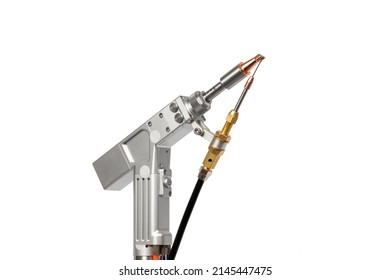
Pulse energy control (0.1–50 J) directly influences depth and precision. Wobble welding heads dynamically spread the beam to minimize porosity and improve bead uniformity. This combination allows deep penetration in thick materials without excessive heat input.
Active liquid cooling systems maintain stable thermal conditions during high-power operation. Overheating risks beam instability and component failure. Chillers with precision temperature control ensure consistent performance for 24/7 industrial use.
| Aspetto | Saldatura tradizionale (TIG/MIG) | Laser Welding Technology |
|---|---|---|
| Lunghezza d'onda | Not applicable | 1060–1080 nm (JPT/Raycus sources) |
| Pulse Energy Range | Manual adjustment only | 0.1–50 J, fully adjustable |
| Sistema di raffreddamento | Natural air cooling | Liquid-cooled chillers |
| Penetration Depth | Shallow, skill-dependent | Deep, controlled with wobble heads |
| Heat-Affected Zone | Wide and inconsistent | Narrow and minimized |
Caratteristiche e vantaggi principali
Klear Laser welders start with a choice of JPT or Raycus fiber sources that run at 1070 nm with wall-plug efficiencies above 35 %.
Those modules are tuned for single-mode beam quality (M² < 1.1) so the power density stays above 1 MW cm⁻² even after ten metres of delivery fiber.
Because the diodes are hermetically sealed and the resonator is monolithic, the sources deliver ±1 % power drift over an 8-hour shift, giving repeatable penetration on every shift.
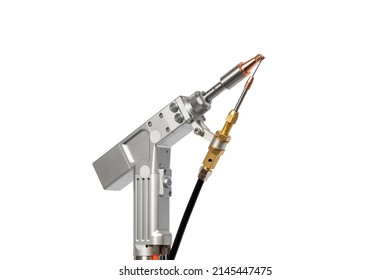
The light is conditioned in our wobble welding head where a galvanometric pair scans the beam in programmable patterns up to 4 kHz.
A 0–4 mm amplitude circle or infinity sign widens the capillary, letting you bridge gaps to 0.8 mm without filler and still reach 4 mm penetration in stainless.
An internal collimation slider lets you switch between 50 µm and 100 µm spot size without changing optics, so one head welds foil at 20 µm and then jumps to structural aluminium at 6 mm.
Closed-loop encoder feedback keeps the beam position within ±10 µm even at 6 m min⁻¹ travel speed, eliminating the “cold-crown” defect that haunts fixed-optic systems.
The same head carries a coaxial CMOS camera and 520 nm illumination diode, so the operator watches the keyhole in real time through the laser axis rather than from an off-angle side port.
Below are the core source/head parameters that ship with every Klear Laser welder.
| Componente | Specifiche | Benefici |
|---|---|---|
| Source model | JPT 1 kW / Raycus 2 kW Q-plus | 1 or 2 kW, single-mode |
| Lunghezza d'onda | 1070 nm ±5 nm | High absorption on Cu & Al |
| Beam quality | M² ≤ 1.1 | 50 µm focused spot |
| Power stability | ±1 % over 8 h | Identical weld depth |
| Delivery fiber | 10 m, 25 µm core | Remote head placement |
| Wobble frequency | 0–4 kHz | 0–4 mm stitch width |
| Spot size range | 20–200 µm (slider) | Foil to thick plate |
| Head weight | 0.9 kg | Hand-held or robot mount |
| Raffreddamento | Closed-loop 24 °C | Maintenance-free |
With those source and head specifications integrated under one firmware package, Klear Laser welders deliver cleaner, deeper and more repeatable seams than conventional TIG or MAG systems, while drawing 80 % less energy and zero filler wire when the joint allows.
Applicazioni industriali
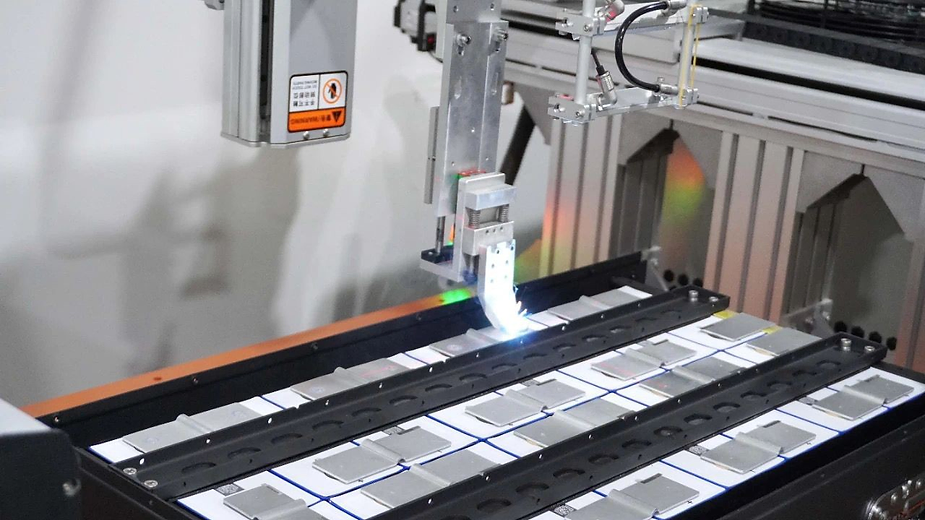
Laser welding technology has revolutionized heavy industry by offering superior control compared to traditional arc welding methods. At Klear Laser, we utilize advanced fiber laser sources from industry leaders like JPT and Raycus to ensure consistent beam quality. These sources provide the high energy density required for deep penetration welds without compromising the structural integrity of the surrounding material.
The automotive sector relies heavily on laser welding for the assembly of electric vehicle battery packs and body-in-white structures. Our systems employ wobble welding heads that oscillate the beam to bridge wider gaps and dramatically improve weld aesthetics. This specific technology ensures hermetic seals which are critical for protecting sensitive electronic components in modern vehicles from moisture and debris.
Aerospace manufacturers demand the highest strength-to-weight ratios possible for flight hardware. Laser welding minimizes the heat-affected zone, which prevents the warping of thin-walled aluminum and titanium components often used in fuselage construction. This precision allows engineers to reduce the overall weight of the aircraft while maintaining rigorous safety standards and structural rigidity.
In the marine industry, resistance to corrosion is the primary concern when joining stainless steel and carbon steel parts. High-power fiber lasers achieve deep penetration welds that are smooth and void-free, significantly reducing the crevices where saltwater corrosion typically begins. This durability is essential for ship hulls and offshore platform components that must endure harsh, saline environments for decades.
Laser Welding Material Compatibility and Parameters
| Tipo di materiale | Sorgente laser consigliata | Key Weld Characteristic | Typical Industrial Application |
|---|---|---|---|
| Acciaio inox | Raycus / JPT Continuous Wave | Deep penetration, high corrosion resistance | Marine exhaust systems, chemical tanks |
| Leghe di alluminio | JPT Adjustable Pulse Duration | Low heat input, crack sensitivity reduction | Aerospace fuselage, EV battery casings |
| Acciaio al carbonio | Raycus High Power (3kW+) | High speed, deep fusion | Automotive chassis, heavy structural beams |
| Titanio | JPT MOPA / CW | Oxide-free, high strength-to-weight ratio | Aerospace engine components, medical devices |
| Acciaio zincato | Raycus with Wobble Head | Spatter reduction, zinc vapor management | HVAC ducting, automotive body panels |
Perché scegliere Klear Laser
Klear Laser delivers immediate technical resolution for industrial laser systems through 24/7 engineering support. Our team possesses deep expertise in JPT and Raycus fiber sources, ensuring rapid diagnosis of complex welding or cleaning process issues. Customers receive direct access to factory-trained specialists, minimizing costly production downtime. This proactive support model keeps high-value manufacturing lines operational.
Our comprehensive 24-month warranty significantly exceeds standard industry coverage for industrial laser equipment. This warranty includes full protection for critical components like fiber laser sources, galvanometer scanners, and wobble welding heads. Unlike limited competitor terms, Klear Laser covers both parts and labor for verified performance failures. This extended coverage provides substantial cost certainty for your laser welding and cleaning investments.
Global spare parts availability is engineered for manufacturing continuity. We maintain strategic inventory hubs worldwide, ensuring critical spares ship within 24 hours for 90% of common components. Genuine Klear Laser parts maintain system calibration and performance specifications, preventing compatibility issues. This logistics network guarantees minimal disruption to your rust removal, precision welding, or UV printing operations.
| Caratteristica | Standard Industry Practice | Klear Laser Commitment |
|---|---|---|
| Assistenza tecnica | Business hours only; tiered response | 24/7 direct engineering access; 4-hour response target |
| Periodo di garanzia | Typically 12 months | Comprehensive 24-month coverage |
| Critical Spare Parts | 3-5 day lead time common | Global hubs; 24-hour shipment for 90% of parts |
💰 ROI Calculator: Laser Welding Technology
Siete pronti ad aggiornare la vostra produzione?
Contattate Klear Laser per soluzioni industriali professionali.