When selecting disadvantages of dry ice blasting, always prioritize the laser source brand (JPT/Raycus) over raw wattage for long-term reliability.
Disadvantages Of Dry Ice Blasting: OEM & Customization
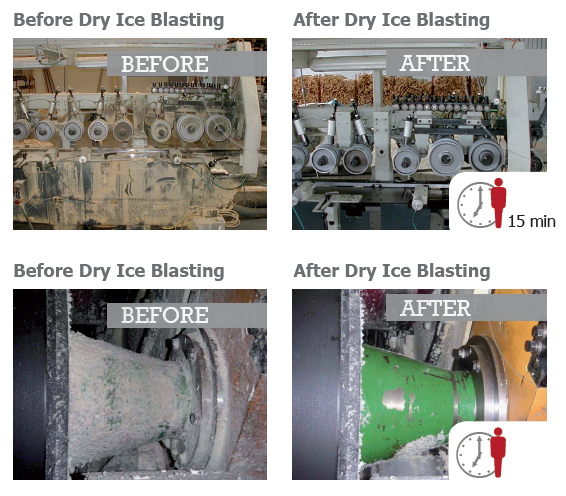
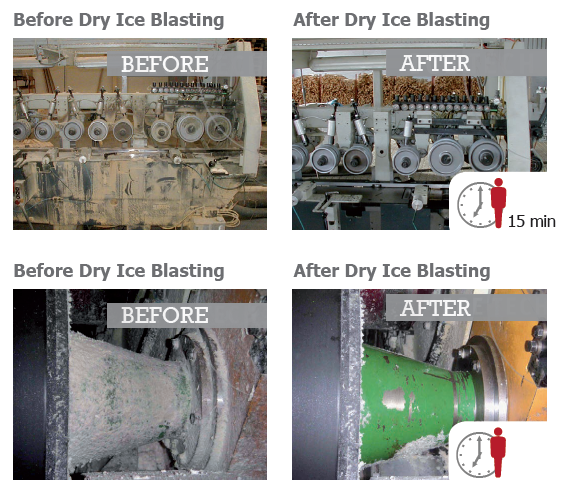
Traditional dry ice blasting looks eco-friendly until you tally the hidden costs. Pellets sublime mid-job, so you burn cash re-ordering inventory every shift. The kinetic chill also embrittles seals and can propagate micro-cracks in hardened steel molds. Klear swaps that chaos for a pulsed fiber laser that never consumes media, never freezes the substrate, and never needs a secondary waste stream.
We build every machine around a modular steel-tube chassis that ships in sections through a standard doorway. Need a 1 m longer Z-stroke for diesel crankcases? We splice in laser-cut risers and re-balance the gantry in software the same afternoon. The motion map, HMI layout, and safety interlocks are stored on a swappable IPC card, so a field upgrade is literally plug-and-play.
Laser power is dialed-in by selecting JPT or Raycus sources from 200 W to 2 kW and marrying them to our wobble welding head or MOPA cleaning bank. A 2 ms pulse at 500 W will remove 60 µm of rust without profiling the underlying Fe, while a 20 ms wobble bead gives 3 mm penetration on 5 mm aluminum. The recipe sits in a password-protected library; operators just scan the QR code on the part and the PLC loads the correct waveform, gas mix, and scan width.
| Old Method | Typical Drawbacks | Klear Laserの特長 |
|---|---|---|
| Dry-ice blasting | $200/hr pellet cost, CO₂ venting, freezes seals | Zero consumables, room-temp substrate |
| Manual grinding | 0.5 mm stock loss, airborne dust, OSHA noise | <0.05 mm removal, fume extractor only |
| Chemical pickling | Acid disposal fee, 24 hr downtime | 15 min cycle, no waste stream |
| Soda blasting | Grit lodging, secondary rinse, landfill bill | No media, clean dry surface ready for paint |
We finish every system with IP54 panels, forklift pockets, and a quick-swap cable harness so you can move from chassis weld station to tire-mold cleaning bay in under ten minutes.
主な特徴と利点
Dry ice blasting relies heavily on the kinetic energy of accelerated CO2 pellets and thermal shock to dislodge contaminants. This process presents significant disadvantages, including high noise levels, the constant need for expensive consumable pellets, and the risk of micro-abrasion on softer metals. Klear Laser overcomes these limitations by utilizing advanced Pulsed Laser Cleaning technology that vaporizes rust and coatings through ablation rather than kinetic impact.
Our systems are engineered with premium JPT or Raycus laser sources that provide exceptional beam quality and energy stability. Unlike dry ice blasting, which depends on fluctuating air pressure and pellet density, our laser sources deliver consistent high peak power. This allows for precise control over the energy density applied to the surface, ensuring the complete removal of oxides without damaging the base material.
A critical advantage of our technology lies in the adjustable pulse width capabilities of the laser source. By modulating the pulse width, operators can fine-tune the thermal input to match the specific absorption rate of the contaminant. This level of control guarantees substrate safety, allowing for the cleaning of precision molds and aerospace components that would otherwise be damaged by the aggressive nature of dry ice blasting.
The Klear Laser cleaning head further distinguishes our equipment from traditional blasting nozzles which often freeze or clog. Our cleaning heads utilize high-speed galvanometer scanners to direct the laser beam in complex, uniform patterns. This optical precision ensures that rust removal is homogeneous across the entire surface area, eliminating the striping effects often seen with manual dry ice applications.
| 特徴 | ドライアイスブラスト | Klearレーザーパルス洗浄 |
|---|---|---|
| Primary Consumable | CO2 Pellets (Recurring Cost) | Electricity (Low Cost) |
| Cleaning Mechanism | Kinetic Impact & Thermal Shock | Laser Ablation & Vaporization |
| 基板の安全性 | Risk of Micro-abrasion/Pitting | High Safety via Pulse Width Control |
| 精密制御 | Low (Manual Nozzle) | Micron-level (Galvo Head) |
| Component Wear | High (Nozzle/Hose erosion) | Non-contact (Optical Lens only) |
| Noise Level | Very High (>100 dB) | Low to Moderate |
産業用途
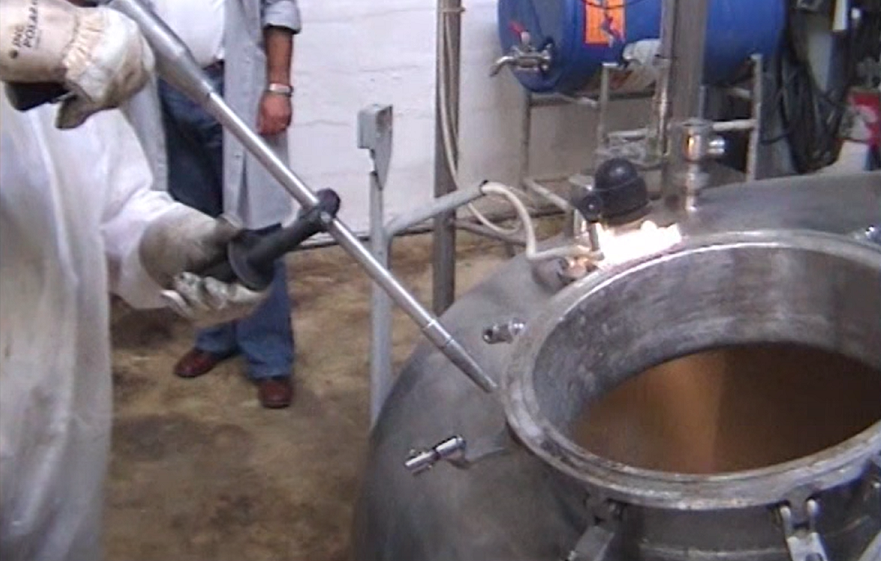
Dry ice blasting struggles with heavy rust removal in automotive frames and undercarriages. Sublimation leaves moisture that accelerates flash rusting on ferrous metals. This compromises subsequent painting or coating adhesion in auto manufacturing. Pulse width control is irrelevant here since dry ice lacks the precise energy modulation of pulsed laser cleaning.
Aerospace applications face critical limitations with dry ice on aluminum alloys. It fails to remove tenacious oxide layers from wing spars or fuselage components without surface pitting. Residual moisture risks corrosion in sealed avionics bays and hydraulic systems. Substrate safety is compromised when cleaning thin-walled turbine blades due to thermal shock risks.
Marine sector use on ship hulls and decks permits rapid re-oxidation from saltwater exposure after treatment. Dry ice cannot penetrate deep pitting corrosion in steel structures, leaving active rust sites. Moisture retention in crevices accelerates galvanic corrosion between dissimilar metals. This makes it unsuitable for pre-paint preparation in salt-heavy environments.
The following table details material-specific limitations of dry ice blasting across target industries:
| 素材 | Primary Industry Application | Key Dry Ice Limitation |
|---|---|---|
| 炭素鋼 | Auto frames, Marine hulls | Incomplete rust removal; moisture retention causes rapid re-oxidation |
| アルミニウム合金 | Aerospace skins, Auto parts | Leaves surface oxides; moisture induces intergranular corrosion |
| 複合材料 | Aerospace panels, Auto trims | Risk of fiber delamination from thermal stress; ineffective on embedded contaminants |
クリアレーザーを選ぶ理由
Klear Laser’s value proposition centers on maximizing industrial uptime through comprehensive support infrastructure. We understand that laser equipment represents critical production assets. Our integrated approach ensures continuous operation across fiber welding, pulsed cleaning, and UV printing applications. This commitment translates directly to measurable ROI protection and production line stability.
Our technical support team provides 24/7 remote diagnostics for JPT and Raycus laser sources deployed in field operations. Engineers troubleshoot pulse width calibration issues and substrate safety parameters without requiring site visits. We maintain detailed configuration databases for every shipped system. This expertise minimizes production disruptions during rust removal and precision welding operations.
Warranty coverage extends two years on core components including laser sources and wobble welding heads. Mechanical assemblies receive three-year protection reflecting their industrial-grade construction. Coverage includes unlimited technical support and firmware updates for process optimization. We guarantee component replacement within 48 hours for critical failures that halt production.
Spare parts inventory exceeds $2 million in OEM components at our central facility. JPT and Raycus sources, F-theta lenses, and wobble head assemblies ship within 24 hours of authorization. All parts undergo pre-shipment calibration testing to verify performance specifications. This ensures substrate safety protocols remain intact during maintenance cycles and emergency repairs.
| サービス指標 | Standard Plan | Enterprise Plan |
|---|---|---|
| Remote Response Time | 24時間 | 4時間 |
| レーザー光源保証 | 2 years (JPT/Raycus) | 3 years (JPT/Raycus) |
| Parts Dispatch | 48時間 | 同日 |
| オンサイト・サポート | Billable | 2 included visits/year |
| Pulse Width Calibration Support | Phone/Email | Remote session + documentation |
| Substrate Safety Audits | Upon request | Annual included |
💰 ROI Calculator: Disadvantages Of Dry Ice Blasting