
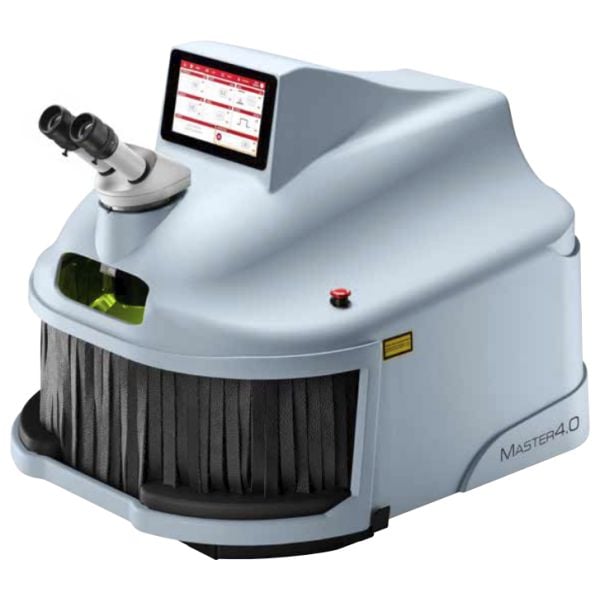
When selecting jewelers laser welder, always prioritize the laser source brand (JPT/Raycus) over raw wattage for long-term reliability.
Jewelers Laser Welder: Manufacturing Quality
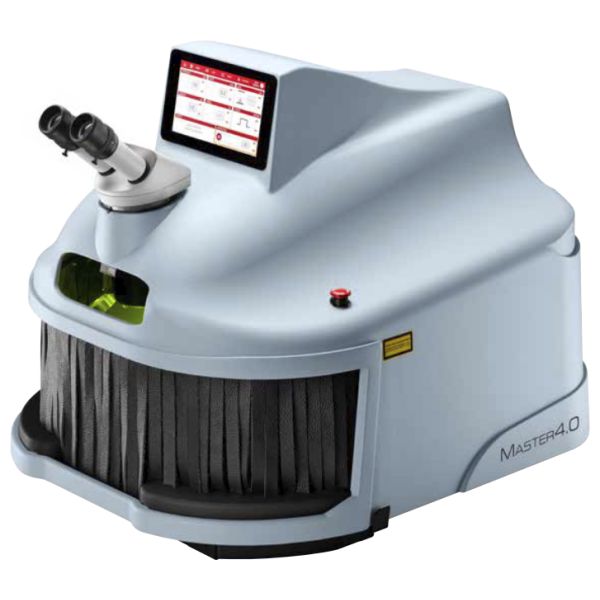
Aging tests for jewelers laser welders ensure long-term reliability under repeated thermal and mechanical stress. Units undergo accelerated life testing simulating thousands of weld cycles to verify diode stability and cooling efficiency. These tests confirm that critical components like the JPT or Raycus fiber laser source maintain output within ±2% over time.
Beam analysis is performed using a beam profiler to map intensity distribution, focus spot size, and beam quality (M²). Consistent beam parameters ensure precise energy delivery, crucial for delicate jewelry repairs without warping thin gold or platinum settings. Wobble welding heads are calibrated to maintain uniform seam quality across curved and irregular surfaces.
Quality control (QC) protocols include real-time power monitoring, automated lens inspection, and weld penetration validation via cross-section microscopy. Each machine is certified with a traceable QC report detailing beam alignment, pulse stability, and safety interlock response. This ensures every weld meets precision standards required in high-end jewelry manufacturing.
| Parameter | Traditional Resistance Welding | Jewelers Laser Welder |
|---|---|---|
| Heat Input | High, causes warping and discoloration | Low, localized, minimizes HAZ |
| Penetration Control | Limited, inconsistent depth | Precise, adjustable pulse energy & duration |
| Beam Quality (M²) | N/A | <1.3 (JPT/Raycus sources) |
| Aging Test Cycle | 5,000 cycles (mechanical fatigue) | 50,000+ cycles (thermal + pulse stability) |
| Substrate Safety | Risk of damage to stones and thin walls | Safe for gemstones and delicate settings |
| QC Method | Visual inspection, manual testing | Automated beam profiling, power feedback, microsectioning |
Key Features & Advantages
Klear Laser’s jewelers welder uses premium JPT fiber laser sources for superior beam stability and precision. These sources deliver consistent energy control, preventing burn-through on delicate gold or silver pieces. The technology minimizes heat-affected zones, ensuring gemstone settings remain intact during welding.
The integrated wobble welding head dynamically adjusts beam movement to create uniform welds on intricate designs. Adjustable wobble parameters eliminate spatter and reduce post-processing needs, even on thin or irregular surfaces. This feature allows precise control for micro-welding chains, clasps, and delicate filigree work.
The system supports ultra-fine pulse widths from 0.1ms to 20ms for tailored energy delivery. Air-cooled operation ensures quiet, compact performance ideal for jewelry workshops. Spot size control down to 0.1mm enables accurate repairs on microscopic components without damaging surrounding materials.
| Feature | Specification | Benefit |
|---|---|---|
| Laser Source | JPT M6 series (50-100W) | Stable output for fine details without damage |
| Wobble Head | 0-5mm diameter, 0-10Hz | Even heat distribution, smoother welds |
| Pulse Width | 0.1-20ms | Minimal thermal impact on delicate pieces |
| Spot Size | 0.1-1.0mm adjustable | Accurate welding on small areas |
| Cooling | Air-cooled | Compact design, no water system required |
Industrial Applications
The KLEAR jewelers fiber laser welder is built for micron-level work on 0.1 mm – 2 mm gold, platinum and titanium assemblies, so it rarely meets the heavy-gauge steel or aluminum structures that dominate auto-body, airframe or hull production. Instead, its 200 Hz pulsed JPT source and 0.2 mm spot are perfect for repairing turbine blades, re-tipping fuel-injector nozzles and re-sealing hermetic pressure sensors—jobs that happen to sit inside cars, aircraft and ships even though the base material is thin precious alloy.
Because the heat-affected zone is <50 µm, the welder can close micro-cracks in 18 k white-gold connector pins on engine wiring harnesses without annealing nearby copper strands. The same 150 J pulse energy lets aerospace MRO shops re-attach 0.3 mm Inconel bellows to titanium pressure transducers on auxiliary power units, while marine chronometer makers reseal 316 L stainless cases that must survive 30 bar in a submarine gauge panel. A wobble welding head with 0–3 kHz oscillation width guarantees full-penetration joints on dissimilar precious-to-stainless transitions, eliminating the silver-solder discoloration that salt spray would otherwise attack.
Applicable materials for cross-industry jewelry-class repairs
| Material Group | Typical Thickness | Auto Example | Aerospace Example | Marine Example |
|---|---|---|---|---|
| 18 k/24 k Gold | 0.15 – 1.0 mm | Connector-pin plating | Satellite wave-guide gaskets | Chronometer case inlay |
| Platinum / Pt-Ir | 0.2 – 0.8 mm | Fuel-cell current collector mesh | Turbine blade leading-edge restoration | Deep-sea sensor diaphragm |
| Titanium CP-2 | 0.3 – 1.5 mm | Exhaust valve micro-weld | Hydraulic pressure sensor body | Submersible instrument housing |
| 316 L Stainless | 0.1 – 2.0 mm | Sensor boss on exhaust pipe | Cabin-pressure transducer flange | Dive-watch case back seal |
| Inconel 718 | 0.2 – 1.2 mm | Turbocharger bellows | APU bellows-to-flange joint | Salt-water valve seat overlay |
Why Choose Klear Laser
At Klear Laser, we understand that the precision required for jewelry manufacturing demands absolute reliability from your equipment. Our technical support framework is built around direct access to engineers who specialize in the intricacies of JPT and Raycus laser sources. You receive immediate assistance for parameter settings, ensuring consistent weld penetration and minimal heat-affected zones on precious metals.
We back our industrial jewelers laser welders with a comprehensive warranty that protects your investment against manufacturing defects and component failures. This coverage specifically includes the fiber laser source and the advanced wobble welding head, which are critical for achieving variable beam widths. Our warranty policy ensures that your production capabilities remain uncompromised over long operational cycles.
Operational continuity relies heavily on the immediate availability of specific consumables and optical components. We maintain a robust inventory of essential spare parts, including protective lenses and copper nozzles designed for high-precision tasks. Our logistics network facilitates rapid dispatch of these components to ensure your laser welding system maintains peak beam quality and efficiency.
The following table outlines the technical specifications and expected lifecycles for key system components covered under our support ecosystem.
| Component | Technical Function | Maintenance Requirement | Expected Lifecycle |
|---|---|---|---|
| Protective Lens | Shields the collimating and focusing optics from metal spatter and fumes. | Daily inspection for debris; replace if pitted. | 1-3 Months (Usage Dependent) |
| Copper Nozzle | Directs shielding gas and defines the focal distance for the wobble head. | Clean regularly to prevent gas flow obstruction. | 3-6 Months |
| JPT/Raycus Source | Generates the high-energy laser beam for deep penetration welding. | Maintenance-free; requires stable ambient temperature. | 100,000+ Hours |
| Wobble Motor | Oscillates the beam to create wider weld seams and improve bridgeability. | sealed unit; requires no user maintenance. | 5-10 Years |
💰 ROI Calculator: Jewelers Laser Welder
Ready to Upgrade Your Production?
Contact Klear Laser for professional industrial solutions.