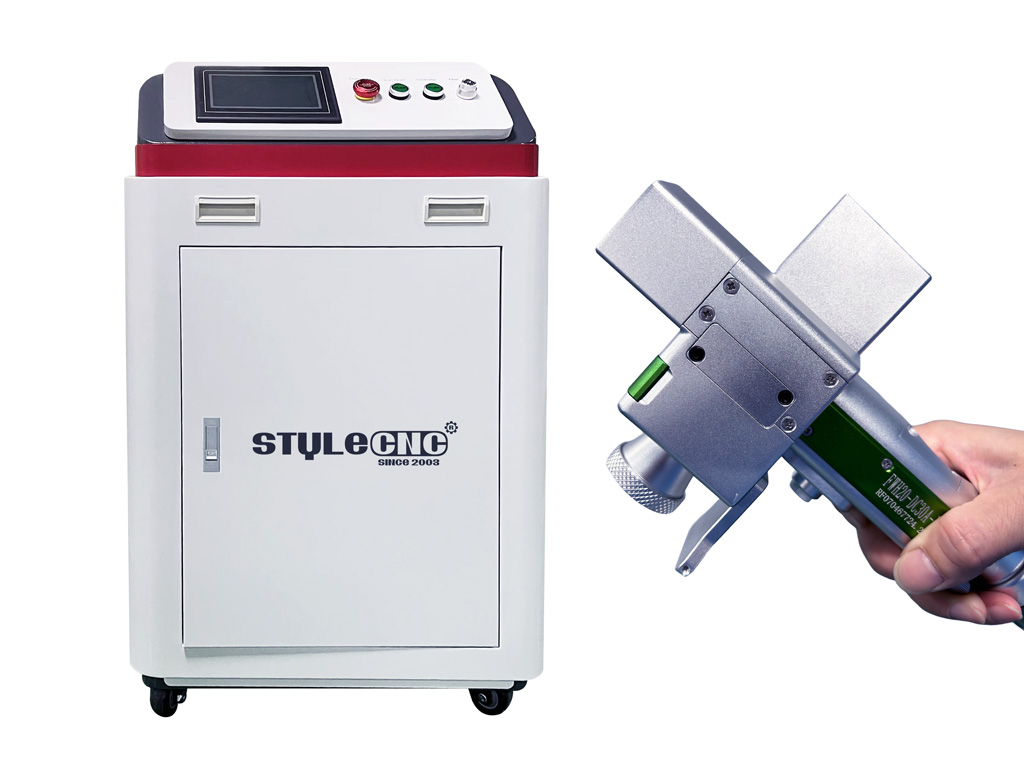
When selecting laser that removes varnish, always prioritize the laser source brand (JPT/Raycus) over raw wattage for long-term reliability.
Laser That Removes Varnish: Technical Specifications
The removal of varnish and organic coatings requires a sophisticated approach to ensure the underlying material remains pristine. Klear Laser utilizes pulsed fiber laser technology to achieve this delicate balance. By leveraging high-peak power delivered in nanosecond bursts, our machines vaporize varnish layers instantly through a process known as ablation.
The physics behind this process relies heavily on the specific wavelength of the laser source. Our industrial cleaning machines typically operate at a center wavelength of 1064 nanometers. This near-infrared wavelength is highly absorbed by organic contaminants like varnish, rust, and oil, yet it is largely reflected by metallic substrates. This differential absorption ensures that the energy targets the coating while leaving the base metal unaffected.
Pulse width is the critical variable that distinguishes high-quality cleaning lasers from standard continuous-wave units. We utilize Master Oscillator Power Amplifier (MOPA) structures, particularly from JPT, which allow for variable pulse durations. Short pulses prevent heat accumulation in the substrate, effectively eliminating the risk of thermal distortion or micro-cracking during the cleaning process.
Pulse energy dictates the “cleaning force” of each laser shot. Higher single-pulse energy is necessary for thick, stubborn marine varnishes or heavy industrial coatings. Our systems allow operators to fine-tune this energy density. This precision enables the removal of a single layer of paint from a multi-layer surface or the complete stripping of varnish down to bare metal.
Thermal management is essential for maintaining consistent beam quality during long industrial shifts. For high-power units exceeding 200 watts, we implement active water cooling systems to regulate the temperature of the laser source and optical components. Lower wattage, portable units often utilize forced air cooling to maximize mobility without sacrificing performance.
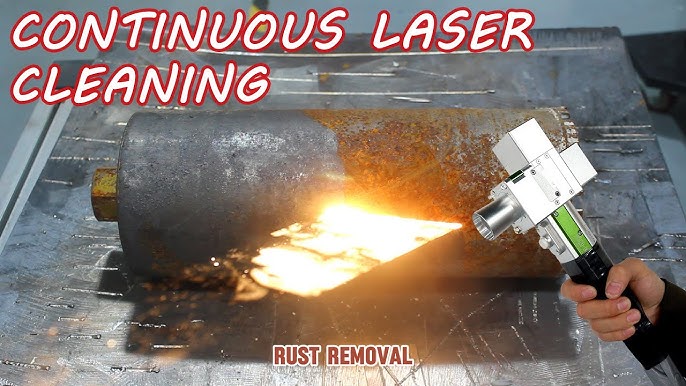
Beyond varnish, these machines are exceptionally effective at rust removal. The rapid expansion of plasma generated by the laser pulse ejects iron oxide particles from the surface. This occurs without the use of chemical solvents or abrasive media, aligning with our mission to eliminate hazardous industrial waste.
| Feature | Chemical Stripping | Abrasive Blasting (Sand/Grit) | Klear Pulsed Laser Cleaning |
|---|---|---|---|
| Substrate Impact | High risk of chemical corrosion or etching. | High risk of surface pitting and dimensional change. | Non-contact; zero damage to base material. |
| Precision | Low; difficult to control depth of removal. | Low; affects large areas indiscriminately. | Micron-level precision; layer-by-layer removal. |
| Consumables | Continuous purchase of solvents and neutralizers. | Large volumes of grit, sand, or media required. | No consumables; requires only electricity. |
| Waste Generation | Hazardous toxic sludge and wastewater. | Contaminated media mixed with coating debris. | Minimal solid dust; easily captured by extraction. |
| Operator Safety | High risk of chemical burns and inhalation. | Risk of silicosis and physical injury from debris. | High safety with proper eyewear and fume extraction. |
Key Features & Advantages
Klear Laser’s varnish removal solution uses our industrial Pulsed Laser Cleaning Machine platform. This system leverages a proprietary JPT MOPA fiber laser source engineered for precise coating ablation. The optical delivery head integrates high-speed galvanometers and specialized focusing optics calibrated for organic coating removal.
Pulse width control is critical for varnish applications. Our MOPA source dynamically adjusts pulse duration between 4-200 nanoseconds to match coating thickness without substrate interaction. Shorter pulses vaporize varnish layers through photomechanical ablation while eliminating heat transfer to sensitive substrates like wood or composite materials.
Substrate safety is ensured through real-time power density optimization. The scanning head maintains consistent energy distribution across curved or uneven surfaces using closed-loop feedback. This prevents undercutting or thermal damage common with chemical strippers or abrasive methods.
The table below compares core technical differentiators against conventional varnish removal methods:
| Parameter | Traditional Blasting | Chemical Stripping | Klear Laser System |
|---|---|---|---|
| Varnish Removal | Inconsistent; embeds media | Slow; requires disposal | Complete ablation; no residue |
| Substrate Damage | High risk of pitting | Chemical degradation | Zero thermal/mechanical impact |
| Process Control | Manual adjustment | Variable dwell times | Real-time pulse width & power tuning |
Industrial Applications
Pulsed fiber laser cleaning systems have displaced chemical stripping methods across automotive, aerospace, and marine industries by delivering precise, controllable energy without consumables. These systems generate high-peak-power nanosecond pulses that fracture molecular bonds in organic coatings through rapid photothermal and photomechanical effects. The result is complete varnish removal with zero abrasive media and minimal environmental footprint.
Automotive manufacturers deploy MOPA fiber lasers for selective paint removal from aluminum body-in-white assemblies and EV battery enclosures prior to welding. Pulse widths between 30-50 nanoseconds optimize coating ablation while preserving critical e-coat layers and preventing zinc diffusion. Robotic integration enables consistent processing of A-class surfaces, chassis components, and powertrain parts at production-line speeds.
Aerospace maintenance operations utilize short-pulse laser systems to strip epoxy primers from carbon fiber reinforced polymer (CFRP) airframe sections and titanium turbine components. Sub-micrometer pulse control prevents fiber delamination and maintains precise dimensional tolerances required by AS9100 quality standards. The process eliminates media embedding risks associated with dry ice or plastic bead blasting.
Marine refurbishment facilities apply high-power pulsed lasers to remove multi-layer marine varnish and anti-corrosion coatings from steel hull plates and aluminum deck structures. Laser parameters adapt to strip 500-micron thick epoxy systems while simultaneously descaling salt-induced corrosion. Shipyard deployments demonstrate 40% faster turnaround compared to chemical dipping with no hazardous waste disposal.
| Substrate Material | Laser Power Range | Optimal Pulse Width | Primary Application | Target Industry |
|---|---|---|---|---|
| Aluminum 5xxx/6xxx Series | 200-500W | 30-50ns | Selective coating removal | Automotive/Aerospace |
| Carbon Fiber Composite | 100-300W | 10-20ns | Epoxy varnish stripping | Aerospace/Automotive |
| Marine-Grade Steel | 500-1000W | 50-100ns | Heavy coating & rust removal | Marine |
| Titanium Alloy Ti-6Al-4V | 200-400W | 20-40ns | Precise primer removal | Aerospace |
| Magnesium AZ31B | 150-300W | 15-30ns | Delicate coating removal | Automotive/Aerospace |
Pulse width engineering determines the thermal penetration depth and stress wave propagation characteristics during varnish removal. Shorter pulses (10-30ns) generate shockwave-induced spallation ideal for brittle coatings on sensitive composites, while longer pulses (50-100ns) drive thermal ablation for robust marine systems. Klear Laser’s MOPA architecture provides real-time pulse duration adjustment from 10-500ns without hardware changes.
Substrate safety validation requires mapping the ablation threshold of each coating-substrate combination through parametric studies. Process windows establish maximum fluence limits that protect thin-walled aluminum from melt-through and prevent resin degradation in CFRP matrices. In-situ pyrometry and acoustic monitoring provide closed-loop feedback to maintain operational parameters within certified envelopes for aerospace and automotive OEM specifications.
Why Choose Klear Laser
Support
Klear Laser provides comprehensive technical support services to ensure optimal operation of your laser equipment. Our global network of factory-trained engineers offers installation, training, and troubleshooting assistance before, during, and after the sale. We maintain a dedicated technical support team available 24/7 via multiple channels including phone, email, and remote assistance. Our service contracts provide priority response times and preventive maintenance programs to maximize your equipment uptime.
Warranty
We stand behind the quality and reliability of our laser equipment with an industry-leading warranty program. All Klear Laser systems come with a standard 12-month comprehensive warranty covering all components and labor. Our laser sources and critical components carry an extended 24-month warranty, demonstrating our confidence in product durability. Extended warranty options are available to provide up to 60 months of protection, offering additional peace of mind for your investment.
Spare Parts
Klear Laser ensures minimal equipment downtime through our efficient spare parts management system. We strategically stock critical components and wear items across our global distribution centers. Our parts ordering system provides same-day shipment for in-stock items, with expedited international shipping options. Comprehensive parts diagrams and maintenance manuals are available online for easy identification and ordering. We also offer scheduled parts replacement programs to anticipate maintenance needs before failures occur.
💰 ROI Calculator: Laser That Removes Varnish
Ready to Upgrade Your Production?
Contact Klear Laser for professional industrial solutions.