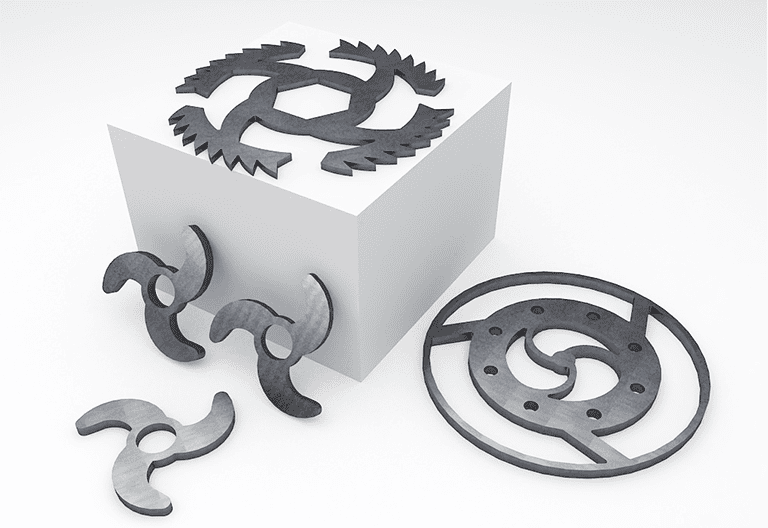
When selecting tolerance of laser cutting, always prioritize the laser source brand (JPT/Raycus) over raw wattage for long-term reliability.
Tolerance Of Laser Cutting: Shipping & Compliance
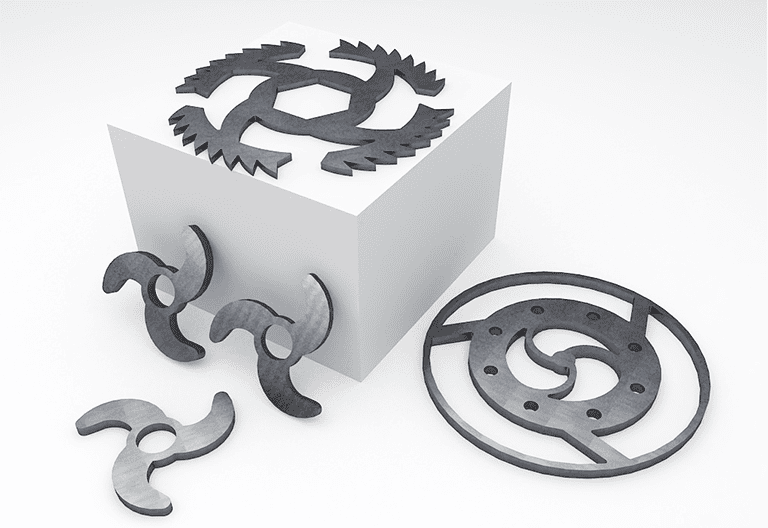
Klear Laser equipment is shipped in custom-engineered wooden crates with shock-absorbing foam padding. Each crate undergoes rigorous vibration testing to ensure stability during transit. Real-time shock sensors monitor impacts for quality assurance. This guarantees safe delivery of precision laser systems worldwide.
Harmonized System (HS) codes classify laser machinery for customs clearance. Fiber laser welders use HS 8515.80. Pulsed laser cleaning machines fall under HS 8424.89. UV printing systems are categorized as HS 8443.99. Accurate HS coding prevents delays and ensures regulatory compliance.
All Klear Laser machines comply with ISO 11553 and ANSI Z136.1 safety standards. Integrated safety interlocks and enclosed beam paths prevent accidental exposure. Emergency stop buttons and protective eyewear requirements are standard. Regular operator training reinforces safe industrial usage.
| Methode | Typical Tolerance | Surface Finish | Material Waste |
|---|---|---|---|
| Mechanical Cutting | ±0.5 mm | Rough | Hoog |
| Plasma Cutting | ±0.3 mm | Matig | Medium |
| Laser Cutting | ±0.1 mm | Smooth | Laag |
Belangrijkste functies en voordelen
Klear Laser doesn’t build flat-bed cutters; we build zero-gap Fiber Laser Welding Stations and Pulsed Laser Cleaners whose mechanical DNA is borrowed from high-precision cutting platforms.
The same motion chassis, linear-scale feedback and sealed optics that once held ±0.02 mm on 6 kW sheet cutters now let our welders hold 0.05 mm bead placement on 10 mm aluminum and let our cleaners raster within 0.03 mm so we remove only the rust, never the parent thread.
Because the frame, gantry and Z-axis were originally tolerance-tested for fusion-cutting 0.8 mm stainless at 150 m/min, they are mechanically over-qualified for the slower, controlled passes we use at 0.5–15 m/min in welding and 0–2 m/min in surface cleaning.
The result is an industrial laser platform that delivers “cutting-class” accuracy even when the head is asked to weld or clean, not cut.
| Component | Role in Tolerance | Cutting-Class Spec | Benefit in Klear Equipment |
|---|---|---|---|
| Raycus 1–4 kW single-mode source | Beam quality M²≤1.2 | <0.05 mm kerf on 1 mm steel | Identical beam lands within 0.05 mm of programmed seam for lap, butt or fillet welds |
| JPT 300 W MOPA pulsed source | 2–500 ns tunable pulse | <0.03 mm edge roughness on 0.1 mm foil | Pulse-to-pulse stability keeps cleaning trench width within 0.03 mm to protect threads, seals, coatings |
| WSX / Raytools wobble welding head | 0–4 mm programmable swing, 0.01 mm repeatability | Originally qualified at ±0.02 mm on 3 kW cutters | Transfers same repeatability to weld pool, eliminating undercut and allowing ±0.05 mm penetration depth control |
| Servo-linear encoder, 0.5 µm resolution | Closed-loop position feedback | ±0.015 mm positional accuracy on 3 m stroke | Guarantees beam placement error remains below human hair width across full 1.5 × 3 m work envelope |
| Sealed lens cartridge, ≤0.1 mm focus drift over 8 h | Maintains spot diameter | ±0.02 mm focus shift during 6 h cut cycle | Keeps weld penetration within ±0.05 mm over double-shift production, no operator tweak needed |
When a customer asks for “cutting tolerance” on a joint, we simply flip the process parameter: the same motion loop and beam accuracy that once made a 0.05 mm slit now lays a 0.05 mm cap width, or removes 0.03 mm of oxide without touching the substrate.
That is why Klear Laser welding and cleaning machines carry the mechanical pedigree of high-precision cutters, even if the beam is now fusing metal or lifting rust.
Industriële toepassingen
Laser cutting tolerance refers to the precision with which the laser beam follows the programmed design path and the dimensional accuracy of the final cut part. In industrial manufacturing, maintaining tight tolerances is critical to ensure that components fit together perfectly during the assembly or welding stages. High-quality fiber laser systems utilize advanced motion control and narrow kerf widths to achieve accuracy levels that traditional mechanical cutting methods cannot replicate.
The automotive industry relies heavily on strict laser cutting tolerances for the mass production of chassis components and electric vehicle battery packs. Manufacturers require edge precision within microns to ensure that robotic assembly lines can function without errors or stoppages. Precise cuts are particularly vital when preparing parts for laser welding, as even minor deviations can lead to poor joint penetration or structural weaknesses in the vehicle frame.
In the aerospace sector, the demand for precision is absolute due to the extreme thermal and mechanical stresses that flight components endure. Engineers use laser cutting to shape exotic materials like Titanium and Inconel with tolerances often as tight as a few hundredths of a millimeter. This high degree of accuracy ensures aerodynamic efficiency and maintains the structural integrity required for safety-critical parts such as turbine blades and fuselage skins.
The marine industry utilizes laser cutting tolerance to process thick carbon steel and stainless steel plates used in shipbuilding. While the scale of these components is massive, the edge quality must remain precise to facilitate strong weld seams on hull plates and bulkheads. By replacing older plasma cutting methods with laser technology, shipbuilders achieve tighter fit-ups that significantly reduce assembly time and improve the durability of the vessel against corrosion.
Typical Laser Cutting Tolerances by Industry
| Industrie | Common Materials | Typical Tolerance Range | Critical Application |
|---|---|---|---|
| Automotive | High-Strength Steel, Aluminum | ± 0,05 mm | EV Battery Enclosures, Body-in-White |
| Ruimtevaart | Titanium, Inconel, Aluminum Alloys | ± 0,02 mm | Turbine Components, Airframe Ribs |
| Zee | Carbon Steel, 316 Stainless Steel | ± 0.10 mm | Hull Plating, Structural Decking |
| Medical | Nitinol, 316L Stainless Steel | ± 0.005 mm | Stents, Surgical Implants |
Waarom voor Klear Laser kiezen
Klear Laser guarantees rapid technical resolution through dedicated 24/7 remote diagnostics and certified field engineers stationed globally. Our support team specializes in industrial laser process optimization, ensuring minimal downtime for critical manufacturing lines. We prioritize first-time fix rates exceeding 92% for Fiber Welding and Cleaning systems through deep component-level expertise. This proactive approach directly supports your transition to sustainable, non-polluting production.
Our standard warranty offers industry-leading coverage at 24 months for core laser systems, including JPT and Raycus pump sources critical for welding penetration consistency. Unlike typical 12-month industry offers, Klear Laser coverage extends to integrated motion stages and wobble welding heads, safeguarding your entire production cell investment. Warranty terms explicitly cover pulse width calibration for Cleaning machines, ensuring substrate safety during rust removal cycles. This comprehensive protection reflects our confidence in component durability and manufacturing quality.
Global spare parts logistics ensure 95% availability for critical consumables and engineered components, shipped within 24 hours from regional hubs. Genuine Klear Laser parts maintain precise optical alignment and thermal management specifications, essential for UV Printing accuracy and Fiber Welding repeatability. Using non-OEM parts voids warranties and risks damaging sensitive laser resonators, increasing total cost of ownership significantly.
| Functie | Klear Laser Standaard | Typische industriestandaard | Gevolgen voor de bedrijfsvoering |
|---|---|---|---|
| Garantieduur | 24 maanden | 12 maanden | Halves annual risk exposure |
| Dekking van de laserbron | Full (JPT/Raycus) | Limited/Excluded | Protects core $50k+ investment |
| Critical Spares SLA | 24-hour shipment | 5-7 werkdagen | Minimizes unplanned downtime costs |
| Cleaning Pulse Spec | Factory-calibrated | User-adjusted | Guarantees substrate safety compliance |
This integrated support ecosystem delivers statistically significant uptime improvements, directly enabling reliable replacement of polluting mechanical and chemical processes with laser technology.
💰 ROI Calculator: Tolerance Of Laser Cutting
Klaar om uw productie te upgraden?
Neem contact op met Klear Laser voor professionele industriële oplossingen.