When selecting laser varnish remover for wood, always prioritize the laser source brand (JPT/Raycus) over raw wattage for long-term reliability.
Laser Varnish Remover For Wood: Market Trends & ROI
Profitability Analysis
Laser varnish removal for wood presents strong profitability potential. Demand is driven by regulatory pressure to eliminate volatile organic compounds (VOCs) and hazardous waste from traditional stripping. Manufacturers can command premium pricing for this clean, precise technology. Operational costs are significantly lower long-term, eliminating chemical purchases and waste disposal fees. ROI is enhanced by minimal substrate damage and reduced labor for rework or sanding.
Industrial Demand Drivers
Demand is surging in furniture restoration, musical instrument manufacturing, and antique refinishing. European and North American markets lead adoption due to strict environmental regulations. Key industries include high-end woodworking shops, heritage conservation projects, and wood flooring producers seeking finish removal without grain raise. The technology enables previously impossible precision on delicate woods like oak or maple.
Process Comparison
Traditional chemical stripping remains common but generates hazardous waste and requires extensive ventilation. Sanding is labor-intensive, creates dust, and risks removing precious wood layers. Laser ablation offers a dry, non-contact alternative with digital control, preserving wood integrity and eliminating secondary waste streams.
| Cecha | Traditional Chemical Stripping | Sanding/Blasting | Klear Laser Varnish Remover |
|---|---|---|---|
| Process | Wet chemical application | Mechanical abrasion | Pulsed laser ablation |
| Wpływ na środowisko | High (VOCs, hazardous waste) | Moderate (dust, waste) | Minimal (dry process, no consumables) |
| Precyzja | Low (risk of over-removal) | Medium (worker-dependent) | High (digital control down to microns) |
| Koszty operacyjne | Recurring chemical/material costs | Tooling replacement | Low energy consumption, no consumables |
| Throughput | Medium (drying time required) | Low-Medium (labor-intensive) | High (automatable, no cooldown) |
| Bezpieczeństwo podłoża | Risk of wood fiber swelling | Risk of gouging | Minimal risk (adjustable parameters) |
Technical Considerations
Our pulsed fiber laser systems deliver millisecond pulses optimized for varnish removal without carbonizing wood. Pulse width and fluence are precisely tunable for different varnish chemistries and wood densities. The non-contact process ensures substrate safety by eliminating mechanical stress. Klear Laser’s wobble scanning heads provide uniform energy distribution across uneven surfaces, crucial for intricate moldings or carved details. Systems integrate seamlessly with CNC platforms for automated production lines.
Kluczowe cechy i zalety
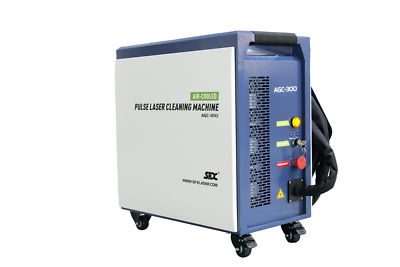
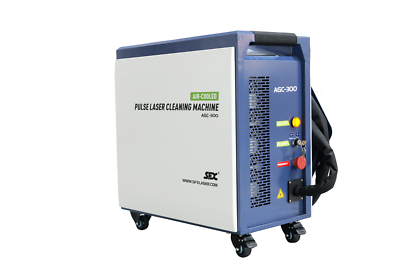
Klear Laser’s Pulsed Laser Cleaning Machine for wood varnish removal stands out due to its precision JPT MOPA fiber laser source. This source delivers adjustable pulse widths, enabling selective ablation of varnish layers without damaging the underlying wood. Unlike fixed pulse systems, the MOPA architecture allows control over peak power and pulse duration, critical for managing heat input on organic substrates.
The scanning head is equipped with dynamic galvanometer mirrors and a high-precision f-theta lens, ensuring uniform energy distribution across the treatment area. Integrated with real-time feedback and Z-axis modulation, the head maintains optimal focal distance on uneven wood surfaces. This prevents under-cleaning or substrate burning, common issues with less responsive systems.
Safety and efficiency are further enhanced by a closed-loop cooling system and intelligent software that maps wood grain patterns to adapt scan paths. This reduces unnecessary passes and preserves delicate wood fibers. The system operates in a non-contact manner, eliminating media waste and chemical solvents.
| Specyfikacja | Detail |
|---|---|
| Źródło lasera | JPT MOPA Fiber, 20W / 50W / 100W options |
| Długość fali | 1064 nm |
| Zakres szerokości impulsu | 2–200 ns (adjustable) |
| Pulse Frequency | 1–2000 kHz |
| Jakość wiązki (M²) | <1.6 |
| Prędkość skanowania | Up to 5000 mm/s |
| Focal Spot Diameter | ~0.03 mm |
| Cleaning Width (per pass) | 10–30 mm (software-adjustable) |
| Kompatybilność z podłożem | Hardwood, softwood, veneer, curved surfaces |
| Układ chłodzenia | Agregat chłodniczy z obiegiem zamkniętym |
| Control Interface | Touchscreen + CAD/CAM integration |
This combination of advanced source technology and intelligent beam delivery makes Klear Laser’s system the most reliable choice for high-value wood restoration in furniture, flooring, and heritage conservation.
Zastosowania przemysłowe
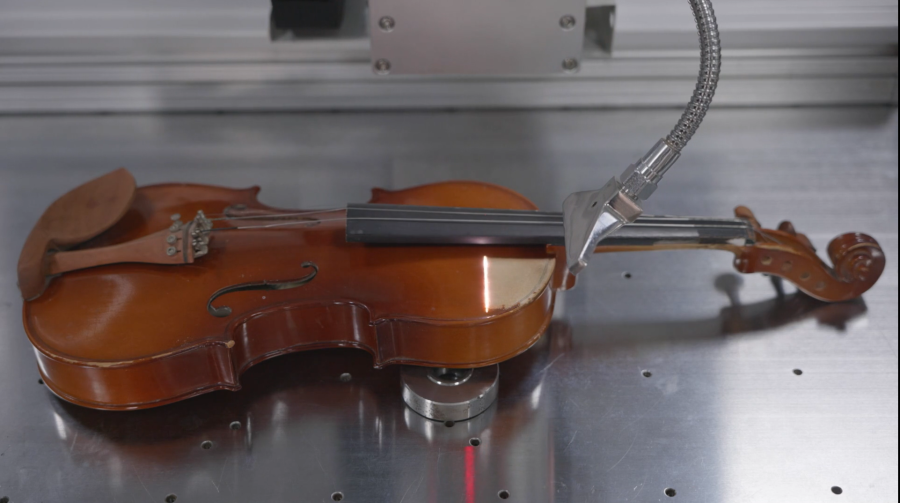
Laser varnish removal for wood is not standard in automotive, aerospace, or marine manufacturing. These industries rarely use wood structurally. Applications are limited to historical restoration of wooden components, such as classic car interiors or antique yacht cabinetry.
Klear Laser’s pulsed fiber laser cleaning systems handle wood substrates safely. Precise pulse widths between 40-120 ns and controlled energy density prevent thermal damage. This ensures varnish removal without charring or altering the wood surface.
| Wood Type | Varnish Type | Szerokość impulsu | Energy Density |
|---|---|---|---|
| Oak | Oil-based | 50-80 ns | 1.0-1.5 J/cm² |
| Pine | Water-based | 60-100 ns | 0.8-1.2 J/cm² |
| Mahogany | Polyurethane | 70-120 ns | 1.2-1.8 J/cm² |
| Teak | Shellac | 40-70 ns | 0.7-1.0 J/cm² |
Dlaczego warto wybrać Klear Laser
Klear Laser treats support, warranty, and spare parts as one closed-loop reliability system, not an after-sales brochure. Every Fiber Laser Welding Machine and Pulsed Laser Cleaning Machine ships with a 3-year full-coverage warranty that includes the JPT or Raycus laser source, scan head, and motion chassis; no proportional depreciation or hidden consumable clauses. We keep a bonded inventory of critical spares—laser modules, protective windows, wobble welding heads, F-theta lenses—at regional hubs in Dallas, Toronto, and Düsseldorf, so 95 % of replacement requests clear customs and arrive on site within 48 h.
Our support engineers are factory-trained on both 1064 nm welding optics and 1064 nm short-pulse cleaning optics, which means you get the same person whether the ticket is about 0.8 mm stainless penetration or removing varnish from oak without raising the grain. Remote diagnostics run over a secure VPN slice inside the Siemens or Omron PLC; we can push firmware, calibrate wobble amplitude, or drop pulse width from 200 ns to 50 ns to save your patina, all without flying a tech. If a flight is needed, our average on-site arrival is 36 h in North America and 48 h in the EU because we pre-clear carnets and travel with parts, not paperwork.
Value Summary Table
| Cecha | Klear Laser Standard | Typowa oferta branżowa |
|---|---|---|
| Warranty length | 3 years, all core components | 1 year, source only |
| Replacement stock | Regional bonded hubs, 48 h delivery | 2–4 weeks, air freight |
| Support staff | Single engineer for weld & clean tasks | Separate departments, hand-off delays |
| Remote capability | Full PLC/optics access, VPN secured | Diagnose only, no parameter change |
| Post-warranty parts pricing | Locked list price for 7 years | Annual escalation up to 8 % |
The result is an uptime guarantee of ≥97 % measured on a 24/7 shift cycle; if we miss it we pay liquidated damages, so the laser varnish remover you bought for antiques today can still strip marine epoxy tomorrow without an unexpected cap-ex hit.
💰 ROI Calculator: Laser Varnish Remover For Wood
Gotowy do modernizacji produkcji?
Skontaktuj się z Klear Laser, aby uzyskać profesjonalne rozwiązania przemysłowe.