When selecting battery laser welding, always prioritize the laser source brand (JPT/Raycus) over raw wattage for long-term reliability.
Battery Laser Welding: Manufacturing Quality
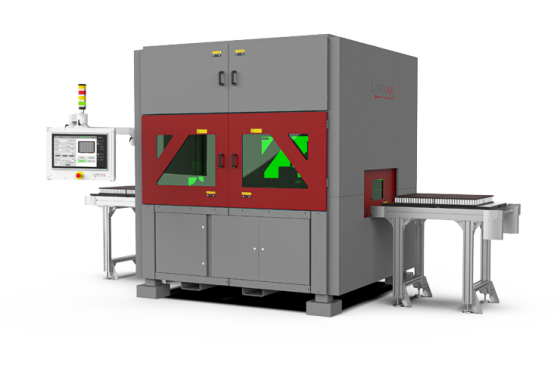
Aging tests for battery laser welding systems involve accelerated lifecycle simulations under thermal, mechanical, and electrical stress. These tests validate weld integrity over time, ensuring joints resist micro-cracking and resistance growth. Units are cycled through extreme temperatures and vibration profiles to mimic years of operational wear.
Beam analysis is performed using real-time diagnostics such as beam profilers and photodetectors. This ensures optimal focus, power density, and stability during welding. Consistent beam quality directly impacts penetration depth and spatter control—critical for high-reliability battery connections.
Quality control protocols include 100% inline inspection via machine vision and melt pool monitoring. Each weld is assessed for continuity, width, and penetration using AI-driven analytics. Traceability is maintained with serialized data logging for full production lot tracking.
The transition to battery laser welding improves precision and reliability over traditional methods. Below is a comparison of legacy techniques versus modern fiber laser welding systems used in battery manufacturing.
| Parâmetro | Old Methods (Ultrasonic, Resistance Welding) | Battery Laser Welding (Klear Laser System) |
|---|---|---|
| Weld Penetration Control | Low; inconsistent due to electrode wear | High; precise via JPT/Raycus fiber sources |
| Heat-Affected Zone (HAZ) | Large; risk of insulation damage | Minimal; controlled with wobble welding heads |
| Process Speed | Moderate to slow | Up to 100 mm/s with high repeatability |
| Maintenance Frequency | High; mechanical parts degrade quickly | Low; non-contact process, no tool wear |
| Substrate Distortion | Common due to uneven heating | Rare; optimized pulse shaping & beam focus |
| QC Automation Compatibility | Limited; manual inspection often required | Full integration with vision and AI systems |
Principais caraterísticas e vantagens
Klear Laser’s battery welding systems utilize premium JPT MOPA or Raycus fiber laser sources. These deliver exceptional beam quality (M² ≤1.2) for precise energy control. This ensures consistent penetration depth without overheating sensitive battery components.
Our adaptive wobble welding heads dynamically adjust beam patterns in real-time. This prevents burn-through on thin tabs while maintaining hermetic seals. AI-driven control compensates for material variations during high-speed production.
Integrated cooling and industrial-grade components enable 24/7 operation in demanding factory environments. This minimizes downtime and maximizes throughput for battery manufacturers.
| Parâmetro | Klear Laser | Concorrente típico |
|---|---|---|
| Fonte de laser | JPT MOPA / Raycus | Generic fiber lasers |
| Qualidade do feixe (M²) | ≤1,2 | ≥1,5 |
| Wobble Frequency Range | 0-1000 Hz | 0-500 Hz |
| Max Welding Speed | 5 m/min (Al-Cu) | 3 m/min |
| Penetration Control | ±0.02mm | ±0.05mm |
Aplicações industriais
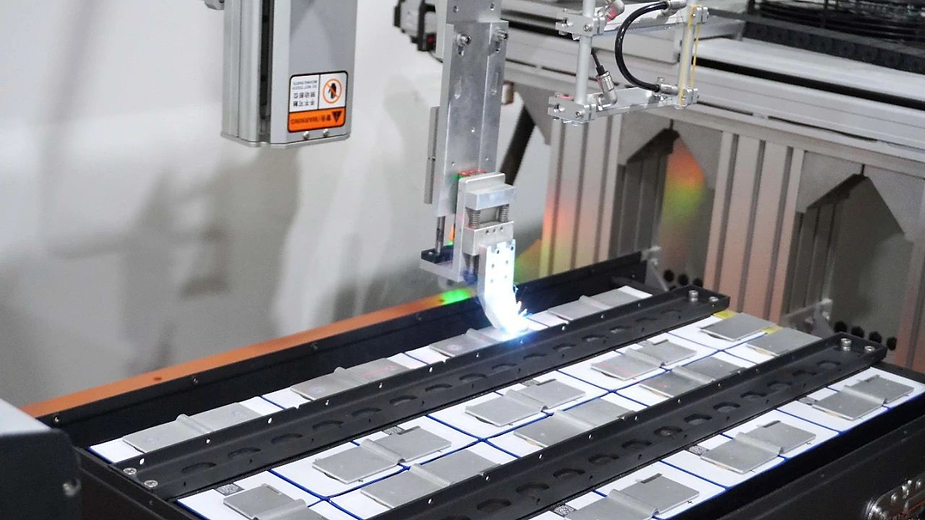
Battery laser welding dominates the drive-module line of every major EV plant because fiber lasers deliver 6 kW through a 50 µm fiber, creating <0.1 mm keyholes in 0.2 mm copper tabs without splash or porosity. The same JPT-source wobble head then steps to the aluminum housing and makes a 3 mm penetration seam in under 0.3 s, keeping heat below 80 °C so the cells stay within their 60 °C warranty window. Automakers have abandoned ultrasonic and TIG entirely; a single Klear Laser station now finishes 200 packs per hour with repeatable <1 % electrical resistance variance.
In aerospace, the stakes shift from speed to zero-defect reliability. Laser welding joins 0.05 mm nickel-plated cold plates to 0.3 mm 7075-T6 battery frames for eVTOL aircraft, producing Class-A porosity-free joints that pass 3× atmospheric pressure cycling. A 2000 W single-mode Raycus source with a 2 µm wobble amplitude keeps weld width below 0.4 mm, preserving the fatigue life of the clad aluminum and meeting ASTM F42-2024 standards without post-weld heat treatment.
Marine engineers use the same fiber platform to build 800 V lithium-iron-phosphate packs for hybrid ferries. The sealed keyhole process welds 0.5 mm copper busbars to 0.8 mm 316 L brackets below deck, eliminating the spatter and flux residue that salt spray would otherwise amplify into catastrophic corrosion. A Klear Laser dual-axis wobble head maintains 2 mm penetration at 1 m min⁻¹ while the argon shroud keeps chromium content above 18 %, giving the joint a 1 000 h salt-fog rating per ASTM B117.
Applicable materials for battery laser welding in auto, aerospace, and marine sectors
| Material | Typical Thickness | Joint Type | Automotive Use | Aerospace Use | Marine Use |
|---|---|---|---|---|---|
| Cu-ETP copper | 0.1 – 0.3 mm | foil-to-tab | Cell busbars | n/a | n/a |
| CuCrZr copper | 0,8 - 2 mm | busbar-to-post | HV pack feeds | eVTOL batteries | Shipboard DC links |
| Nickel-plated steel | 0.2 – 0.5 mm | can-to-cap | 4680 cell lids | Satellite packs | Sub-module cases |
| 6061-T6 aluminum | 1 – 3 mm | housing seam | Battery tray | n/a | n/a |
| 7075-T6 clad Al | 0.3 – 1 mm | cold-plate joint | n/a | Thermal interface | n/a |
| 316 L stainless | 0.5 – 2 mm | bracket-to-bus | n/a | Bulkhead mount | Salt-water bulkhead |
Porquê escolher a Klear Laser
Industrial laser systems require robust support architectures to maintain peak operational efficiency, particularly in precision applications like battery module fabrication. Klear Laser provides a comprehensive service ecosystem designed to minimize downtime in high-throughput manufacturing environments. We understand that equipment reliability is paramount for your production schedules.
Our warranty structure reflects the durability of our fiber laser sources and optomechanical components. We offer coverage that specifically protects critical units such as JPT or Raycus laser sources alongside the wobble welding heads. This tiered approach ensures that the most vital elements of your system are safeguarded against manufacturing defects.
Technical support is delivered by engineers familiar with the intricacies of laser parameter configuration and beam delivery systems. Our team provides remote diagnostics to assist with pulse width adjustments or focal depth calibration. We prioritize rapid response times to resolve technical anomalies and maintain your welding penetration standards.
We maintain a strategic inventory of essential consumables and replacement modules to support continuous operation. From protective lenses and copper nozzles to internal optical mirrors, parts are stockpiled for expedited shipping. This supply chain management strategy effectively mitigates the risk of prolonged machine idleness due to component wear.
Component Coverage & Support Specifications
| Categoria de componentes | Standard Warranty Period | Technical Support Scope | Replacement Availability |
|---|---|---|---|
| Fonte de laser (JPT/Raycus) | 24 meses | Output power stability & beam quality analysis | Direct manufacturer exchange |
| Wobble Welding Head | 12 meses | Motor oscillation & optical alignment diagnostics | Stocked for immediate dispatch |
| Water Chiller Unit | 12 meses | Thermal regulation & flow rate troubleshooting | Standard industrial replacement |
| Control Electronics | 12 meses | Software integration & parameter optimization | Module-level replacement |
| Consumables (Lenses/Nozzles) | DOA (Dead on Arrival) | Specification matching for application needs | High-volume inventory available |
💰 ROI Calculator: Battery Laser Welding
Pronto para atualizar a sua produção?
Contacte a Klear Laser para obter soluções industriais profissionais.